

It’s reasonable to want a clear cost before handing over a basket, especially when laundry needs vary from week to week. This guide explains what affects pricing, how wash, dry, and fold service works, and how residential and commercial laundry needs can differ. You’ll also learn how to communicate detergent preferences and what to consider when deciding whether this service fits your routine. No mystery, just the practical details to help you plan.
Key Takeaways
- Estimate your laundry amount and understand how weight and handling can shape per-pound pricing.
- Separate household laundry from business needs, such as towels, linens, and uniforms, to clarify what the service must handle.
- Share detergent and fabric-softener preferences clearly so they can be considered during laundering.
- Learn what washing, drying, and folding involve, and what to consider when deciding if the service suits your routine.
- Use customer experience details to identify the service approach and communication that work best for you.
How Much Does Wash-and-Fold Laundry Service Cost in Spring Hill, FL?
In Los Angeles, the price depends on the case and is given after a quote request. Key factors include laundry weight, requested handling, service scope, and turnaround. A typical laundry load weighs 8-10 pounds, which offers a practical starting point when estimating a basket. Weighing the bag at home or comparing it with a familiar load can help you describe its size.
Per-pound pricing connects the total to the weight processed. The calculation uses the quoted rate per pound and the laundry’s measured weight. An 8-pound batch and a 10-pound batch therefore produce different totals at the same rate. Ask what the per-pound service includes, such as washing, drying, and folding, so you can compare equivalent services rather than rates alone.
Your weekly laundry volume can help with planning. One person typically wears about 15-18 pounds of laundry in a week. Adding towels brings the stated average to 20 pounds weekly. These figures are estimates for planning, not a guarantee of a household’s actual load.
Compare home laundry, a laundromat, and a wash-and-fold option by considering both effort and expense. At home, you use your own machines and spend time sorting, washing, drying, and folding. A laundromat involves a trip and machine use. A service handles those laundry steps, with the quote reflecting the weight and requested handling. Modern home washers and dryers also allow wool and other delicate fabrics to be cleaned at home, according to Frontiers in Public Health.
Express pricing should be considered separately from standard per-pound service. Note the turnaround you need and include it when requesting a quote instead of assuming express handling has one universal surcharge. Pickup and doorstep delivery are also part of the service arrangement to include in your comparison. Businesses with recurring towels, linens, or uniforms can record each batch’s weight for consistent quote requests.
To find a service near you, search by Los Angeles neighborhood or ZIP code. Compare the listed service area, pricing method, and handling options. Include your neighborhood in the search, then check whether pickup reaches your address. Before requesting a quote, estimate the weight and list special care needs. Use the same details for each estimate, including whether you need washing, drying, folding, or a quicker turnaround.
Residential and commercial laundry
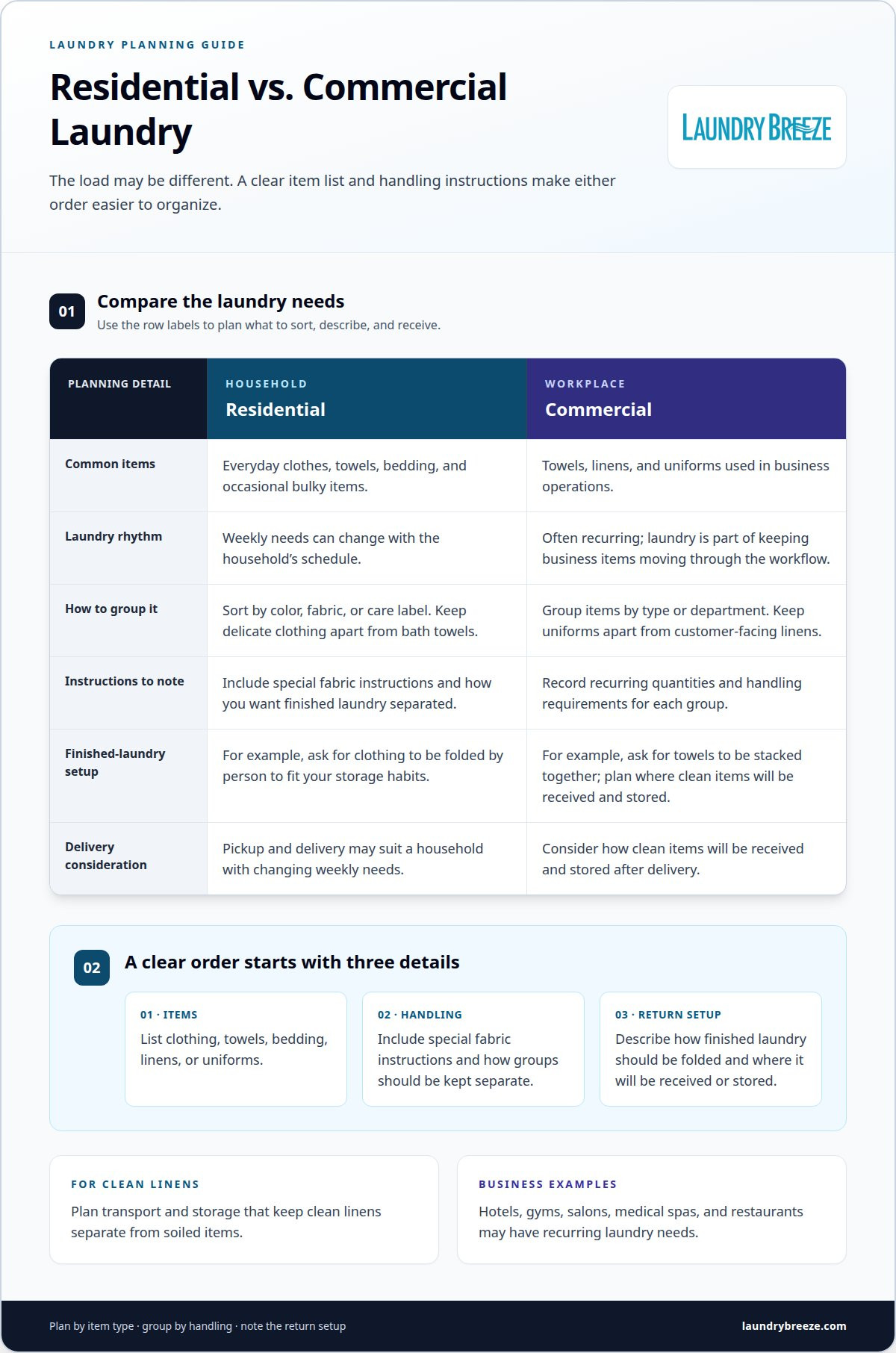
Household laundry often includes everyday clothes, towels, bedding, and occasional bulky items. Before arranging cleaning, separate garments by color, fabric, or care label. For example, keep delicate clothing apart from bath towels and note any specific instructions. The goal is clean, folded laundry that fits your household’s schedule and storage habits.
Commercial laundry has a different rhythm. Businesses may need towels, linens, and uniforms cleaned regularly, making laundry a recurring operational task. Hotels need fresh sheets for room turnover, while salons use clean towels throughout the day. Group items by type and keep track of recurring quantities to make orders and handling requirements easier to communicate. Laundry Breeze provides Commercial Laundry Service for businesses including hotels, gyms, salons, medical spas, and restaurants.
Residential and commercial orders can also differ in how laundry is organized. A household might send a bag of washable clothing, while a business may separate items by type or department. For example, keep uniforms apart from customer-facing linens. Separate bags or clear labels help identify each group. Plan where clean items will be received and stored after delivery.
Before arranging service, write down the practical details. Include the item types, any special fabric instructions, and the preferred way to separate finished laundry. A household might request clothing folded by person, while a workplace might need towels stacked together. These examples help describe the result you need without relying on vague instructions. For clean linens, plan transport and storage that keep them separate from soiled items.
- For a home: Sort garments, towels, and bedding by handling needs.
- For a business: Group towels, linens, or uniforms by use or department.
- For either: Note delivery details and how finished items should be folded.
Households and businesses across Los Angeles, Beverly Hills, West Hollywood, Culver City, Santa Monica, Venice, and Westwood can use these steps to prepare a clear order. A household with changing weekly needs may value pickup and delivery, while a business may focus on keeping recurring items moving through its workflow. Describe the load and how each group will be used so the service can handle and return it appropriately.
Customer experiences
Choose a laundry service by checking its cleaning process, customer support, delivery details, and instructions for special garments. Compare those details with your own needs, such as keeping work clothes separate from everyday clothing or arranging delivery around your routine.
To help avoid mix-ups, keep special-care garments separate and describe them clearly. Laundry Breeze never mixes one client’s laundry with another’s. If you notice a concern with an order, contact Laundry Breeze promptly and provide the order details and a description of the item. Photos and care labels can help explain the issue.
Before arranging service, confirm what your order includes and how to share garment-specific instructions. Wash & Fold includes washing, drying, and folding. Identify delicate items and explain the care you need rather than assuming staff will recognize your preference. Clear instructions give the team useful details to follow.
Customer service matters at each handoff. Consider how you can share instructions, ask about an order, and report a concern. A delivery service should explain the pickup and return arrangements in plain language. For example, know where to leave a laundry bag and where clean clothes will be returned. These small details help prevent missed handoffs.
- Process: Find out whether washing, drying, and folding are included.
- Instructions: Note garment care needs and how preferences are communicated.
- Delivery: Understand pickup and return arrangements for your address.
- Support: Look for a clear way to discuss order questions or concerns.
For a first order, choose familiar clothes, provide clear instructions, and review the returned items for cleanliness and folding. If a garment has a care label with specific directions, check whether your instructions were followed. This gives you a practical basis for deciding whether the service fits your routine.
For recurring orders, keep a short note of what worked. Record preferences such as separating work clothes, folding certain items, or keeping a garment aside for special handling. Share any change with customer support before the next pickup. That routine makes each order easier to explain and gives you a consistent way to assess the washing, drying, and delivery experience.
Detergent and fabric-softener preferences
Detergent preferences can affect how clothes smell and feel after washing. State whether you prefer scented or unscented washing, or have a fabric-softener preference. Specific instructions are more useful than “make it fresh,” which can mean different things to different people. For example, write, “Please wash these shirts without added fragrance.”
If you want unscented washing, state that preference when arranging service and identify the items it applies to. You might request it for all household clothing or only for pillowcases and sleepwear. Clear wording distinguishes a no-added-scent request from a preference for a lighter fragrance.
Describe fabric-softener preferences separately. Some people prefer softer-feeling towels, while others want to skip softener on particular garments. Name the item and instruction, such as “No softener on these athletic shirts.” Avoid vague requests like “use less,” which don’t clarify whether you mean less detergent, less fragrance, or no softener.
Care labels offer a practical starting point for fabric-care instructions. Before pickup and delivery, check each garment’s label and separate items with different requirements. For example, keep a blouse marked for dry cleaning apart from washable cotton clothing. A note on the bag can identify the garment and its care instruction, reducing confusion during sorting.
- Detergent: Specify scented, unscented, or another clear preference.
- Softener: State whether to use it or avoid it for named items.
- Fabric care: Separate garments with distinct label instructions.
- Sorting: Mark the bag or group that needs special handling.
A short preference list can make recurring orders easier to explain. Keep general instructions in one note and add exceptions by garment or group. For example, “Unscented wash for household clothing; no softener on towels” is clearer than a broad request to “be careful.” Update the note if your preferences change, and keep dry-clean-only pieces separate from regular laundry.
When describing detergent and fabric-care preferences, state the result you want rather than guessing which products or methods will be used. Identify clothes that need unscented washing, items that should avoid fabric softener, and garments whose labels call for dry cleaning. Those details give the service clear instructions and help you compare the finished order with your preferences.
For a first order, choose a small, familiar group of garments and provide one clear instruction for each preference. Separate scented-wash items from unscented items, if both are included, and label any special-care piece. Once you review the cleaned clothes, adjust your written directions for the next pickup and delivery. That simple step keeps preferences concrete without turning laundry instructions into a novel.
Wash, dry, and fold laundry service
A Wash and fold laundry service handles clothes through washing, drying, and folding, then returns them ready to put away. The process is straightforward: prepare the laundry, share care instructions, and choose drop-off or pickup and delivery.
Washing and Drying
Before handing over laundry, sort garments according to their care needs. Separate colors, delicate fabrics, and items with distinct care labels. A cotton T-shirt and a delicate blouse may need different handling, so clear separation helps communicate your preferences. Check pockets and point out visible stains rather than assuming every mark will receive special treatment.
Drying is a distinct part of the process. Fabric type and care labels help determine which garments need different handling. A lightweight blouse, for example, shouldn’t be treated like a thick bath towel. Identify anything you want handled differently and keep those pieces together or clearly labeled.
Consider the finished result as well as getting clothes clean. Everyday shirts may suit standard drying, while delicate items can have specific care-label instructions. Check that the handling matches the garments you’re sending. Keep items that require dry cleaning separate from regular wash loads.
Folding and Service Workflow
Folding makes clean laundry easier to store and use. You can request a practical arrangement, such as folding shirts together or keeping household members’ clothes apart. A simple instruction like “keep these work shirts together” gives the team a clear example to follow.
The process has a few simple steps: gather washable clothes, add care notes, arrange pickup or drop-off, and receive clean, folded laundry. Keep special instructions with the relevant garments. For instance, attach a note to a delicate top rather than placing one general instruction on a mixed bag.
Pickup and delivery can save a trip to the laundromat, while drop-off may suit someone already nearby. Choose the option that fits your routine. Before handing over a bag, identify which items belong in the wash and anything requiring separate care. That helps prevent confusion from the start.
Laundry Breeze: Pickup & Delivery Laundry Service
Laundry Breeze offers pickup and delivery for household laundry that needs washing, drying, and folding without an extra trip. Use this option when getting laundry to and from a laundromat doesn’t fit your routine. Businesses with recurring towels, linens, or uniforms can turn to Commercial Laundry Service, while Comforter & Pillow Laundry Service handles bulky bedding needs.
For everyday clothing, Laundry Breeze’s Wash & Fold Service includes washing, drying, and folding. Separate items that need special care and include clear instructions with your order. The service is available by drop-off or pickup and delivery for households and businesses in Los Angeles and nearby areas, including Beverly Hills, West Hollywood, Culver City, Santa Monica, Venice, and Westwood.
Make Laundry Easier to Fit Into Your Routine
Your next step is to match the service to the laundry task you want off your plate. A wash and fold laundry service can suit everyday clothing, while bulky bedding or recurring workplace loads may call for a different approach. Think about what takes the most time, then choose the service that addresses that specific need.
Laundry Breeze offers Pickup & Delivery Laundry Service for customers who want laundry collected and returned, Commercial Laundry Service for business laundry, and Comforter & Pillow Laundry Service for bulky bedding. Choose the option that fits your needs, whether you’re managing household clothes, business linens, or bedding that’s difficult to handle at home.
Frequently Asked Questions
Can I put anything I want to wash in the bag?
No. Use the bag for laundry items suited to the selected service, and leave unrelated objects out. Check pockets in jackets, work pants, and children’s clothes. Set aside garments marked for dry cleaning instead of mixing them with regular wash items. If a piece needs special care, identify it clearly. A quick pocket check also keeps keys from joining the laundry on an unexpected spin.
How do I place my first order?
Choose pickup and delivery or drop-off Wash & Fold, then prepare your items and arrange service. For pickup, provide clear collection and return details; for drop-off, bring the laundry to the facility. Laundry Breeze serves Los Angeles, Beverly Hills, West Hollywood, Culver City, Santa Monica, Venice, and Westwood. Choose the option that suits your routine and include essential care instructions.
How do I prepare my laundry?
Empty pockets, close zippers, and gather small items before packing. Separate garments with different care instructions, then add a short note for special requests. For example, mark a delicate blouse and keep it apart from sturdy everyday clothes. This gives the team a clear reference and helps you remember which pieces need attention. Your future self will appreciate not having to solve a laundry mystery.
How will I know the total cost?
The total depends on the selected service and the laundry handled. Per-pound orders are weighed, and the applicable minimum and surcharge affect the final amount. Bulky items use individual pricing rather than the standard per-pound method. To understand the estimate, identify your service and separate bedding or other individually priced pieces from regular clothing. That gives the order a clearer starting point than “one very full bag.”
Is there a minimum order size for Wash & Fold?
Yes, Wash & Fold has a minimum order requirement. Identify whether you’re arranging drop-off or pickup and delivery, since the applicable order terms depend on the service selected. If your bag contains just a few items, adding other washable garments may make the order more practical. Keep special-care pieces separate so they don’t get lost in a pile of everyday laundry.
What items are accepted or excluded by wash and fold services?
A Wash and fold laundry service handles regular laundry suited to washing, drying, and folding. Comforters and pillows are handled through a separate service, while dry-clean-only garments belong in Dry Cleaning Service. Keep bedding and items with distinct care labels apart from everyday clothing. Sorting by service type helps direct each item to the right kind of garment care, rather than hoping every fabric enjoys the same routine.
Do wash and fold services charge minimum order, pickup, delivery, or rush fees?
Per-pound orders have an applicable minimum and fuel surcharge. Free pickup and delivery require meeting the order minimum that applies to that service. Drop-off and pickup orders can have different terms, so consider the service you’re choosing before estimating the total. Rush handling is a separate consideration, not something to assume comes with standard processing. The laundry basket may be mysterious, but the order details shouldn’t be.
How long does wash and fold laundry service take?
The advertised four-minute figure refers to the customer’s Wash & Fold drop-off and pickup time, not the full laundry process. Washing, drying, and folding take place as part of the service. If you choose pickup and delivery, arrange your order around the clothes you’ll need for work or daily activities. Keep timing in mind when preparing a garment needed for a specific occasion.
To see links to services mentioned in this article, please click
https://www.laundrybreeze.com


