

What if the best way to wash white clothes professionally has less to do with hotter water or stronger bleach and more to do with matching care to the fabric and soil? If your whites have started looking gray, yellow, or tired, sorting, detergent, and temperature may all be worth checking. Residue can contribute to dullness, while harsh treatment may wear down fibers, so a one-setting-fits-all approach isn’t always the answer.
Professional laundry care typically starts by separating garments according to color, fabric, care instructions, and soil level. From there, the cleaning and drying methods should suit the items in the load. This guide explains those practical steps, common home-washing mistakes to avoid, and how to approach stains without rushing into bleach. You’ll also learn when a garment’s care label calls for dry cleaning.
If home care isn’t convenient, Laundry Breeze serves Los Angeles and nearby communities with pickup and delivery laundry service, wash and fold for drop-off, and dry cleaning for garments whose care labels call for it. Use the guidance below to decide what you can wash at home and when a laundry service may fit your routine.
Key Takeaways
- The best way to wash white clothes professionally is to match care to each garment’s fabric, label, and soil, rather than relying on hotter water or stronger bleach.
- Sorting whites carefully and choosing suitable washing and drying methods can help limit dullness and protect fabric.
- For washable items with clear care instructions, home laundering may be practical; delicate or complex-care garments may need more attention.
- Before handing clothes over, check care labels, empty pockets, separate items with stains, and point out any special concerns.
- In Los Angeles, Laundry Breeze offers residential pickup and delivery, wash and fold, and dry cleaning for garments whose labels call for it.
Why white clothes lose brightness and what professional laundry care changes
The best way to wash white clothes professionally is to match the cleaning approach to the garment, not simply choose a stronger wash setting. A sturdy cotton T-shirt and a delicate white blouse may need different care because fabric, construction, soil, and the care label all affect what’s suitable. Careful handling starts with those details, rather than treating every white item as if it can tolerate the same temperature, detergent, or bleach.
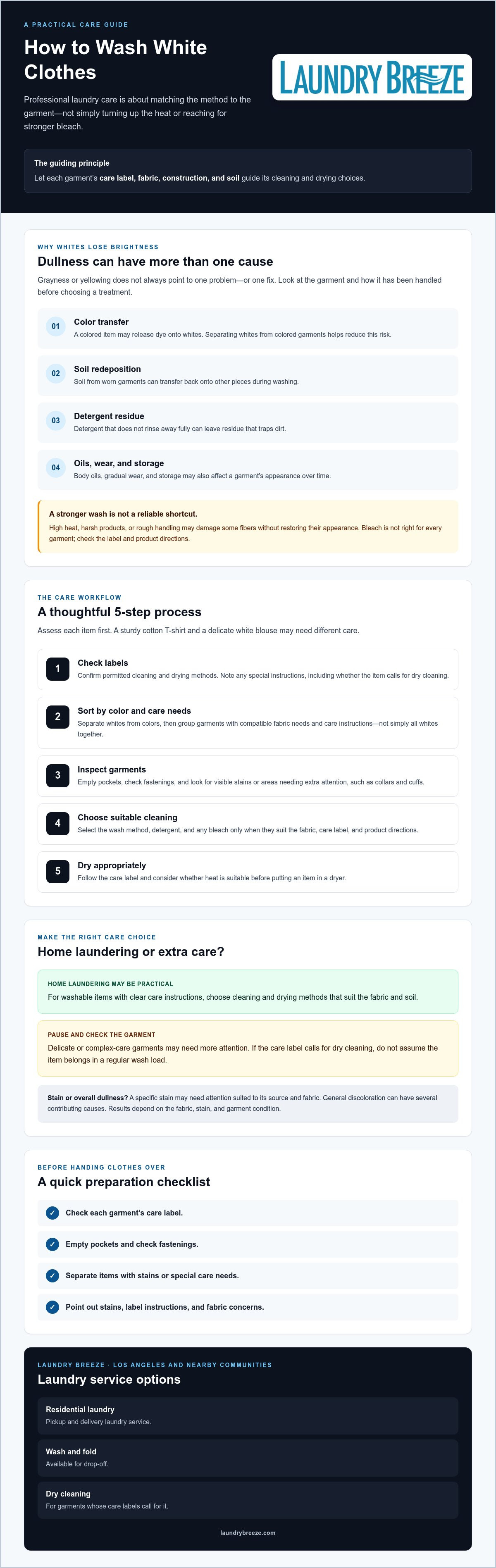
Whites can become dull for several reasons. A colored item may release dye, soil from worn garments may redeposit on other pieces, and detergent that doesn’t rinse away fully can leave residue that traps dirt. Body oils and gradual wear can also change a garment’s appearance. Storage may contribute to discoloration, too, so yellowing doesn’t always point to one cause or one fix.
What can make white clothes look gray or yellow?
Overall discoloration is different from a specific stain, such as a food mark or a spot of makeup. A stain may need attention suited to its source and the fabric, while general dullness can have several contributing causes. More aggressive washing isn’t a reliable shortcut. High heat, harsh products, or rough handling may damage some fibers without restoring their appearance. Bleach works through a chemical process of bleaching, but whether it’s appropriate depends on the garment and product directions.
What does professional laundry care mean for white garments?
Careful laundry handling generally begins by separating items according to color and care needs, then choosing a method suited to the garment and its soil. Sorting whites by color and care needs supports more consistent cleaning while reducing avoidable color transfer and mismatched treatment. It’s a guiding principle, not a promise that every stain will come out or every yellowed item can be restored. Results depend on the fabric, stain, and garment condition.
Care labels still matter when you use a laundry service. They indicate which cleaning methods the garment is intended to tolerate, so share the instructions when you hand the item over. If the label calls for dry cleaning, don’t assume the garment belongs in a regular wash load. When you’re unsure, point out the label and any stains or fabric concerns before cleaning begins.
How professionals wash white clothes: from sorting to drying
A careful white-laundry workflow involves a series of decisions, not one setting applied to every garment. A professional facility may assess items individually. At home, use the same principle: let the care label, fabric, construction, and soil guide each choice. The American Cleaning Institute also outlines practical laundry basics, including sorting and drying.
How should whites be sorted and checked before washing?
Start with the label, then separate whites from colored items to help reduce the risk of dye transfer. Group garments with compatible fabric needs and care instructions instead of automatically washing all whites together. Before washing, check pockets, fastenings, and visible stains. Look for marks around areas that commonly collect soil, such as collars or cuffs, and set aside items that need particular attention. A stain is easier to identify before it goes through a wash and dry cycle.
A general workflow looks like this:
- 1. Check labels. Confirm the permitted cleaning and drying methods, and note any special instructions.
- 2. Sort items. Separate whites from colors, then group garments by compatible fabric and care needs.
- 3. Inspect garments. Empty pockets, check closures, and identify visible stains or areas needing extra attention.
- 4. Select care. Choose a wash method, detergent, and any bleach only when they suit the fabric and label.
- 5. Dry appropriately. Follow the label and consider whether heat is suitable before putting an item in a dryer.
How should washing and drying choices protect white fabrics?
There’s no single water temperature that suits every white garment. Follow the care label, since delicate fibers, blends, and sturdy fabrics can have different needs. Detergent and bleach choices also need to fit the garment and product directions. If a stain remains after washing, don’t assume more heat will solve it. Heat may be unsuitable for the fabric or unresolved mark, so check the label before drying. Air drying may be a sensible option when the label advises against dryer heat.
Quick checklist: read the label, separate by color and care needs, inspect the garment, choose compatible cleaning products, then dry according to instructions.
Home washing or professional laundry: which is better for white clothes?
Neither option is automatically better for every white garment. Home washing can work well for everyday items with clear care labels, while a laundry service may be more convenient when loads pile up or garment instructions feel complicated. Professional laundry is a care option, not a guaranteed whitening treatment. For perspective, the CDC’s guidelines for handling textiles address contaminated laundry in healthcare settings, so they shouldn’t be treated as a household washing recipe.
| Factor | Home washing | Professional laundry |
|---|---|---|
| Convenience | You manage sorting, washing, and drying. | A service can reduce the laundry work you handle. |
| Garment quantity | Practical when loads are manageable. | Worth considering when routine laundry becomes burdensome. |
| Care-label complexity | Works best when instructions are clear and you can follow them. | Ask about instructions and concerns before handing over delicate items. |
| Your involvement | You choose the settings and products. | You still need to share garment-specific information and preferences. |
When is washing white clothes at home a practical choice?
Choose home care for ordinary washable items when you can separate colors, follow the label, and use suitable laundry products. Check the label before changing the water temperature or adding bleach. If you spot a stain, attend to it promptly and avoid unverified chemical mixtures. For stain-specific advice, consult a trusted guide to washing clothes and removing stains rather than treating every mark the same way. If a garment has unclear instructions or delicate construction, set it aside until you know what care is appropriate.
When should you consider professional laundry care?
A service may make sense when household laundry takes too much time, the volume becomes difficult to manage, or you’re unsure how to handle a garment’s care instructions. Before handing over a delicate item, point out its label and any concerns, and ask how those instructions will be considered. Garments marked for dry cleaning should go to a dry-cleaning service, not into a standard wash-and-fold load.
How to prepare white clothes for professional laundry service
A little preparation helps a laundry service understand what you’re sending and which care details matter to you. It won’t guarantee stain removal or restore every discolored garment, but clear notes can help prevent important instructions from being overlooked. Before packing white clothes, check each label and set aside anything that needs a different type of care.
What should you tell a laundry service about white garments?
Use this quick checklist before drop-off or pickup:
- Check care labels. Look for special washing or drying instructions, and set aside garments labeled for dry cleaning.
- Empty every pocket. Check for tissues, receipts, or other items that could affect the load.
- Separate problem items. Keep stained, especially delicate, or unusually soiled pieces apart so you can identify them clearly.
- Point out stains. Describe what caused a visible mark, if you know, and mention any treatment you’ve already tried.
- Share special concerns. Flag delicate construction, a request to keep an item separate, or other care preferences.
Be specific but realistic. For example, say where a stain is and what you know about it rather than asking for a guaranteed result. If you’re unsure how a garment should be cleaned, ask the provider about its care requirements before sending it. A label or brief explanation can clarify your preference, but the appropriate method still depends on the item.
Which Laundry Breeze service fits household white laundry?
For residential customers in Los Angeles and nearby communities, pickup and delivery laundry service is an option for routine household laundry. If you prefer to bring your laundry to the facility, Laundry Breeze also offers wash and fold. These options are for washable laundry, so don’t assume every white garment belongs in the same service. Set aside items whose labels call for dry cleaning and direct them to an appropriate dry-cleaning service.
The best way to wash white clothes professionally starts with matching the service to the garment and communicating what you’ve noticed. Share the care label, stain details, and any concerns before the laundry is handled. That gives the provider useful context without assuming every fabric or stain can be treated the same way.
Keep white clothes looking their best with Laundry Breeze in Los Angeles
White garments don’t all need the same care. Check each label, sort laundry by color and compatible care needs, and choose home washing or a laundry service based on the garment and your routine. A service can make household laundry more convenient, but it isn’t a guaranteed whitening treatment. For delicate items or clothes with special instructions, share those details before cleaning.
What household laundry can Laundry Breeze help with?
Laundry Breeze serves residential customers with pickup and delivery laundry service, an option for routine household loads. Customers who prefer bringing their laundry to the facility can choose wash and fold. These options suit washable laundry, but a white garment marked for dry cleaning should be directed to an appropriate dry-cleaning service instead.
Before handing over clothes, point out stains, previous treatment, delicate construction, and any label instructions or preferences you want the service to know. Clear information helps the provider understand your concerns, though it can’t promise a particular cleaning or whitening result. You can review the pickup and delivery laundry service to see whether it fits your household routine.
How can Los Angeles customers take the next step?
Laundry Breeze serves Los Angeles and nearby communities, including Beverly Hills, West Hollywood, Culver City, Santa Monica, Venice, and Westwood. Coverage can depend on your exact address, so check service availability before arranging laundry care. It’s also useful to review current ordering details directly, especially if you have questions about a garment’s care label or whether it’s suitable for wash and fold.
The best way to wash white clothes professionally is to choose care that fits the fabric and follow the label, whether you wash at home or use a service. With those basics in mind, you can pick the option that makes routine laundry easier without assuming every white garment needs the same treatment.
Make white-clothes care easier with the right next step
The best way to wash white clothes professionally is to choose care based on each garment’s label, fabric, and condition, not simply reach for hotter water or stronger bleach. Sorting whites thoughtfully and sharing stain or fabric concerns can help reduce avoidable care mistakes. For ordinary washable pieces with clear instructions, home laundry may be enough. A laundry service is another option when routine loads take too much time or garment care feels uncertain.
Laundry Breeze offers residential pickup and delivery laundry service in Los Angeles and nearby communities, including Beverly Hills, West Hollywood, Culver City, Santa Monica, Venice, and Westwood. Address coverage can vary, so check availability for your location before arranging service. Choose the laundry routine that feels manageable, and set aside garments whose labels call for dry cleaning.
Frequently Asked Questions
What is the best way to wash white clothes professionally?
The best way to wash white clothes professionally is to match the cleaning method to each garment’s care label, fabric, construction, and soil. A careful process generally includes separating whites from colors, checking for stains, and choosing suitable washing and drying methods. This doesn’t guarantee every stain will come out or restore yellowed fabric. Share any concerns or previous stain treatment with the laundry service so they understand what the garment needs.
Can white clothes be washed with colored clothes?
It’s safer to wash whites separately from colored garments, especially if colors may bleed or the items are new. Dye transfer can leave whites looking tinted or uneven. Also sort by compatible care instructions, since a white delicate blouse may need different handling from sturdy white towels. If you’re unsure whether items can share a load, check their labels and separate them when their colors or care needs differ.
Should white clothes be washed in hot water?
Not always. Follow the garment’s care label rather than choosing hot water simply because an item is white. Temperature needs can vary with fabric and construction, and unsuitable heat may damage a garment or affect a stain. Check the label before changing the wash setting, and be cautious about drying with heat if a stain remains or the garment’s instructions advise against it.
Is bleach safe for all white clothes?
No. White fabric isn’t automatically bleach-safe. Check the care label and the bleach product’s directions before using it, since bleach may be unsuitable for some fibers, finishes, or garment construction. Don’t assume that using more will brighten fabric more effectively. If the label is unclear or the item is delicate, ask a laundry professional about appropriate care before treating the garment.
Can a professional laundry service remove yellowing from white clothes?
Sometimes discoloration may improve with suitable care, but no service can promise that every yellowed garment will return to its original appearance. Yellowing can have different causes, and results depend on the fabric, garment condition, and what caused the discoloration. Point out the affected areas and share any treatment history before service. Avoid applying stronger products or heat without checking whether they’re appropriate for the garment.
Is professional laundry better than washing white clothes at home?
Neither option is always better. Home washing can suit ordinary washable items when the labels are clear and you can sort and care for them appropriately. A laundry service may be more convenient when household loads become burdensome or care instructions are difficult to manage. Laundry Breeze serves customers in Los Angeles, Beverly Hills, West Hollywood, Culver City, Santa Monica, Venice, and Westwood. Confirm address availability and current service details directly.
Should white clothes marked dry clean only go in a regular wash?
No. Don’t put a garment labeled dry clean only into a regular wash load. Follow its care label and direct it to a dry-cleaning service rather than assuming that its white color makes it suitable for wash and fold. If you’re uncertain about the label or garment, ask the service provider before handing it over. Laundry Breeze offers dry cleaning for garments whose care needs call for it.
To see links to services mentioned in this article, please click
https://www.laundrybreeze.com


