

Wet sand is stubborn, but it’s easier to remove once beach clothes and towels have dried. For getting sand out of clothes and towels in Santa Monica, laundry professionals start by loosening sand with careful shaking, then use fabric-softener options or a no-heat dryer cycle when appropriate.
It’s frustrating when sand follows you home in towels, blankets, bags, and swimwear. This guide explains how professionals handle sandy beach laundry while taking care with different fabrics and items.
You’ll learn why drying and shaking come first, when fabric softener may help limit sticking, and how a no-heat dryer cycle can loosen remaining grains before washing. The right approach removes sand without treating every beach item the same way.
Key Takeaways
- Let sandy beach items dry, then shake them separately to loosen grains before washing.
- Fabric-softener treatment may help reduce how much sand clings to beach gear.
- A 10-minute no-heat dryer cycle can help dislodge stubborn sand before laundering.
- For sandy towels, a cold-water soak can help separate grains from the fabric.
- Careful pre-wash handling helps keep loose sand out of laundry equipment and drains.
How laundry professionals remove sand from towels, blankets, bags, and clothing
For getting sand out of clothes and towels in Santa Monica, assess each item separately to avoid unsuitable handling. Check its construction, care label, and condition before choosing how to prepare it for laundry.
- Sort beach laundry by item type and care needs before treatment. A towel, lined beach bag, swimsuit, and blanket have different constructions. Separate items that need different handling instead of putting everything through one routine. Pay attention to fabric, lining, closures, and other details that affect cleaning.
Use care labels to identify delicate pieces and items with special construction. A garment marked for gentle care should not automatically receive the same treatment as a sturdy cotton towel. Distinguish washable fabric covers from beach gear with rigid frames or foam, which should be spot-cleaned rather than machine-washed.
- Inspect each item for places that can hold grit. A blanket may have bound edges, a beach bag may have an inner lining, and clothing may include pockets or layered panels. Check these features before choosing a preparation method. Empty bags completely so small beach items don’t end up in the laundry.
Keep clean garments apart from damp or visibly sandy gear while sorting. Clean clothes placed beside a sandy swimsuit can pick up grit before washing begins. Separation is especially useful when a beach bag contains towels, clothes, and accessories together. Keep each category distinct throughout cleaning.
- Prepare each item according to its material and design, not simply its use at the beach. A fabric beach blanket can be assessed for laundering, while a chair cover attached to a rigid frame needs a different approach. Use the care label and item construction to decide whether the fabric is machine-washable or needs spot treatment.
Before washing, remove loose contents and accessories from bags and garments. Check closures, detachable straps, and delicate trim to prevent snagging or tangling during laundering. This careful preparation supports getting sand out of clothes and towels in Santa Monica while respecting the differences between beach clothing, towels, blankets, and bags.
How laundry professionals use fabric softener to help prevent sand from sticking
Fabric softener may help limit how much sand clings to suitable beach gear, but it won’t remove grains already trapped in fabric. Consider treating appropriate items before beach use, then handle sandy laundry separately.
- Check the item’s care label before considering fabric softener. A tote bag, for example, may be treated before a beach trip if its care instructions allow it. Check both the product label and the bag’s instructions to avoid using a laundry product on material that may not tolerate it.
- Apply fabric softener only as directed for the specific item. Because fabric softener repels water, treating a suitable tote before beach use may reduce how much sand sticks. It’s a preventive option, not a way to clean sand already trapped in seams or corners.
- Use this treatment only for suitable beach gear rather than assuming every fabric needs it. A tote and a towel serve different purposes, and their care instructions may differ. Consider the material and how the item is used. Don’t automatically treat a swimsuit, towel, or blanket just because it went to the beach.
- After the beach, keep treated gear separate from clean laundry. Empty a tote and shake out loose sand before placing clean garments inside. Fabric softener may limit sticking, but it can’t prevent every grain from entering folds or seams. Inspect the item to keep remaining sand from transferring to other clothes or the washer.
- Use fabric softener as one part of a careful laundry process, not as a substitute for sand removal. Professionals still remove loose grains before washing and follow the care label for each item. This is especially useful for beach bags and other gear that can carry sand back to towels and clothing. For help with laundry after a beach day, explore professional laundry care.
How laundry professionals use a no-heat dryer cycle to loosen sand
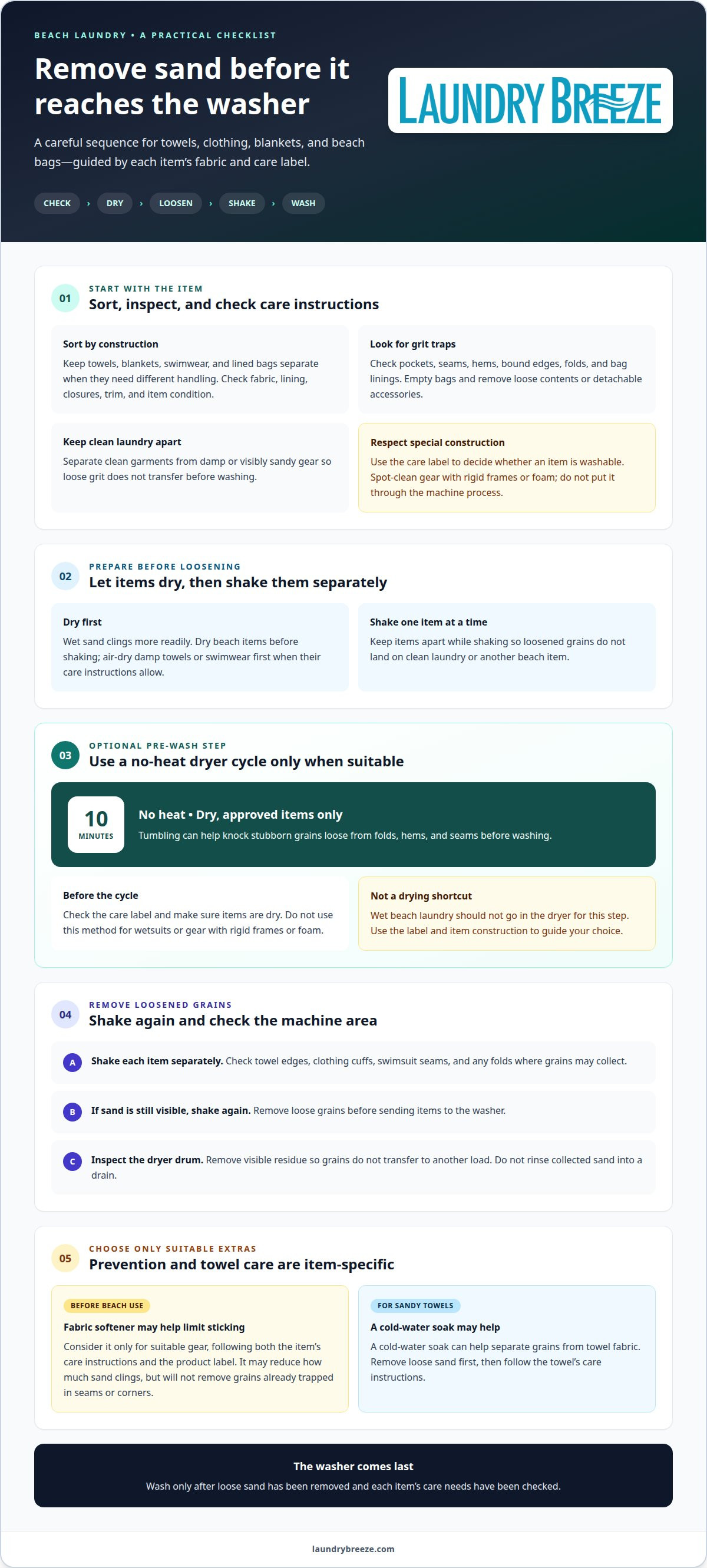
A no-heat dryer cycle can help dislodge stubborn sand before washing. Professionals use it for suitable, dry beach laundry, then remove the loosened grains before loading the washer.
- Check the care label before placing a beach item in a dryer. A dry towel or washable garment may suit this method, but an item that cannot be tumble-dried should stay out. Don’t machine-dry wetsuits or put beach gear with rigid frames or foam in the dryer. Spot-clean that gear instead, and let the label and construction guide your decision.
- Make sure items are dry before starting the cycle. Wet sand clings to fabric more readily, while dry sand is easier to loosen and remove. If a swimsuit or towel is damp, air-dry it first when the care instructions allow. Don’t use the dryer as a shortcut to dry wet beach laundry.
- Run the suitable items on a no-heat dryer cycle for 10 minutes. The tumbling action helps knock stubborn grains from folds, hems, and seams without adding heat. This is a pre-wash step, not the final cleaning stage. A towel with sand deep in its pile may still need careful shaking before washing.
- Take items out carefully and shake them separately to release loosened sand. Check towel edges, clothing cuffs, and swimsuit seams, where grains can collect. Keep items apart from clean laundry. If sand is still visible, shake carefully again rather than sending loose grains directly into the washer.
- Remove residue from the dryer area before processing another load. Sand shaken free during tumbling may remain in the drum, so inspect the machine and remove visible residue. Don’t rinse collected sand into a drain, where it can build up. A clean drum helps keep leftover grains from transferring to the next load.
- Wash the items only after the loose sand has been removed. Follow each garment’s care label for the wash cycle and drying method; one setting does not suit every towel, swimsuit, or beach blanket. The no-heat cycle loosens sand, but it does not replace washing. Professionals check seams and folds again after laundering for any remaining grit.
How can a laundry service get sand out of towels effectively?
For towels, remove loose grains before washing and follow the care label. A cold-water soak and suitable wash cycle can help address sand caught deeper in the fabric.
- Separate sandy towels from other laundry before handling them. Shake each towel away from clean garments, opening folds and checking hems. Sand can remain trapped in thick terry loops even when the surface looks clear. Keeping towels separate also prevents grains from transferring to clothing during preparation.
- Check the towel’s label and assess how wet and sandy it is. A damp towel may hold grains more firmly than a dry one, so air-drying can make shaking more effective. Check seams and corners, where sand often collects. Remove as much loose grit as possible before adding water or loading the washer.
- Soak wet, sandy towels in cold water for 10 minutes. This can help separate grains from the fabric before washing. Water alone isn’t enough to remove all beach sand, so professionals combine soaking with shaking and a proper wash. Keep the soak step appropriate to the towel’s care instructions.
- Choose a cool wash above 30°C and a gentle delicates cycle when suitable for the towel. Follow its label rather than applying one setting to every fabric. A professional considers the towel’s material and construction when selecting the cycle. This helps clean the fabric while avoiding an unsuitable wash setting.
- Use detergent suited to the towel and its care instructions. Washing cleans the fabric after loose grains are removed; it shouldn’t be the only sand-removal step. Avoid putting towels heavily coated in sand directly into the washer, where grains may remain or collect around the equipment.
- Check the towel after washing, especially along hems and thick folds. If grit remains, remove it before the final drying. Dry the towel completely according to its care label. Checking at this stage helps catch sand missed during preparation, before the towel returns to clean linens.
- Clear visible sand from the washer and surrounding area after processing. Sand can build up in drains and contribute to plumbing problems, so don’t rinse it away. Remove residue from the laundry area, then feel along the towel’s seams and edges for remaining grains.
Should a laundry professional shake or brush sandy clothes and towels before washing?
Shake sandy items separately before washing. Dry sand is easier to remove than wet sand, so air-dry damp pieces first when the care label allows. Brushing may help with visible surface grit, but let the item’s care instructions and construction guide your approach.
- Separate beach clothes and towels from other laundry before removing sand. Shake each item away from clean garments so loosened grains don’t transfer. Open towels fully and check shirts or swimsuits around their hems and seams. Keep shoes and bags apart from fabric items during this step.
- Air-dry damp items before shaking when the care label allows. Don’t put wet, sandy clothes straight into the washer: sand may remain in the fabric and spread inside the machine. Hang items outside when possible, or use a suitable drying area. Drying helps grains fall away instead of clinging to wet fibers.
- Shake towels, blankets, and clothing one at a time. Open folds, turn garments inside out where practical, and shake both sides. Check thick towel edges and corners, and swimsuit leg openings and straps. Handling items separately helps prevent sand from one piece settling into another.
- Use a brush only for visible surface sand on suitable items. Brushing may not reach grains caught inside towel loops or swimsuit seams, so shaking and inspection still matter. Avoid harsh scrubbing, especially on delicate swimwear or fabric with exposed stitching. Follow the care instructions rather than applying the same pressure to every textile.
- Inspect each item after shaking and before washing. Feel along towel hems, clothing cuffs, and swimsuit seams for remaining grit. If visible sand remains, shake again or use a no-heat dryer cycle for suitable items. Remove loose grains first rather than relying on the washer to carry them away.
- Keep collected sand out of laundry equipment and drains. Sand can build up in drains and cause plumbing problems, while grains entering a washer may remain in its drum, filter, or pipes. After handling sandy laundry, remove residue from the work area instead of rinsing it down a drain. This helps keep leftover grit from reaching the next load.
Laundry Breeze
Laundry Breeze can take beach laundry off your hands when towels, clothes, or blankets need professional washing. Its Wash & Fold Service handles everyday laundry, while Pickup & Delivery Service offers a convenient option for residential loads. Businesses managing sandy towels and linens can use Commercial Laundry for help with their laundry needs.
Before sending items, separate beach gear from clean clothes and point out heavily sandy pieces or delicate care instructions. This helps account for different fabrics and items during laundry. Residents in Santa Monica can use the service for beach-day laundry without turning the washer and home into a sandpit.
Make Your Next Beach-Day Reset Easier
After a Santa Monica beach day, decide whether sandy laundry is a small household load or part of a larger routine. Laundry Breeze offers Pickup & Delivery Service for convenient laundry care, Commercial Laundry for businesses handling towels and linens, and Comforter & Pillow Laundry Service for bulky household items. Choose the service that fits the items waiting in your laundry basket.
For residents balancing beach plans with laundry, getting sand out of clothes and towels in Santa Monica can be one less chore to manage alone. When beach gear and everyday laundry pile up, a professional laundry service is a practical next step.
Enjoy your time by the water, and let laundry fit more easily into your routine.
Frequently Asked Questions
How does a laundry service remove sand from clothes before washing?
A laundry service sorts sandy garments by fabric and construction, handling delicate pieces separately from sturdy towels. A swimsuit with grit at the seams, for example, needs a different touch than a cotton beach towel. Professionals check pockets, hems, and folds, remove loose sand, and follow each item’s care instructions before washing. Mention heavily sandy areas to highlight spots that need extra attention.
To see links to services mentioned in this article, please click
https://www.laundrybreeze.com


