

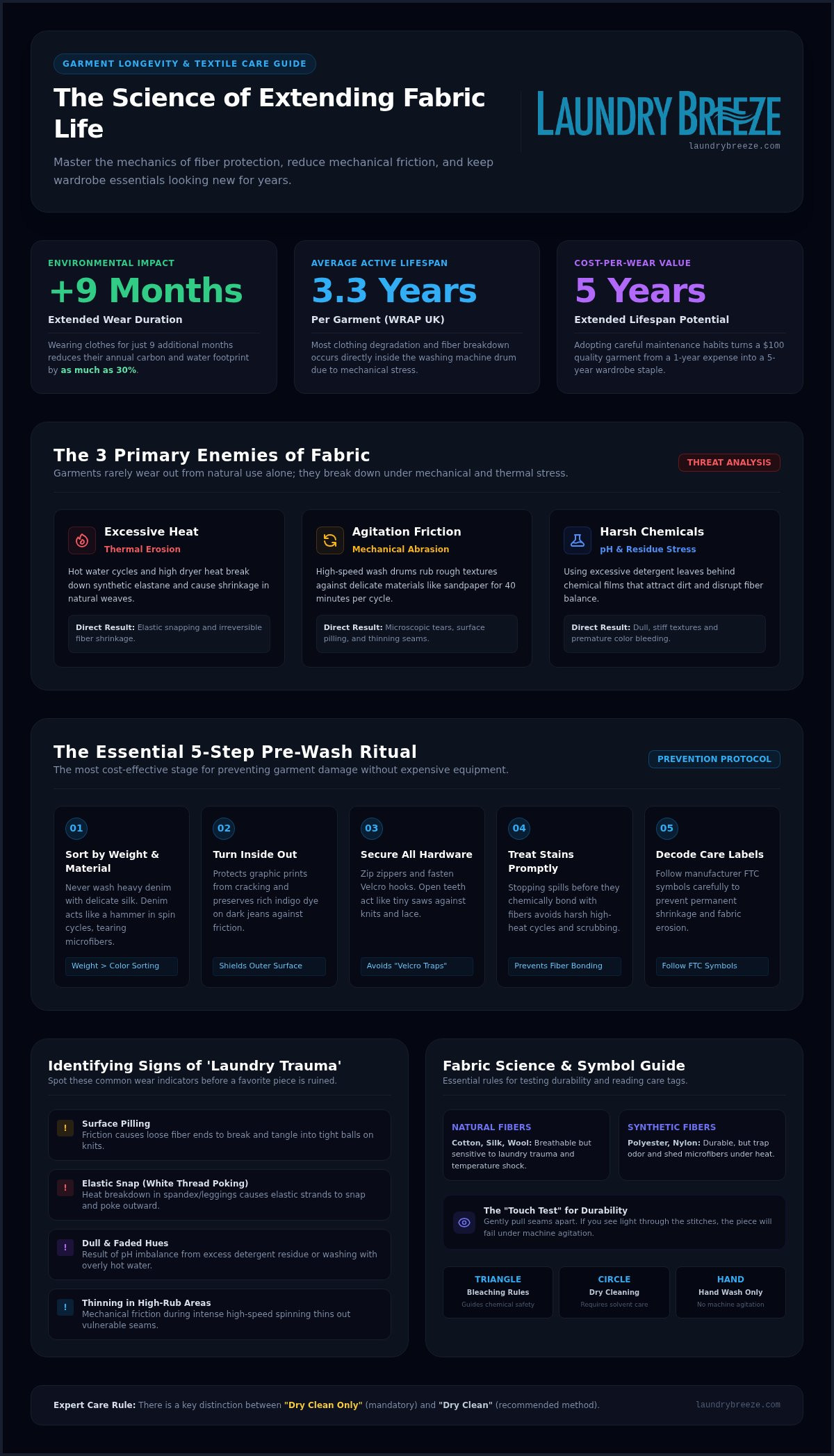
Did you know that simply extending the life of your clothes by nine additional months can reduce their annual carbon and water footprint by as much as 30%? It's a powerful statistic, yet most of us feel the sting when a favorite cashmere sweater starts pilling after just two washes or expensive yoga leggings lose their elasticity. You shouldn't have to choose between clean laundry and ruined fabrics.
We know that the laundry mountain taking over your home in West Hollywood or Santa Monica is stressful enough without the fear of damaging your wardrobe. In this guide, we'll show you how to keep your favorite outfits looking brand new for years. You'll discover the mechanics of fabric friction, the essential five-step pre-wash ritual, and why professional wet cleaning is the gold standard for delicate items. We're diving into the expert techniques that preserve every fiber, from the science of cold-water enzymes to the benefits of high-efficiency commercial care.
Key Takeaways
- Learn the science-backed secrets to extending the life of your clothes by minimizing the three main enemies of fabric: heat, friction, and harsh chemicals.
- Master the 5-step pre-wash ritual, including why turning garments inside out and securing hardware is vital for protecting delicate knits and graphic tees.
- Discover how modern detergents and cold-water cycles prevent shrinkage and dye bleeding while significantly reducing your environmental impact.
- Understand why bulky bedding and high-maintenance fabrics like cashmere require specialized care that home machines often fail to provide.
- Find out how professional-grade equipment and expert attendants ensure a deeper clean with less mechanical wear on your favorite wardrobe pieces.
Why Your Favorite Outfits Wear Out (And How to Stop It)
Your favorite clothes don't just "get old" through natural use. They're usually victims of three specific enemies: heat, friction, and harsh chemicals. When we talk about extending the life of your clothes, we're really talking about garment longevity. This is the careful balance of maintaining fiber integrity and color retention over hundreds of wears. Most people ignore the mechanical stress of high-speed agitation. Think of it like sandpaper rubbing against your delicate fabrics for forty minutes every week. By adopting a "cost-per-wear" mindset, you'll see that spending a few minutes on better maintenance pays for itself. It makes a $100 sweater last five years instead of one.
According to research by WRAP UK, the average garment has an active lifespan of only 3.3 years. Most of that wear happens inside the washing machine drum. To prevent accidental damage, always check the international laundry care symbols on the tag before the first wash. These guides are your first line of defense against thermal and chemical erosion.
The Hidden Cost of Fast Fashion vs. Quality Fibers
Synthetic fibers like polyester are durable, but they trap odors and shed microfibers. Natural fibers like cotton, silk, and wool are breathable but highly sensitive to "laundry trauma." Even the best washing technique can't save a garment with low-quality stitching or weak seams. When you're shopping in Santa Monica or Beverly Hills, use the "touch test" to identify durability. Gently pull on a seam; if you see light through the stitches, it won't survive many cycles. High-quality fibers should feel substantial and snap back into shape immediately after being stretched.
Identifying the Signs of 'Laundry Trauma'
The Pre-Wash Ritual: 5 Steps to Prevent Damage
Most laundry damage happens because of poor preparation. This stage is the most effective way of extending the life of your clothes without buying expensive equipment. You need to view your laundry as a collection of different materials rather than one big pile. Sorting by color is a good start, but sorting by weight is what actually prevents fiber breakdown. Heavy denim jeans and delicate silk tops should never be roommates in the wash drum. The weight of the denim acts like a hammer against the silk during the spin cycle, causing microscopic tears in the fabric.
Turning your garments inside out is another essential step. This simple habit is the best way to save graphic tees from cracking and keep dark denim from losing its deep indigo hue. It ensures that the "good" side of the fabric stays protected from the friction of the machine and other clothes. Finally, treat stains immediately. If you let a spill sit, it bonds with the fibers. By stopping stains before they set, you avoid the harsh scrubbing or high-heat cycles that ruin fibers, further extending the life of your clothes.
Decoding Care Labels Like a Professional
Hardware Protection: Zippers, Velcro, and Hooks
Cold Water and Gentle Cycles: The Science of Preservation
Many LA residents believe hot water is the only way to kill bacteria and remove stains. This is a myth. Modern laundry detergents are engineered with multi-enzyme complexes that activate perfectly at temperatures between 60 and 70 degrees Fahrenheit. In fact, water heating accounts for 85% to 90% of the energy used by a standard washing machine. By switching to cold water, you prevent thermal damage that causes fiber shrinkage and dye bleeding. It's one of the easiest ways of extending the life of your clothes without extra effort.
Choosing the Right Detergent and Softener
Using too much soap is a common mistake that backfires. Excess detergent leaves a microscopic residue that actually attracts more dirt and breaks down fibers over time. If you want soft towels, skip the chemical-heavy fabric softeners. They coat fibers in a waxy layer that reduces absorbency. Try adding half a cup of white vinegar to the rinse cycle instead. It's a natural alternative that keeps fabrics soft and removes odors without damaging the material. For drying, swap dryer sheets for wool dryer balls. They separate clothes and improve airflow, which reduces drying time and friction.
The 'Air Dry' Advantage
The dryer is often the most dangerous machine in your house for your wardrobe. High heat degrades the spandex in workout gear and the delicate fibers in knits. When you can, choose to air dry. For sweaters, always "flat dry" them on a clean towel to avoid "shoulder bumps" from hangers. Residents in Santa Monica or Culver City can take advantage of the California sun, but be careful. Direct sunlight can act as a natural bleach. Turn items inside out to protect the colors while they dry on the rack. If you're short on space, our wash and fold experts use professional-grade temperature controls to ensure your clothes are dried safely.
Handling the 'Difficult' Stuff: From Cashmere to Comforters
Some items in your closet require more than just a cold cycle. High-maintenance fabrics like cashmere and silk are prone to shrinking and losing their luster if handled roughly. For extending the life of your clothes, these delicate fibers need pH-neutral detergents and should never be wrung out by hand. We often recommend professional wet cleaning for these high-risk items. This process uses computer-controlled mechanical tension and biodegradable conditioners to protect sensitive natural fibers without the toxicity of old-fashioned solvents. Activewear presents a different challenge. The elastane in your yoga pants is extremely sensitive to heat. High-heat drying snaps the elastic fibers, which leads to sagging and a loss of that "perfect fit." Leather and suede are even more complex. These materials can crack or discolor if you attempt a DIY wash. They always require professional intervention to maintain their original texture and oils.
Specialty Care for Bulky Items
Maintaining Your Professional Image: Uniforms and Linens
Professional Care: How Laundry Breeze Saves Your Wardrobe
Professional care is the most reliable method for extending the life of your clothes. While home machines are convenient, they often lack the precision of commercial-grade equipment. Our machines provide a deeper clean with significantly less mechanical wear. They use advanced water dynamics and drum balances that prevent the aggressive friction found in older home units. The real secret is the "Attendant Advantage." Having a professional human eye on your laundry prevents disasters before they happen. Our staff checks for forgotten items in pockets and ensures that delicate fabrics aren't mixed with heavy hardware. This level of attentiveness is something an automated home cycle simply cannot provide.
By choosing professional care, you aren't just saving your wardrobe; you are reclaiming your free time. We understand that residents in Beverly Hills and Santa Monica have busy schedules. Our 4-minute promise is designed for total convenience. It takes just two minutes to drop off your laundry and two minutes to pick it up. We handle the technical details of fabric chemistry and thermal control so you don't have to. It's the most efficient way of extending the life of your clothes while keeping your weekend for yourself.
Wash & Fold: Expert Cleaning Without the Effort
Laundry on Your Schedule: LA Pickup and Delivery
Take Control of Your Closet’s Future
Caring for your wardrobe doesn't have to be a full-time job. By shifting to cold-water cycles and mastering a simple pre-wash ritual, you're already ahead of the curve. Remember that extending the life of your clothes depends on reducing mechanical stress and heat damage. For your most valuable pieces or bulky bedding, professional intervention is the smartest choice to avoid accidental damage.
Laundry Breeze makes this process effortless for residents across Los Angeles, Beverly Hills, and Santa Monica. Our expertly attended wash and fold service ensures every fabric gets the specific care it needs. You can skip the laundry mountain entirely with our FREE Pickup and Delivery service for both residential and commercial clients. All it takes is four minutes of your time to get professional results that keep your favorite outfits looking brand new for years to come.
Frequently Asked Questions
How often should I really wash my jeans to make them last?
You should wash your jeans every five to ten wears instead of after every single use. Excessive washing is the main cause of indigo dye loss and denim fiber breakdown. If you notice a small spill, spot clean it with a damp cloth rather than tossing the whole pair into the machine. This simple habit is essential for extending the life of your clothes while maintaining the original fit and texture of the denim.
Can I really wash 'Dry Clean Only' items at home?
You should generally avoid washing "Dry Clean Only" items at home because residential machines lack the precise tension controls needed for delicate fibers. While some "Dry Clean" labels allow for careful hand washing, "Dry Clean Only" is a strict instruction. LA residents in Santa Monica or Venice can trust our professional dry cleaning service to handle these high-risk garments. We use specialized solvents that clean deeply without causing the shrinkage or warping common in home washers.
Why do my clothes keep getting small holes after washing?
Small holes are usually caused by snags from open zippers, bra hooks, or metal buttons during the spin cycle. These tiny hardware teeth catch on knits and thin cotton, creating microscopic tears that grow over time. Always zip up hoodies and use mesh bags for your delicates to create a protective barrier. If you use our wash and fold service, our attendants check for these issues to ensure your wardrobe stays hole-free and intact.
Does fabric softener actually damage my clothes over time?
Fabric softener can actually damage your clothes by coating the fibers in a waxy layer of silicone. This buildup reduces the absorbency of towels and breaks down the moisture-wicking properties of your favorite Culver City gym gear. Over time, this coating also traps bacteria and odors inside the fabric. For a safer alternative, try using wool dryer balls or a splash of white vinegar in the rinse cycle to keep things soft and fresh.
How do I stop my black clothes from fading so quickly?
The best way to stop black clothes from fading is to wash them inside out in cold water using a liquid detergent. Powders can be abrasive and strip away dark dyes more quickly. You should also avoid the dryer whenever possible, as high heat is a major factor in color loss. LA residents can take advantage of indoor drying racks to keep their darks looking sharp and saturated without the risk of thermal damage.
Is it better to wash clothes in hot or cold water for longevity?
Cold water is significantly better for garment longevity because it prevents thermal stress on delicate fibers. Hot water often causes immediate shrinkage and accelerates the bleeding of dyes, which ruins the look of your clothes. Since modern detergents are designed to activate in cold water, you don't lose any cleaning power. Choosing cold cycles is a reliable strategy for extending the life of your clothes while also reducing your home energy consumption in Los Angeles.
What is the best way to wash large comforters without a commercial machine?
You should avoid washing large comforters in residential machines because they lack the necessary drum space for a thorough clean. Most home washers have central agitators that can snag and tear the inner filling of bulky bedding. Instead, visit a fully attended laundromat with large-capacity machines or use a specialized comforter and pillow laundry service. This ensures your bedding is cleaned and dried evenly without the risk of lumps or mold growth common in smaller units.
How does professional laundry service help my clothes last longer?
Professional services use commercial-grade machines that provide a more balanced wash with less mechanical friction than home units. Our attendants in Beverly Hills and West Hollywood provide a human eye to catch pocket items and sort fabrics by weight and type. This prevents accidental damage and ensures each piece receives its ideal treatment. From expert folding that prevents wrinkles to specialized bulky item care, professional handling is the ultimate way to protect your long-term wardrobe investment.
To see links to services mentioned in this article, please click
https://www.laundrybreeze.com


