

The safest cleaning method is not always a wash. For cleaning prayer rugs and shawls in Santa Monica, start with the care label and material: silk prayer rugs should be dry-cleaned rather than washed in water, while velvet or embroidered pieces need careful spot cleaning. For washable fibers, follow the care label and handle the item gently, then let it dry fully before storing.
It’s understandable to want a simple routine, especially when a treasured piece has fringe, delicate stitching, or colors you want to protect. Hot water, harsh cleaners, and direct sunlight can increase the risk of damage, so gentle handling is the practical starting point.
This guide explains how to dry rugs and shawls without trapping moisture, care for delicate fibers and embroidery, and avoid cleaners that can damage fabric or color. You’ll also learn when careful spot cleaning makes sense and how local pickup and delivery can help when a piece needs extra attention.
Key Takeaways
- Air-dry pieces in a shaded, well-ventilated spot to help prevent fading and lingering moisture.
- Match the cleaning method to the material: silk, wool, velvet, and embroidery need extra care.
- Use cool water and mild detergent for suitable spot cleaning, and avoid harsh cleaners and hot water.
- Hand washing is a gentle option for many prayer rugs, but delicate fibers may call for dry cleaning.
- When you’d rather leave the laundry to someone else, Laundry Breeze offers dry cleaning and pickup and delivery service.
Air-drying and preventing moisture buildup
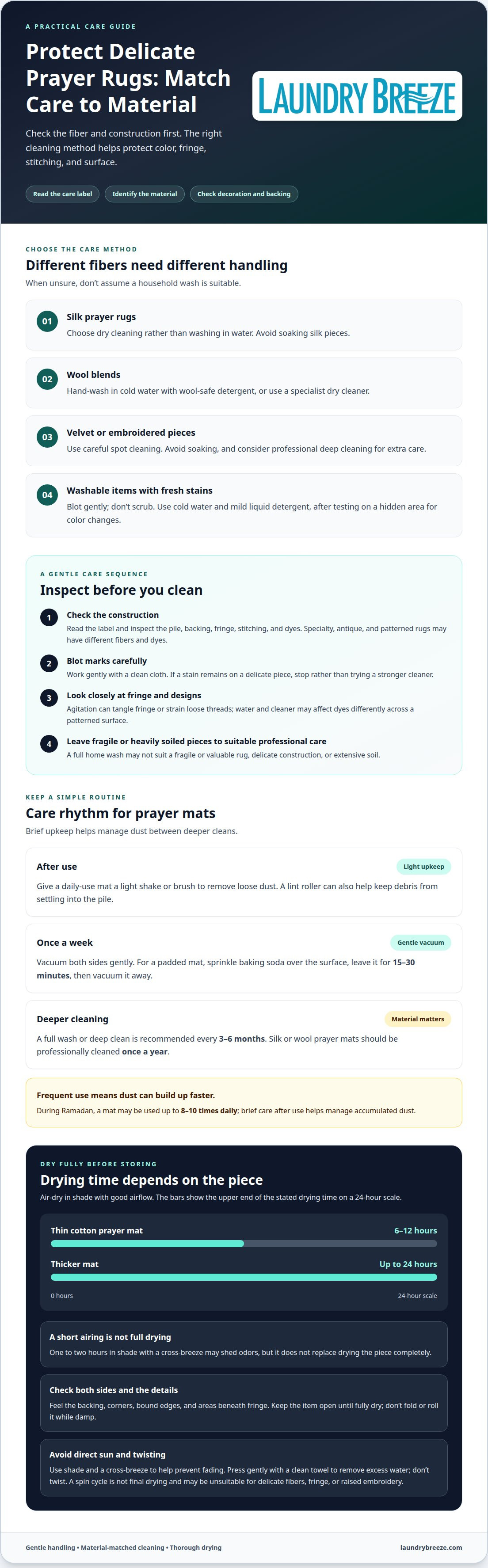
In Santa Monica, drying time depends on the piece’s fiber, thickness, and airflow. A thin cotton prayer mat may need six to twelve hours to air-dry, while a thicker mat may need up to twenty four hours. Shawls also need enough time for their fibers and folds to dry completely.
- Remove water without twisting the fabric. After washing, support the rug or shawl with both hands as you lift it. Let excess water drain, then press gently with a clean towel. Twisting can pull at fringe, seams, and embroidery. For a large rug, work in sections so its wet weight doesn’t stretch one edge.
- Set up a shaded drying area. Lay the piece flat on a clean, dry surface or hang it evenly without heavy folds. Choose shade and a cross-breeze instead of direct sunlight, which can fade prayer rugs. A mat aired in shade with a good cross-breeze for one to two hours may shed odors, but that short airing period does not replace drying it fully.
- Allow enough time for the underside to dry. Thin cotton mats can take six to twelve hours, and thicker mats may need up to twenty four hours. Turn a flat-dried item over once its surface feels dry, then check the backing and bound edges. Avoid folding or rolling the piece while damp. Moisture can linger in thick pile, padding, or layered embroidery.
- Treat centrifugal drying as water extraction, not final drying. A washing machine’s spin cycle uses rotation to push water out; it does not replace air-drying. Use it only when the care instructions allow machine washing and spinning. Delicate silk, wool, fringe, or raised embroidery can be vulnerable to twisting forces, so don’t assume a spin cycle is suitable. Air-dry the item afterward.
- Finish with a moisture and detail check. Before storing the piece, feel both sides, the corners, and the areas beneath fringe. Check that the backing is dry and embroidery lies flat. If a silk shawl should not be washed in water, consider dry cleaning instead of soaking it. Once fully dry, fold it loosely or roll it without pressing creases into decorated sections.
Keep the drying choice gentle and consistent: air-dry prayer mats rather than tumble-drying them to avoid shrinkage and warping. Tumble-drying is not a substitute for the slower, supported approach described here. Let the piece remain spread evenly and give it time to dry all the way through before putting it away. When drying outdoors, keep prayer rugs out of direct sunlight to avoid fading. Choose a shaded place where the rug can stay out of direct rays for the full drying period. If the light shifts, reposition the rug rather than leaving part of it exposed. Continue checking the backing and decorated areas before storage; do not rely on a dry-feeling top surface alone. Keep the mat open while it finishes drying, and put it away only after both sides and the details feel dry.
Care for wool, silk, velvet, and embroidered mats
Identify the fiber, surface, and construction before choosing a cleaning method. A wool prayer mat and an embroidered silk shawl need different care.
-
Identify the Material and Rug Type
Read the care label and inspect the pile, backing, fringe, and stitching. Wool blends can be hand-washed in cold water with wool-safe detergent or dry-cleaned by a specialist. Silk prayer rugs should be dry-cleaned rather than washed in water. For velvet or embroidery, stick to spot cleaning and professional deep cleaning. Oriental, Persian, area, antique, and specialty rugs may have varied fibers and dyes, so don’t assume they all share one safe cleaning method.
-
Remove Stains Without Damage
Blot a fresh stain with a clean cloth, working gently instead of scrubbing the pile or shawl fibers. For a washable item, use cold water and mild liquid detergent, first testing the cleaner on a hidden area for color changes. Avoid soaking silk, velvet, or embroidered pieces. If a stain remains on a delicate rug, stop rather than applying a stronger cleaner that could affect its dye or surface.
-
Assess Fringe and Religious Designs
Inspect fringe, decorative threads, and printed or woven designs before washing. Agitation can tangle fringe or strain loose threads, while water and cleaner may affect dyes differently across a patterned surface. These risks can make a full home wash unsuitable for a fragile or valuable piece. Spot-clean small marks carefully; leave extensive soil or delicate construction to professional cleaning suited to the material.
-
Set a Simple Care Routine
After each prayer session, give a daily-use mat a light shake or brush to remove loose dust. A daily shake or lint roller can also keep debris from settling into the pile. Once a week, vacuum both sides gently. For a padded mat, sprinkle baking soda over the surface, leave it for fifteen to thirty minutes, then vacuum it away.
Avoiding harsh chemicals and hot water
Use cool water and mild products for prayer-rug spot cleaning. A cautious test helps protect dyes, fibers, and delicate decoration.
- Read the care label before mixing a cleaner. Check whether the rug or shawl can be washed in water, and note any temperature or detergent instructions. Silk prayer rugs should be dry-cleaned rather than washed in water. If the label is missing, don’t assume the piece can handle a household wash. Fiber, backing, dyes, and decoration all affect the safest choice.
- Test the cleaner on a hidden area. Apply a small amount of the product to an inconspicuous spot, such as the back edge. Blot with a clean cloth reserved for cleaning, then check for color transfer, fading, or a change in texture. This simple test can reveal a reaction before the cleaner reaches a visible design. Don’t proceed if the hidden area changes.
- Choose mild detergent and cool water. For a washable prayer rug, mix cool water with a small amount of mild laundry soap. For a small stain, dab the mixture onto the affected area instead of pouring it across the pile. Use a clean cloth and gentle pressure. Bleach, strong stain removers, and concentrated cleaners can affect color and fibers, so don’t use them in place of mild soap.
- Keep hot water away from the rug. Hot water can shrink a prayer rug or set stains, making a mark harder to remove. Cool water is the safer choice for spot cleaning and soaking. If the rug needs a longer soak, use cool water with a small amount of mild laundry soap and proceed cautiously. Don’t increase the temperature to speed up washing.
- Rinse away soap without rough handling. After treating a spot, use a clean cloth dampened with cool water to lift away remaining detergent. Press and blot rather than scrubbing, which can distort the pile or pull at threads. For a washable rug that has been soaked, rinse until the water no longer feels soapy. Leftover detergent can attract dirt, so take care around dense pile and stitched designs.
- Pause if the fabric or color reacts. Stop if a test causes bleeding, fading, or a texture change. Don’t layer a second product over the first or use heat to force a stain out. For general household laundry needs, explore laundry care options.
Santa Monica rug cleaning pickup and delivery
Pickup and delivery can make cleaning prayer rugs and shawls in Santa Monica easier to fit into daily routines. A clear handoff helps protect delicate pieces and gives the cleaning team useful information about their materials and condition.
- Describe the item before arranging collection. Say whether you’re sending a prayer rug, a shawl, or both, and identify known fibers such as wool, silk, or cotton. Mention fringe, embroidery, padding, and visible stains. These details help the cleaning team understand what needs special attention. If you’re unsure about the material, describe its texture and construction instead of guessing.
- Explain the cleaning concern clearly. Point out specific marks, odors, or areas of wear, such as a stain near the rug’s edge or loose fringe. Share any care-label instructions and describe cleaning methods you’ve already tried. Clear notes help distinguish a spot-treatment request from one for deep cleaning. Don’t apply a new product just before handoff, since it may affect the fabric or dyes.
- Prepare the piece for transport. Make sure the rug or shawl is fully dry before packing it. Roll a rug loosely rather than folding it across embroidered sections, and keep the fringe aligned with the body of the rug. Place a shawl in a clean, breathable bag. Avoid sealing a damp item in plastic, where moisture can remain against the fibers.
- Keep each item’s information together. Attach a note or use a separate label for each piece. For example, label one package “wool prayer rug, fringe, stain near corner,” and another “silk shawl, embroidered edge.” Keep care instructions with the matching item. This simple step reduces confusion when a household sends several textiles for cleaning.
- Plan the handoff and return around the item. Choose a collection arrangement that lets the piece stay protected and dry until it’s handed over. When it returns, inspect the front, backing, fringe, and seams before storing it. Check that the item is dry, then roll or fold it according to its construction. If a rug measures 60 x 110 cm or more, allow room to handle and store it without crushing the pile.
For Santa Monica residents, pickup and delivery can spare you from carrying a bulky rug while running errands or leaving a delicate shawl loose in a bag. Sharing the material, condition, and care instructions makes the handoff more useful and clarifies the cleaning request.
Do Santa Monica rug cleaners offer hand washing for prayer rugs?
Hand washing is generally a gentle option for prayer rugs, although some rugs can be machine-washed. The right approach depends on the rug’s fiber, dye, construction, and care instructions.
- Choose hand washing for a suitable washable rug. Set up a clean space where the rug can lie flat, and use cool water with a small amount of mild laundry soap. A suitable washable prayer rug can be left to soak in this solution. Keep the water cool, since hot water can shrink a rug or set stains. Avoid rushing through this step with heat.
- Work gently across the surface. Use your hands to move soapy water through the rug without twisting or scrubbing the pile. Focus on visibly soiled areas with light pressure. Gentle handling limits strain on the backing and decorative threads. If the rug has fringe, keep it aligned rather than rubbing it or pulling it into knots.
- Rinse out soap carefully. Replace the soapy water with clean, cool water, then press water through the rug with your hands. Repeat until the water no longer feels soapy. Don’t wring the rug, since twisting can distort its shape and strain its construction. Support the rug as you lift it, especially when wet.
- Use material as your guide. Wool or silk blend rugs call for cold water and wool-safe detergent if hand-washed. Velvet or embroidered pieces are better suited to spot cleaning, with professional help for deep cleaning. A specialist can assess the material and construction when the rug’s age or fibers are uncertain.
- Decide whether home washing fits the piece. Hand washing is not right for every rug. A delicate antique, unstable dye, ornate embroidery, or fragile fringe can make a home wash risky. Machine washing may suit some rugs, but hand washing is generally gentler. Stop if color transfers during cleaning or the surface changes, rather than adding stronger detergent or increasing agitation.
For a washable rug with straightforward construction, careful hand washing offers a controlled alternative to machine agitation. For silk, velvet, embroidery, or an older specialty rug, let the material and decoration guide the cleaning decision.
For a wool or silk blend prayer mat, the options are hand-washing in cold water with wool-safe detergent or taking it to a specialist dry cleaner. This guidance applies to that blended material, not to every prayer rug. Use the material information to decide whether a home wash is appropriate or specialist dry cleaning is the better fit.
Stain treatment is a separate step before washing: pre-treat the prayer rug with stain cleaner for at least half an hour. For tougher stains, stain remover can be left on the rug overnight before washing. The shorter treatment is the standard pre-treatment, while the overnight option is for tougher stains. Once pre-treatment is complete, use the washing method suited to the rug’s material, keeping the cold-water and wool-safe-detergent recommendation in mind for wool or silk blends.
Laundry Breeze: Dry Cleaning Service
Laundry Breeze offers Dry Cleaning Service, a useful next step for a shawl whose care label specifies dry cleaning. For a prayer rug or embroidered piece, choose care according to its material and construction rather than assuming every item suits the same method.
If carrying laundry is inconvenient, Laundry Breeze also offers Pickup & Delivery Laundry Service. Keep care-label instructions and details about fringe, embroidery, or stains with the item so its needs are clear. This can help you decide whether professional dry cleaning is a better fit than home washing.
Make a Thoughtful Care Plan for Your Textiles
A thoughtful approach to cleaning prayer rugs and shawls in Santa Monica starts with treating each piece as an individual textile. Keep its care label and any notes about past cleaning together, so the next care decision starts with useful details rather than guesswork. For heirloom or specialty pieces, preserving their condition may matter more than attempting a quick home refresh.
Laundry Breeze offers Pickup & Delivery Laundry Service for added convenience, along with Commercial Laundry Service and Comforter & Pillow Laundry Service for other laundry needs. Choose the option that fits the task, and keep delicate prayer textiles separate from routine household laundry when preparing items for care.
A little preparation can clarify your next cleaning decision and help you feel more confident caring for meaningful fabrics.
With a careful plan, you can confidently keep treasured textiles in your routine.
Frequently Asked Questions
How should wool, silk, and synthetic prayer rugs be cleaned?
Use the rug’s fiber and care label to choose its cleaning method. Wool blends can be hand-washed in cold water with wool-safe detergent, while cotton and polyester rugs are generally machine-washable on a gentle, cold cycle. Synthetic fibers can still have delicate fringe, backing, or embroidery, so consider the whole construction, not just the fiber name.
What should I check before choosing a rug cleaner in Santa Monica?
Check that the cleaning method fits the rug’s material, construction, and care instructions. Note features that affect handling, such as fringe, embroidery, a padded backing, or visible dye changes. For example, silk calls for dry cleaning, while velvet or embroidered mats are better suited to careful spot cleaning. Share these details with the cleaner so the item’s specific needs guide its care.
Do cleaners in Santa Monica offer pickup and delivery for rugs?
Yes. Laundry Breeze offers pickup and delivery laundry service in Santa Monica, and its bulky-item cleaning includes rugs. This can help with a large area rug that’s awkward to carry or transport. Keep the rug dry before pickup and provide its material and care details. This gives the cleaning team useful context for handling it appropriately.
Which Santa Monica cleaners specialize in prayer rugs and delicate shawls?
Laundry Breeze offers dry cleaning and pickup and delivery service for prayer rugs and shawls.
To see links to services mentioned in this article, please click
https://www.laundrybreeze.com


