

You shouldn't have to dread pulling clean items out of the dryer. In this guide, you will discover proven, step-by-step methods to remove stubborn laundry odors from clothes, towels, and washing machines for lasting freshness. We'll cover simple odor-stripping routines, daily prevention habits that keep musty smells from returning, and how to know when high-capacity commercial washers are your best bet for a total fabric reset.
Key Takeaways
- Understand why excess detergent, body oils, and trapped bacteria cause freshly washed fabrics to sour the moment moisture touches them.
- Master a step-by-step wash reset to discover how to get rid of laundry smell by stripping away residue rather than masking it.
- Pinpoint hidden mold and mildew inside your washer drum and rubber gasket to stop odor contamination at the source.
- Apply specialized cleaning techniques tailored specifically for synthetic activewear, dense bath towels, and oversized bedding.
- Establish simple daily habits to prevent sour odors permanently, and recognize when bulky items need high-capacity commercial machines.
Why Does Clean Laundry Smell Bad? Decoding the Hidden Causes
Pulling a freshly dried shirt from your closet only to catch a stale whiff is deeply frustrating. Clean laundry shouldn't stink, but persistent odors rarely mean your garments are coated in everyday dirt. The true culprit is a mix of bacterial biofilm, hardened body sebum, and old soap scum wedged deep inside fabric fibers. When damp clothes sit trapped in dark washing machine drums for even a few hours, fungal growth accelerates rapidly. Understanding what mildew is helps clarify why microscopic spores thrive on trapped organic matter. Adding scented fabric softeners or dryer sheets doesn't solve this problem. These products simply coat fabrics in slick chemical waxes, sealing the bacteria beneath artificial perfumes. Discovering how to get rid of laundry smell permanently requires dissolving these layers entirely.
The Biofilm Trap: Body Oils and Synthetic Fabrics
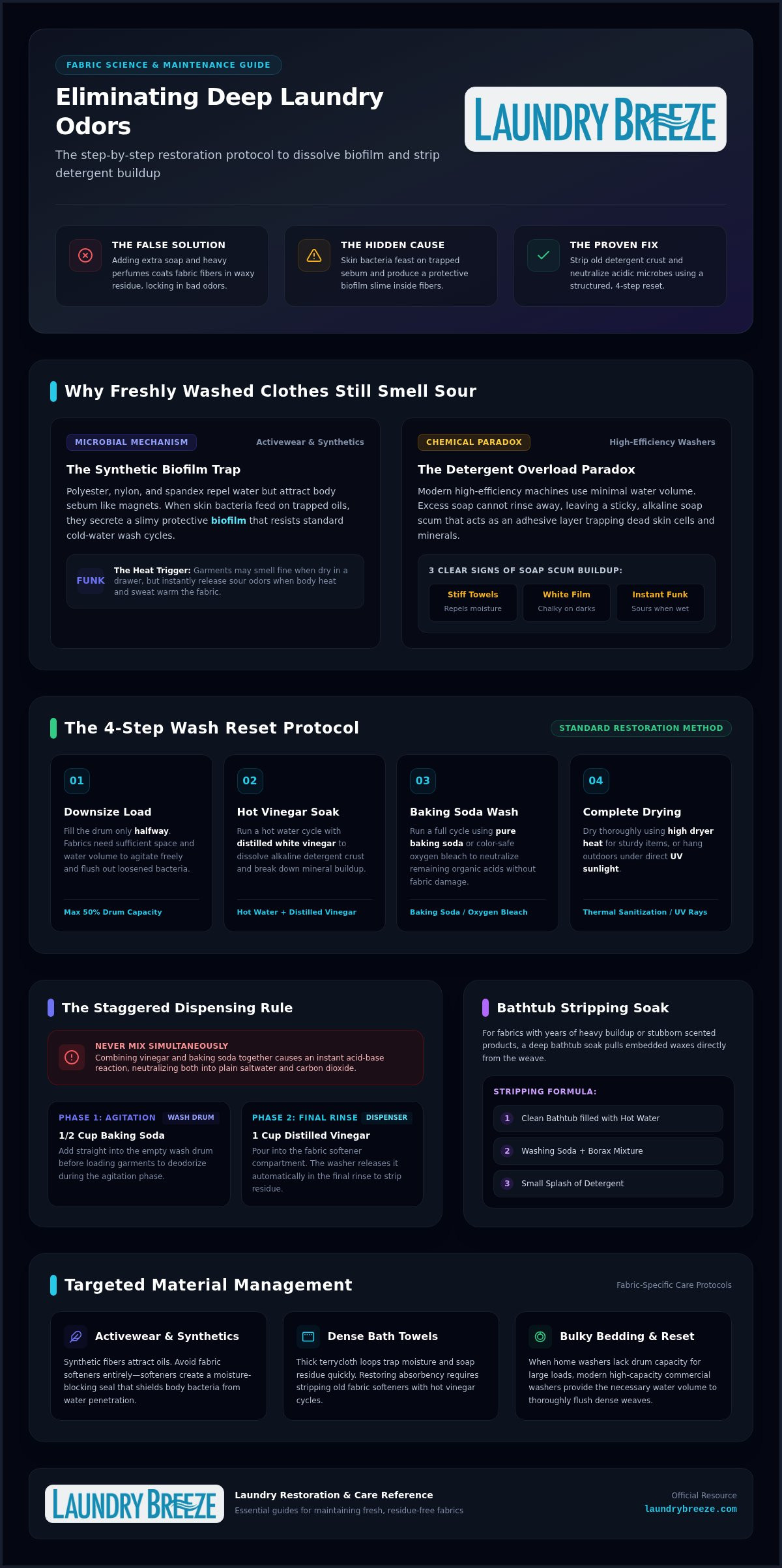
Activewear fabrics like polyester, nylon, and spandex are designed to repel water, but they bond to body oils like magnets. Sweat itself is largely odorless; the sour funk happens when skin bacteria feast on trapped sebum. Over time, these microbes produce a protective slime called biofilm that shields them against standard, cold-water wash cycles. This explains why your gym shirts might smell fine while folded in a drawer, only to release an unbearable sour odor the second your body heat and sweat warm the fabric.
The Detergent Overload Paradox: Why More Soap Equals More Stink
Dumping extra detergent into a smelly load seems like a logical fix, but it backfires quickly. Modern high-efficiency machines use minimal water, meaning excess soap cannot fully rinse away. Instead, leftover soap scum creates a sticky film that traps dead skin cells and minerals.
Common signs of severe detergent buildup include:
- Towels feeling stiff, waxy, or struggling to absorb moisture
- Dark clothing drying with a faint, chalky white film
- Garments releasing a musty smell the moment they touch clean water
How to Get Rid of Laundry Smell: The Step-by-Step Washing Reset
Treating persistent fabric odors requires an intentional wash cycle reset, not more scented detergent. When sour scents linger, lingering colonies of certain kinds of mold or fungus have anchored themselves into the fibers alongside accumulated sebum. To restore freshness, follow this proven four-step method:
- Step 1: Separate and downsize loads. Isolate affected garments and fill the washer drum only halfway. Fabrics need ample space to agitate freely and flush out loosened bacteria.
- Step 2: Run a hot vinegar pre-soak. Fill the machine with hot water and add distilled white vinegar to break down alkaline detergent crust and dissolve stubborn mineral buildup.
- Step 3: Wash with baking soda or oxygen bleach. Run a full cycle with pure baking soda or color-safe oxygen bleach to neutralize remaining organic acids without damaging weave structures.
- Step 4: Dry thoroughly. Use high dryer heat for durable items, or hang items outdoors under direct UV sunlight, which acts as a powerful natural sanitizer.
For fabrics suffering from years of heavy build-up, laundry stripping serves as a restorative deep-soak method designed to pull embedded waxes directly from the weave.
The White Vinegar and Baking Soda Protocol
Never mix vinegar and baking soda together in the same water compartment. Combining them instantly causes an acid-base neutralization reaction, turning two potent deodorizers into basic saltwater and carbon dioxide. Instead, stagger their delivery. Add a half-cup of baking soda straight into the empty wash drum before loading your clothes to deodorize during the agitation phase. Then, pour one cup of distilled white vinegar into the fabric softener dispenser. Your machine will automatically release the vinegar during the final rinse to strip leftover alkaline residue and soften fabrics naturally.
Laundry Stripping for Heavily Scented or Musty Items
When normal wash cycles fail, fill a clean bathtub with hot water and stir in a mixture of washing soda, borax, and a small splash of detergent. Submerge clean towels, sheets, or gym gear, stirring occasionally. Allow the items to soak for four to five hours until the water turns murky from released residue. Drain the tub, wring out the textiles, and transfer them immediately into a washer for a complete water-only rinse and high-speed spin cycle.
Cleaning the Culprit: How to Deodorize Your Washing Machine
Treating your clothes won't help if your appliance is actively contaminating every cycle. A dirty washing machine recirculates stagnant water, detergent slime, and fungal spores across your fabrics. Research into the science of laundry hygiene demonstrates that microbial communities easily colonize moist internal surfaces, directly causing malodors to transfer onto clean laundry. If you want to know how to get rid of laundry smell permanently, cleaning the appliance itself is non-negotiable.
Target these essential maintenance steps once a month:
- Clean the drain pump filter: Open the small access panel near the bottom of your front-loader, drain the residual water into a shallow tray, and remove trapped hair, coins, and lint causing stagnant odors.
- Wipe the door seals: Moisture collects in the lower folds of rubber gaskets, creating an ideal breeding ground for mildew.
- Rinse the dispenser housing: Old fabric softener forms a thick jelly behind the drawer that slowly rots over time.
Deep Cleaning Front-Load Washer Gaskets and Dispensers
Front-load washers are notorious for trapping moisture. Pull back the flexible rubber door boot gasket with your fingers to inspect the folds. Spray the interior with a 1:1 mixture of warm water and chlorine bleach, wipe away black mold deposits using a microfiber towel, and dry thoroughly. Next, press the release tab to pull out the dispenser drawer. Soak the entire tray in hot, soapy water, scrub away black slime with an old toothbrush, and wipe out the internal housing cavity before snapping the drawer back into place. Never shut the door on a damp machine; keep it propped open between uses.
Running a High-Heat Sanitizing Drum Cycle
Clear out stubborn internal biofilm by running an empty tub-clean cycle on the hottest water setting. Add an oxygenated washing machine cleaning tablet directly to the drum, or pour two cups of liquid chlorine bleach into the detergent dispenser. The intense heat combined with the oxidizing agent strips scum clinging to the outer wash tub where your eyes can't see. Once the cycle finishes, wipe down the inside of the glass door. Keep the washer door and detergent drawer cracked open continuously to maintain constant airflow, ensuring mold spores never get the dark, humid environment they need to return.
Targeted Solutions for Stubborn Odors: Workout Gear, Towels, and Bulky Bedding
Different textiles trap grime in entirely different ways. While dense cotton loops soak up moisture like sponges, synthetic activewear locks onto body oils at a chemical level. Large comforters introduce an even bigger challenge: sheer physical bulk. When you need to figure out how to get rid of laundry smell across these diverse items, a one-size-fits-all wash cycle won't cut it. Tackling sweat-soaked activewear, stiff towels, and oversized blankets demands fabric-specific strategies that address how each material traps organic matter.
Eliminating Embedded Odor from Athletic Gear and Spandex
Performance fabrics require dedicated treatment to release body grease. Always turn workout clothes inside out before washing, placing the side that absorbed dead skin and sweat directly against the agitator. Never use fabric softener on nylon or spandex; it coats the synthetic fibers and seals the pores that make activewear breathable. If clothing smells stale before washing, pre-soak it in cold water with a splash of white vinegar for thirty minutes. For regular maintenance, use an enzyme-based sports detergent formulated with proteases and lipases, which actively break down tough sweat-induced lipid layers that standard detergents leave behind.
Reviving Sour Bath Towels and Heavy Blankets
Bath towels quickly turn sour because their thick cotton loops retain moisture long after you hang them up. Over time, fabric softeners coat these fibers, severely reducing their absorbency and creating an ideal habitat for mildew. You can reset them with a two-step cycle:
- First wash: Run a cycle using hot water and one cup of distilled white vinegar with zero detergent.
- Second wash: Immediately run a second hot cycle using a half-cup of baking soda to neutralize lingering odors and lift remaining residue.
Daily Odor Prevention Habits and When to Seek Professional Laundry Care
Preventing persistent musty odors requires shifting everyday habits rather than relying on constant deep-cleaning rescues. A sour smell rarely happens by accident. It usually stems from tiny daily oversights, such as letting wet athletic wear stew inside a dark gym bag or measuring soap by eye. Knowing how to get rid of laundry smell includes stopping the cycle before bacteria have a chance to take root.
Here are three essential habits to keep sour odors from returning:
- Dose detergent with precision: Modern liquid concentrates require surprisingly small amounts. Measure strictly based on soil level, water hardness, and load size instead of filling the cap to the top.
- Aerate damp items immediately: Never toss sopping bath towels or sweat-drenched gym clothes into an enclosed laundry hamper. Hang them across a drying rack to air out first.
- Transfer cycles promptly: Set a timer on your phone so washed loads never sit inside a dark, humid washer drum after the cycle finishes.
Best Practices for Everyday Laundry Freshness
Ensure clothes and linens dry completely before folding them into dressers or linen closets. Storing slightly damp fabrics in unventilated drawers creates a greenhouse effect for mildew. In addition, run a hot tub-cleaning cycle on your residential machine once a month. Taking ten seconds to wipe the door seal and prop the machine door open keeps your internal components completely dry and free from odors.
The Professional Wash and Fold Advantage
Breathe Easy with Fresh, Odor-Free Fabrics
Solving stubborn fabric funk doesn't require endless rewashing or heavy fragrances. When you know how to get rid of laundry smell, the real secret centers on dissolving trapped bacterial biofilm, measuring detergent accurately, and keeping your washer clean. Stripping away accumulated soap scum and ensuring dense textiles dry thoroughly will quickly restore your wardrobe to its original freshness.
Frequently Asked Questions
Why do my clothes smell worse after washing them?
Your clothes smell worse because trapped detergent residue and body oils warm up in the wash, reactivating dormant bacterial biofilm. When you use too much soap or wash in an overloaded machine, the appliance cannot rinse away this buildup. The leftover moisture then turns your garments into an accidental incubator for sour odors.
How much vinegar should I use to get rid of laundry smell?
Pour exactly one cup of distilled white vinegar into the automatic fabric softener compartment for a standard wash load. The machine dispenses it during the rinse cycle, where the mild acidity strips away detergent scum and neutralizes alkaline odors. If you are learning how to get rid of laundry smell on heavily soiled loads, avoid pouring vinegar directly onto dry fabrics.
Can baking soda and vinegar be used together in the same laundry cycle?
You cannot mix baking soda and vinegar together in the same compartment because they neutralize each other instantly into plain saltwater. To use both effectively, place a half-cup of baking soda straight into the empty wash drum before adding your garments. Then, fill your dispenser drawer with white vinegar so it releases exclusively during the final rinse.
What kills mildew smell in clothes permanently?
High water temperatures paired with oxygen bleach or distilled white vinegar permanently destroy mildew spores and bacterial biofilm. Chemical masking agents like fabric softeners only hide spores temporarily. Drying fabrics completely under natural outdoor sunlight or high dryer heat ensures lingering moisture never allows fungal growth to take root again.
Why do clean gym clothes start to smell bad as soon as I put them on?
Synthetic activewear locks onto body oils at a microscopic level, creating a resilient bacterial layer that standard detergents miss. While the fabric may seem odorless when dry in your drawer, your natural body heat and fresh sweat instantly reactivate those trapped microbes. Using an enzyme-based sports detergent breaks down this embedded lipid layer completely.
How do I get rid of the musty smell inside my front-load washer?
Wipe down the rubber door boot gasket with diluted bleach and run an empty hot cleaning cycle using an oxygenated washer tablet. Be sure to unscrew the lower drain filter to release stagnant trapped water and lint. Leave the door and dispenser drawer cracked open between wash cycles to maintain continuous airflow across the drum.
What causes clean bath towels to smell sour after just one use?
Clean towels sour immediately when residual fabric softener coats the cotton loops, trapping dead skin cells and moisture deep inside the weave. When you wipe off after a shower, the rehydrated fibers instantly release trapped bacteria. Stripping the towels with hot water and white vinegar restores absorbency and eliminates persistent sour smells for Los Angeles households.
To see links to services mentioned in this article, please click
https://www.laundrybreeze.com


