

Have you ever stood in front of a massive 50lb industrial washer and felt like you needed a pilot's license just to start the rinse cycle? It's a common feeling. Those high-tech control panels and confusing multi-compartment trays can make anyone hesitate. If you're wondering how to use a commercial washing machine without accidentally overfilling the drum or creating a foam party, you're in the right place. At Laundry Breeze, we believe laundry should be effortless. That's why our modern facility is always fully attended by friendly staff ready to answer your questions and help you get started.
We know that facing a wall of industrial buttons is stressful when you just want fresh, clean clothes. We've simplified the entire process for you. In this guide, you'll master the settings, learn where the soap actually goes, and discover how to pick the right machine size for your specific needs. We'll walk you through every step to ensure you get a perfect wash on your very first try. You'll soon be handling those high-capacity machines with total confidence and saving hours of your precious time.
Key Takeaways
- Learn why commercial machines are powerhouses that finish cycles in just 30 minutes and use high G-force extraction to slash your drying time.
- Discover how to use a commercial washing machine by following a simple left-to-right control logic and choosing the safest cycle for mixed loads.
- Avoid common laundry mishaps by mastering the "hand's width" rule for machine capacity and learning exactly where to place your detergent.
- Follow our essential "pre-flight" checklist to ensure your zippers are closed and the door is properly latched for a successful start every time.
- Find out when it is best to skip the DIY stress and let the pros handle your bulky loads or commercial linens in just 4 minutes of your time.
Why Commercial Washers Are Different (And Why That Is Good)
A commercial washer is a heavy-duty appliance designed for continuous use and high-volume loads. If you are learning how to use a commercial washing machine, it helps to know that these aren't just oversized home units. They are precision tools built for maximum performance and durability. These machines handle back-to-back cycles all day long without breaking a sweat. Understanding washing machine mechanics and drum designs reveals how these units prioritize mechanical action to get clothes cleaner in much less time than a standard residential model.
Speed is the most obvious benefit. Most commercial cycles finish in just 30 minutes. This efficiency comes from high-torque motors and advanced water management systems that get the job done fast. Additionally, the G-force extraction in these units is far superior to residential models. By spinning at much higher speeds, they pull more moisture out of the fabric. This means your laundry spends significantly less time in the dryer, which protects your clothes from unnecessary heat damage and gets you back to your day sooner.
Speed and Power vs. Home Machines
Common Myths About Commercial Laundry
Don't let the industrial look of the machines intimidate you. There are plenty of myths that keep people from enjoying the benefits of high-capacity washing. Here is the reality of the situation:
- Myth: They are too rough for delicates. Modern commercial machines offer highly customizable settings. You can choose gentle cycles that protect your sensitive fabrics while still providing a thorough clean.
- Myth: You need special industrial detergent. You don't need to hunt for specialized chemicals. Standard High-Efficiency (HE) soap works perfectly in these units.
- Myth: They are only for businesses. These machines are a lifesaver for Los Angeles residents. Whether you have a massive family load or a bulky king comforter, these units save you hours of time. Plus, at a fully attended facility like Laundry Breeze, help is always available if you ever feel unsure about how to use a commercial washing machine correctly.
Understanding the Controls: Buttons, Cycles, and Payments
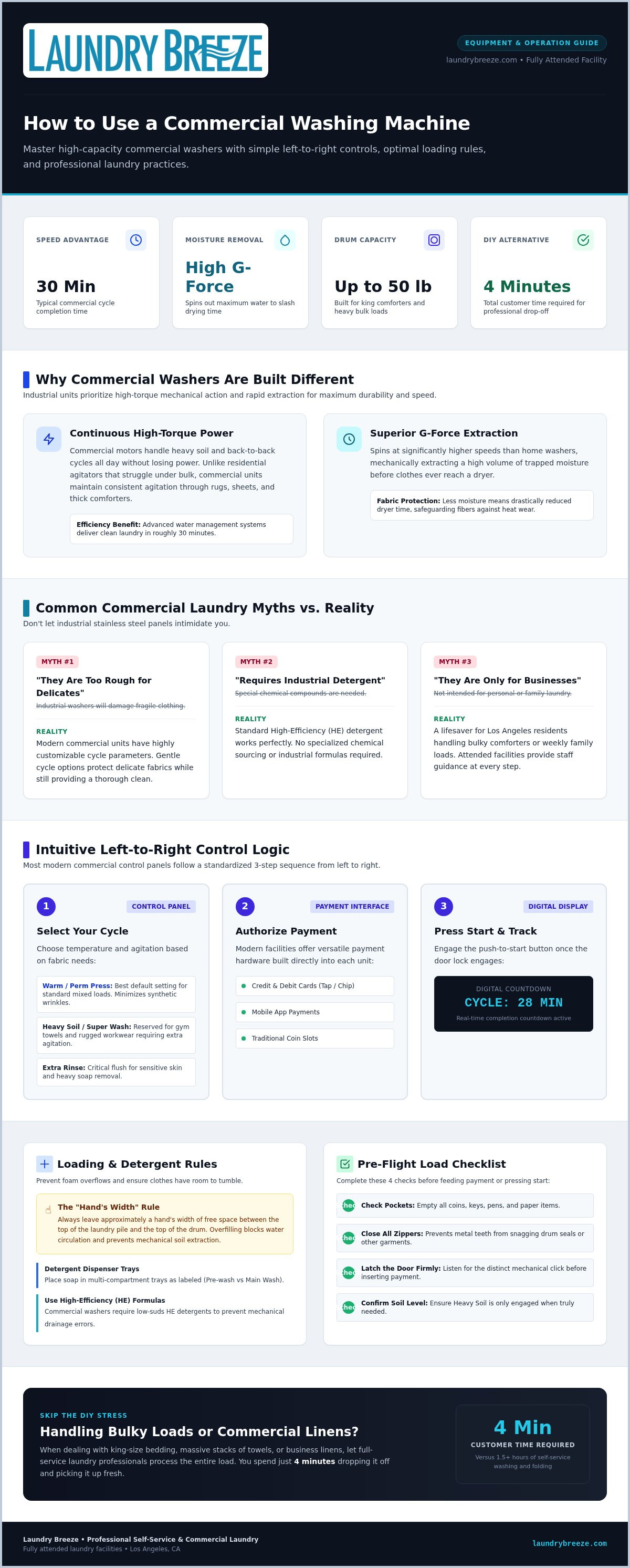
Starting a cycle shouldn't feel like solving a complex puzzle. Most modern machines in Los Angeles follow a simple, intuitive left-to-right logic. First, you select your cycle; next, you add your payment; and finally, you press the start button. While older machines might still have physical dials, most units you'll encounter today feature sleek digital displays that provide real-time updates. If you're learning how to use a commercial washing machine for the first time, the 'Warm/Permanent Press' setting is your safest bet for a standard mixed load of clothes. Only reach for the 'Heavy Soil' or 'Super Wash' buttons if you're cleaning rugged items like gym towels or work uniforms that require extra agitation to get clean.
Deciphering the Control Panel
The 'Perm Press' setting is a secret weapon for keeping your clothes looking new. It uses a specific combination of warm water and a slower spin to minimize wrinkling in synthetic fabrics. If you have sensitive skin or use a heavy hand with detergent, the 'Extra Rinse' option is essential. It adds a final flush of fresh water to ensure no soap residue remains in the fibers. These sophisticated settings are core to ENERGY STAR commercial clothes washer standards, which prioritize both cleaning performance and resource efficiency. The digital display will usually show a clear countdown, so you'll know exactly when it's time to move your load to the dryer.
Modern Payment Systems: Cards, Apps, and Coins
Preparing Your Load: Capacity and Detergent Rules
Getting the best results starts long before you press the start button. If you're learning how to use a commercial washing machine, the most important rule is to avoid the temptation to cram every last sock into the drum. For a perfect wash, always leave a hand's width of space at the top of the drum. This extra room allows clothes to tumble freely and ensures the water and soap reach every fiber. Overfilling the machine prevents this mechanical action, often leaving you with damp spots and lingering odors. Following the American Cleaning Institute laundry guidelines helps you understand that proper sorting and sizing are the foundations of fabric care.
Finding the Sweet Spot for Load Size
Where Does the Soap Go? (Soap Compartment Guide)
Commercial front-loaders use a multi-compartment tray that might look intimidating at first. Most trays are labeled with Roman numerals or icons. Compartment 'I' is typically for a pre-wash cycle, while 'II' is for your main wash detergent. There's usually a third slot with a flower or star icon for fabric softener. It's vital to use only High Efficiency (HE) detergent. Commercial machines use less water than residential ones, and regular soap can cause "oversudsing," which might trigger an error code and stop your cycle mid-wash.
Never pour detergent directly onto your dry clothes in a front-loader. This can cause permanent staining on delicate fabrics and prevents the soap from dissolving evenly. The machine is designed to flush the soap from the tray at the exact moment it's needed. Similarly, bleach and softener slots are timed to release during specific parts of the cycle. By using the tray correctly, you ensure your whites stay bright and your towels stay soft without any extra effort on your part.
Step-by-Step: Starting Your First Commercial Load
You have picked your machine and measured your HE soap. Now, it's time to get that cycle moving. Learning how to use a commercial washing machine is mostly about the order of operations. Unlike home machines where you can often toss in a stray sock mid-wash, commercial units usually lock their programming the moment you pay. Always select your water temperature and cycle type first. Once the display shows the correct price for your selections, you're ready to move to the payment step. Add your coins or tap your card, and wait for the 'Start' button to flash or the digital timer to begin its countdown.
The Pre-Flight Checklist
Before you put a single shirt in, perform a quick inspection. Check the drum for left-behind items like pens, coins, or even a stray sock from the previous user. These small objects can ruin your clothes or clog the machine's pump. Sort your laundry by color and weight at home to save time once you arrive. Make sure all zippers are pulled up and pockets are empty. Double-check the rubber door seal to ensure no small items like baby socks are trapped in the folds. Close the door firmly; you should hear a distinct click or feel the latch engage, as most machines won't start if the sensor doesn't detect a secure lock.
Troubleshooting Common Mid-Cycle Issues
When to Skip the DIY and Call the Pros
Even when you know exactly how to use a commercial washing machine, there are days when the laundry pile is just too high. In a city as fast-paced as Los Angeles, your weekend is valuable. Spending three hours managing cycles, transfers, and folding can feel like a part-time job you didn't sign up for. While mastering how to use a commercial washing machine is a great skill for bulky items, professional services can reclaim your entire afternoon. Professional folding means no more wrinkles and perfectly organized drawers without you lifting a finger.
The '4-Minute' Solution at Laundry Breeze
We've perfected the "4-minute" laundry experience. It takes exactly two minutes to drop off your bags and two minutes to pick them up, fresh and perfectly folded. Our expert staff follows your exact specifications for every load, from detergent preferences to specific drying temperatures. You get professional-grade results that are nearly impossible to achieve with DIY washing at home. This service is designed for busy people who want the quality of a commercial clean without the time commitment of doing it themselves.
Specialized Care for Commercial and Bulky Items
Master Your Laundry Day with Confidence
Using high-capacity industrial equipment doesn't have to be intimidating. By understanding the simple left to right control logic and following the hand's width rule for capacity, you can get professional results every time. Knowing how to use a commercial washing machine effectively saves you hours of drying time and ensures your bulky items like comforters get a deep, thorough clean. Whether you're a local resident or a business owner, these machines are powerful tools designed to make your life easier.
Frequently Asked Questions about Commercial Laundry
Can I use regular laundry pods in a commercial washing machine?
You can use them, but you must toss them directly into the drum before adding your clothes. Never place pods in the dispenser drawer, as they won't dissolve properly and can clog the system. Since commercial machines use less water, one pod is usually plenty for a standard load. If you're unsure about the best detergent for your specific machine, our friendly attendants are always available to help.
What happens if I put too much soap in a commercial washer?
Using too much detergent causes "oversudsing," which can lead to your machine stopping mid-cycle with an error code. When learning how to use a commercial washing machine, it is important to remember that these high-efficiency units need very little soap. Typically, two tablespoons of liquid concentrate is enough. Excess suds prevent effective rinsing and can leave a sticky residue behind. If you see foam in the window, use less next time.
How do I know which size machine to choose for my laundry?
Choose your machine based on the volume of your laundry baskets. A small 20lb machine handles about two standard baskets, while a 40lb unit is perfect for queen comforters or four baskets. If you have a massive load or a king comforter, move up to the 60lb or 80lb machines. Always leave about a hand's width of space at the top of the drum so your clothes have room to tumble freely.
Is it safe to wash my delicate clothes in these large machines?
It is safe as long as you select the correct settings and sort your items properly. Modern commercial washers feature "Permanent Press" or "Delicate" cycles that use gentler agitation and cooler water temperatures to protect sensitive fabrics. Learning how to use a commercial washing machine means knowing when to skip the heavy-duty settings. For your most precious garments, using a mesh laundry bag provides an extra layer of protection during the high-speed spin.
How long does a typical commercial wash cycle take?
Most standard wash cycles finish in 25 to 35 minutes, which is significantly faster than residential machines. Heavy-duty or sanitizing cycles might run closer to 45 minutes. Because these machines are built for speed and efficiency, you can finish a week's worth of laundry in under an hour. This fast turnaround is a huge benefit for busy Los Angeles residents who want to get back to their weekend activities quickly.
What should I do if the machine stops mid-cycle?
First, check the digital display for an error code like 'UE' for an unbalanced load. This often happens if heavy items bunch up on one side. You can usually fix this by redistributing the wet clothes evenly inside the drum. Since Laundry Breeze is a fully attended facility, you don't have to struggle with technical issues alone. Just wave over one of our staff members, and they will help you get the cycle restarted.
Are commercial washing machines cleaner than home machines?
Yes, they often provide a deeper clean due to their powerful mechanical agitation and superior water extraction. Commercial units also undergo frequent professional maintenance and cleaning cycles that residential machines rarely receive. At our facility, we pride ourselves on keeping every machine in top quality condition. The high-speed extraction also removes more dirty water and detergent residue, leaving your clothes fresher than they would be in a standard home agitator.
Can I wash a king-size comforter in a commercial washer?
You absolutely can, provided you use a large-capacity machine designed for bulk items. A 60lb or 80lb washer provides the necessary room for a king comforter to expand and get fully saturated with water. If you don't want to handle the heavy lifting yourself, we offer a specialized comforter and pillow laundry service. This ensures your bedding is handled with professional care and dried thoroughly to prevent any clumping or odors.
To see links to services mentioned in this article, please click
https://www.laundrybreeze.com


