

If you think the hardest part of laundry is getting the stains out, try stuffing a king-sized duvet into a standard home machine. Most people assume they can just toss it in and hope for the best, but the reality is that washing a comforter is 20% washing and 80% drying. If you can't guarantee total airflow, you might end up with a lumpy, damp mess that never quite feels the same again. It shouldn't be this hard.
We've all been there, staring at a bulky blanket that's too big for the drum and worrying about the motor burning out. It's frustrating when your bedding comes out uneven or develops a musty smell from trapped moisture. Learning how to wash a comforter the right way is the only way to ensure your bedroom stays fresh and inviting. This guide will teach you how to master bulky bedding at home using the right settings for a fluffy finish. You'll also discover exactly when it's smarter to outsource the job to the pros so you can reclaim your weekend and protect your investment.
Key Takeaways
- Always check the care label first to determine if your bedding is machine-washable or requires professional dry cleaning.
- Master exactly how to wash a comforter by choosing the right gentle cycle and detergent to protect delicate fill and stitching.
- Use the tennis ball trick during a low-heat drying cycle to break up clumps and keep your bedding fluffy.
- Identify the signs that your home machine is too small so you can avoid costly appliance repairs or damp, lumpy results.
- Learn when to choose a specialized bulky item service to ensure your comforter is deep-cleaned and perfectly dried without the hassle.
Check the Label: Can You Actually Wash Your Comforter at Home?
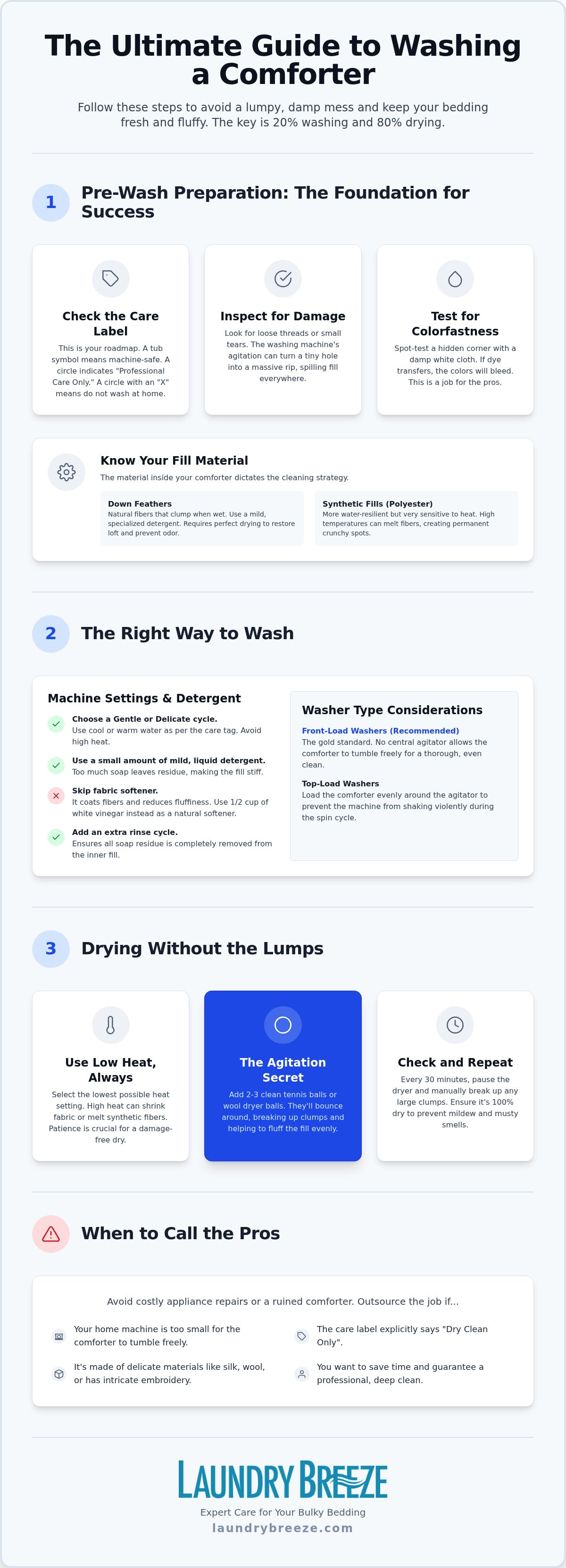
Before you dive into the process of learning how to wash a comforter, you have to find the care tag. It's usually tucked into a corner or along a side seam. This tiny piece of fabric is your roadmap to success. Look for symbols like a tub filled with water, which means it's safe for a machine, or a circle, which indicates it needs professional care. If you see a circle with an "X" through it, don't put it in your home washer.
Give your bedding a quick physical exam before the water starts running. Check for loose threads or small tears. The agitation cycle in a washing machine can turn a tiny hole into a massive rip, spilling fill everywhere and creating a huge mess. You should also spot-test a hidden corner with a damp white cloth to check for colorfastness. If the dye transfers to the cloth, the colors will likely bleed during the wash, meaning it's time to call in the experts for professional care.
Down vs. Synthetic: Why Fill Matters
The material inside your bedding dictates your cleaning strategy. Down feathers are natural protein fibers that provide incredible warmth, but they clump together when wet. If you don't dry them perfectly, they lose their loft and can develop an unpleasant odor. On the other hand, synthetic fills like polyester are more resilient to water but very sensitive to heat. High temperatures can actually melt these fibers, leading to permanent "crunchy" spots in your blanket. For natural down, always use a mild, specialized detergent that won't strip the natural oils from the feathers. This ensures the fill remains fluffy and functional for years.
The "Dry Clean Only" Warning
The Right Way to Wash: Machine Settings and Detergent
Mastering how to wash a comforter means paying close attention to your machine's dial. You should always select a "gentle" or "delicate" cycle. Some modern machines have a specific "bedding" setting, which is perfect for managing the weight of wet fabric without straining the seams. Stick to cool or warm water as indicated by your care tag. While some sources suggest washing at 130 degrees Fahrenheit to kill dust mites, this can easily shrink your favorite duvet or damage synthetic fibers. It's better to prioritize the longevity of the fabric and rely on a thorough rinse to remove allergens.
Top-Load vs. Front-Load Considerations
Front-load washers are the gold standard for bulky bedding because they don't have a central agitator. This allows the comforter to tumble freely, ensuring water and soap reach every inch of the fill. If you're using a top-load machine, you must load the item evenly around the agitator to prevent the machine from shaking or "walking" across the floor during the spin cycle. For those with high-efficiency (HE) machines that use very little water, consider the "bucket trick." Adding a gallon or two of water directly into the drum before starting the cycle can help the sensors realize just how heavy the load actually is, leading to a more effective wash.
The Problem with Too Much Soap
Drying Without the Lumps: The Agitation Secret
If you've mastered the wash, don't trip at the finish line. Drying is where most people fail when learning how to wash a comforter. It requires a lot of patience and a specific strategy to keep the fill from bunching up. Always use the lowest heat setting your dryer offers. While high heat might seem like a time-saver, it's a huge risk for your bedding. Intense heat can cause synthetic fills to melt and fuse, leading to a stiff, crunchy texture that you simply can't fix.
The secret to a fluffy result is constant agitation. Use the tennis ball trick by tossing three clean tennis balls or wool dryer balls into the load. These bounce around and physically break up clumps of wet fill as the drum spins. Without them, feathers or fibers will stick together, leaving you with an uneven blanket full of thin spots. Plan for this to take time. A standard comforter often needs two or three full cycles to dry completely, depending on its thickness and your machine's capacity.
Don't just set it and forget it. Every 30 minutes, you should pause the dryer and pull the comforter out. Give it a vigorous shake and rotate it before putting it back in. This ensures that the damp interior sections move to the outside where the warm air can reach them. It's the only way to avoid "cold spots" that hide deep inside the fabric and cause problems later.
Preventing the Dreaded "Lumpy Comforter"
Agitation is the only way to keep your bedding from feeling like a bag of rocks. When feathers or synthetic fibers get wet, they naturally stick together. If they dry in that state, they'll stay that way forever. Constant movement during the drying process keeps these materials distributed evenly throughout the fabric pockets. Be especially careful with synthetic materials. If the dryer gets too hot, those fibers can actually fuse together, creating permanent lumps that ruin the softness of your bedding.
The Danger of Mildew
Mildew is a silent killer for high-quality bedding. You should never put a comforter back on your bed if it feels even slightly cool to the touch. That coolness usually means there's hidden moisture deep in the fill. If you trap that moisture under your sheets, it will develop a musty smell that's almost impossible to remove. To be 100% safe, hang your comforter over a sturdy railing or a clean shower rod for at least an hour after the dryer cycle ends. This final air-dry step is a crucial part of how to wash a comforter without risking mold growth or unpleasant odors.
Home Washers vs. Commercial Machines: When to Call the Pros
Living in Los Angeles often means making do with compact living spaces. If you're in an apartment in West Hollywood or Santa Monica, you likely have a small, stacked washer and dryer. While these are great for everyday clothes, they simply aren't designed to handle heavy bedding. Knowing how to wash a comforter at home starts with a simple capacity test. If you have to shove the blanket into the drum until there's no room left, it won't get clean. Soap and water need space to circulate through the fabric to actually lift away dirt and allergens.
Similarly, for readers in Dubai, Thawb Wa Teeb provides premium dry-cleaning services that demonstrate how professional standards can preserve the life of luxury comforters and delicate textiles.
Signs Your Washer is Too Small
You can tell your machine is struggling by watching the cycle. If the comforter stays in one position and doesn't tumble, the soap won't penetrate the fill. You might even find dry spots on the fabric after the cycle finishes; this is a clear sign that water never reached the interior. Another warning sign is excessive vibrating or the machine "walking" across the floor during the spin cycle. This puts immense stress on the machine’s suspension and can lead to a permanent breakdown. If your machine is bouncing, stop the cycle immediately to prevent internal damage.
The Time-Value Proposition
Laundry Breeze: Expert Comforter Cleaning in Los Angeles
Laundry Breeze makes cleaning bulky items effortless and stress-free. We specialize in bulky item care for comforters, pillows, and sleeping bags. You don't have to spend your entire Sunday worrying about how to wash a comforter without ruining it. Instead, let our team of professionals handle the heavy lifting. We use high-capacity commercial equipment that ensures your bedding gets a deep clean and a thorough, fluffy dry. Our machines are the latest models, designed to be modern, efficient, and gentle on your fabrics.
Our service is built around your convenience. We offer FREE Pickup & Delivery across Los Angeles, Beverly Hills, and Santa Monica. We understand that your time is valuable. That's why we stand by our "4 Minute" Promise. It takes just 2 minutes to drop off your laundry and 2 minutes to pick it up. If you use our delivery service, it's even easier. We handle the logistics so you can focus on more important things. There's no need to navigate traffic or wait around at a laundromat when we can come directly to your door.
Reclaim Your Weekend with Pickup & Delivery
Commercial Quality for Your Home Bedding
Get the Fluffy, Fresh Bedding You Deserve
Washing your bulky bedding doesn't have to be a source of stress. By checking your care label first and prioritizing low heat and constant agitation, you can successfully learn how to wash a comforter at home. Remember that patience is your best friend during the drying process. If your home machine is struggling or you're tired of babysitting the dryer for five hours, it's okay to let the experts take over.
Reclaim your weekend and enjoy the comfort of a professionally cleaned bed tonight.
Frequently Asked Questions
How often should I wash my comforter?
You should wash your comforter every three to four months to maintain hygiene and fabric quality. If you have pets that sleep on the bed or suffer from seasonal allergies, aim for once a month. Regular cleaning prevents the buildup of dust mites and dead skin cells. Between washes, use a duvet cover and wash that weekly. This keeps your bulky bedding fresher for longer periods without requiring a full, heavy wash.
Can I wash a "Dry Clean Only" comforter in a washing machine?
No, you should never put a "Dry Clean Only" item in a home washer because it can cause permanent shrinkage or damage. High-end materials like silk, wool, or intricate embroidery will lose their structure and texture in water. If the label specifies dry cleaning, it's because the manufacturer knows the fill or outer shell can't handle machine agitation. Take it to a professional to protect your bedding and ensure it lasts for years.
Why did my comforter get lumpy after washing?
Your comforter likely became lumpy because the internal fill stuck together while wet and didn't have enough room to break apart. This happens when the dryer is too small or you skip using dryer balls. To fix this, re-dry the item on low heat with several tennis balls. The constant hitting helps redistribute the feathers or synthetic fibers. This ensures your bedding stays fluffy and even across every pocket of the fabric.
Is it better to wash a comforter in a front-load or top-load washer?
A front-load washer is the superior choice for bulky bedding because it doesn't have a central agitator that can snag or tear the fabric. These machines use a tumbling motion that is much gentler on the seams and internal fill. If you're learning how to wash a comforter at home, a front-loader also allows for more water circulation. This ensures every part of the thick material gets properly cleaned without the risk of mechanical damage.
How many tennis balls should I put in the dryer with a comforter?
You should use three clean tennis balls or wool dryer balls to achieve the best results. Placing them inside clean white socks prevents any dye transfer from the balls to your bedding. As the dryer spins, these balls physically beat the clumps of wet fill apart. This ensures that air can flow through the entire piece. It reduces drying time and prevents that flat, matted feeling that often happens with thick blankets after a wash.
What happens if I wash a comforter that is too big for my machine?
Forcing an oversized comforter into a small machine prevents the water and detergent from reaching the center of the fabric. You'll likely end up with dry spots and trapped dirt even after a full cycle. Additionally, the extreme weight of a water-soaked blanket can burn out your washer's motor or snap the drive belt. If the item doesn't have room to tumble freely, it's time to use a professional service with high-capacity machines.
How long does it take to professionally clean a comforter?
Most professional services take roughly 24 to 48 hours to ensure your comforter is completely clean and bone-dry. Unlike home drying, which can take five hours of constant monitoring, pros use high-airflow commercial dryers that handle the job efficiently. This timeline allows for a thorough inspection and multiple drying cycles. It prevents any chance of mildew or trapped moisture before the item is returned to you, ensuring your bedding is fresh and safe.
Does Laundry Breeze offer comforter cleaning near Beverly Hills?
Yes, Laundry Breeze provides specialized comforter and bulky item cleaning throughout Beverly Hills and the surrounding Los Angeles area. We make the process simple with our FREE Pickup & Delivery service. You don't have to worry about how to wash a comforter in a small apartment machine. Our team handles the heavy lifting and returns your bedding fresh and fluffy. This saves you hours of chores and protects you from potential appliance damage.
To see links to services mentioned in this article, please click
https://www.laundrybreeze.com


