

If laundry keeps stalling halfway through, that doesn’t mean you’re lazy or need to try harder. Laundry involves several steps, transitions, and decisions, often alongside uncomfortable textures, smells, or clothing preferences.
This article explains how executive-function challenges, sensory sensitivities, and expectations can contribute to laundry overwhelm. It also looks at practical ways to make laundry more manageable, without expecting every load to end in a perfectly organized closet.
Key Takeaways
- Laundry can feel difficult when it involves many steps, transitions, and decisions, not because you lack effort.
- Notice which clothing textures, smells, or other sensory experiences make laundry harder to start or finish.
- Set a realistic finish line that prioritizes having clean, wearable clothes over a perfectly folded and organized wardrobe.
- Simplify the process by reducing sorting and folding demands, and choosing routines that fit your needs.
- When doing laundry yourself feels like too much, a wash-and-fold or pickup-and-delivery service can take some of the task off your plate.
1. Executive-function challenges with household tasks
Executive function helps organize actions, direct attention, remember intentions, and manage emotional responses. Laundry draws on all four: someone must notice a full hamper, choose a load, start the washer, remember the cycle, and move clothes to the dryer. Every transition creates another chance to lose track. For anyone seeking ADHD laundry overwhelm support in Santa Monica, recognizing these separate demands can explain why laundry feels difficult.
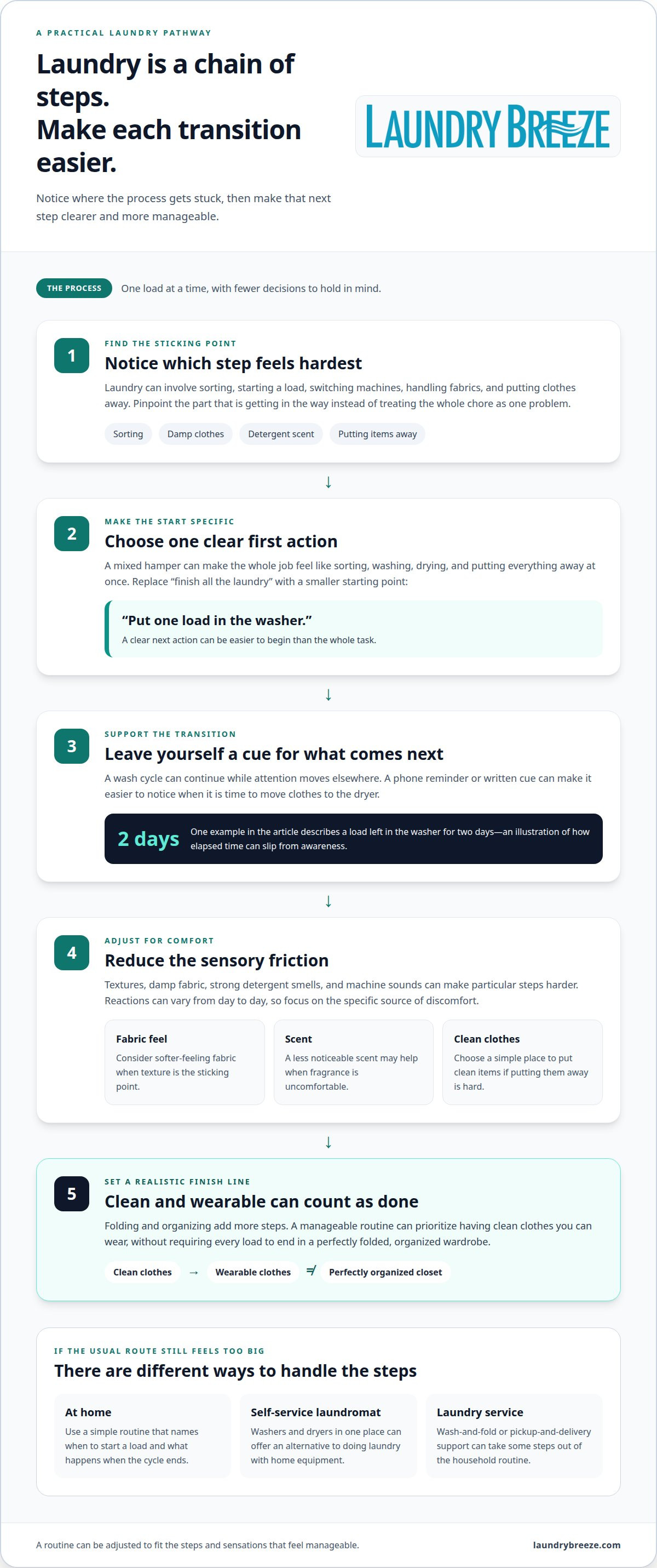
Task avoidance can begin before anyone touches a machine. A person may see mixed clothes and anticipate sorting, washing, drying, and putting everything away, then feel unsure where to start. That isn’t the same as not caring. When a task feels too large, executive function can make it harder to choose the first action. “Put one load in the washer” is a clearer starting point than “finish all the laundry.”
Time awareness can create another challenge. A washing cycle continues while attention shifts to a message, meal, or household task. In one example, a load stayed in the washer for two days, showing how easily elapsed time can slip from awareness. The delay creates another decision: restart the wash, move the load, or begin a different one. A phone reminder or written cue can make the next step easier to notice.
Memory also affects the sequence. Someone may remember starting the washer but forget whether the clothes made it to the dryer. A basket in the hallway can fade into the background, while clean clothes stay unfolded because putting them away requires another shift in attention. One account described the last fully clean, folded, and put-away laundry as possibly having happened seven years earlier. That example shows how high the standard for “finished” can become, not what every person with ADHD experiences.
Professional laundry services can reduce the number of steps at home by taking washing, drying, or folding out of the household routine. Pickup and delivery can remove the trip to the machines, while a clear handoff makes the process more predictable. This can be one form of ADHD laundry overwhelm support in Santa Monica when getting started or tracking a load is the main barrier.
2. Sensory sensitivities and increased laundry
A shirt tag, rough seam, or tight waistband can feel distracting against the skin. Someone may change clothes to find a more comfortable outfit, adding items to the hamper. A favorite soft shirt might feel fine one morning but irritating later. Laundry can grow not only from spills or exercise, but also from searching for comfortable clothes. That pattern adds stress before washing even begins.
Sensory discomfort can also make handling laundry unpleasant. Damp fabric, strong detergent smells, scratchy towels, or a washer’s sound may make a particular step harder. Someone who dislikes wet clothing, for example, may avoid moving a finished load. Someone sensitive to fragrance may put off wearing clothes washed with a strongly scented product. Reactions vary by person, garment, and setting, so the same routine may not feel manageable every time.
Mighty Village notes that a child’s access to skills can change with their nervous-system state, even when the child and task stay the same. This offers a useful way to understand why a familiar laundry step may feel manageable one day and overwhelming another. After a noisy day, sorting clothes or tolerating a fabric texture may take more effort. The difficulty reflects the demands of the moment, not a fixed ability to complete the task.
Clothing preferences can add laundry decisions, too. Someone might repeatedly choose a preferred outfit while avoiding clothes with uncomfortable seams or textures. If that favorite item is unavailable, getting dressed may involve trying several alternatives and leaving them out. Those clothes may then need washing sooner, even if they’re still clean. Sensory needs shape clothing choices, and those choices can increase laundry volume.
Look for specific points of friction instead of treating the whole chore as one problem. Notice whether stress rises while sorting, touching damp clothes, smelling detergent, or putting items away. A sensory-friendly routine can focus on the difficult step. Softer-feeling fabric, a less noticeable scent, or a simple place for clean clothes may help. The goal is practical comfort, not forcing someone to tolerate every texture or smell.
3. ADHD and laundry overwhelm
For individuals with ADHD, laundry can feel like several chores stacked together, not one task. A basket may represent sorting, washing, switching loads, drying, and deciding where everything belongs. Each step calls for a new start, so beginning can feel harder than the physical work. If one transition gets missed, the unfinished load stays visible and can make the whole job seem bigger.
ADHD coach Jeff Rice brought a familiar version of that pile into focus with the term “floordrobe,” describing clothes left on the floor instead of put away. His TikTok video about the term had almost 5 million views. The word captures a common household scene without turning it into a character flaw. For some individuals, the floor becomes a temporary storage system when putting clothes away feels like one more demanding step.
Rice also timed himself putting away three baskets of laundry and found that the task took 21 minutes. He said each basket took seven minutes. That example highlights a gap between anticipated effort and actual time: a task can loom large before it starts, even when its final step takes less time than expected. Knowing the duration doesn’t automatically make initiation easy, but it can challenge the assumption that putting laundry away requires an entire afternoon.
Completion can also be short-lived. One account described getting all the laundry clean, folded, and put away, only for that state to last half a day. New clothes quickly entered the cycle, and the tidy result disappeared. That brief window helps explain why some people feel they never finish. Their standard may be a permanently clear hamper, even though daily life keeps adding clothes and other chores.
Overwhelm often comes from the combination of effort, visibility, and self-judgment. A bedroom pile can serve as a constant reminder, while clean clothes in a basket still seem unfinished. Comparing that scene with an imagined perfectly organized home adds pressure without completing a step. Someone with ADHD may avoid the pile, feel worse about avoiding it, and find the next start even harder.
Support can make the task feel less solitary. Body doubling means having someone sit nearby while a person gets started; their presence can provide structure without taking over. A realistic definition of “done” also matters. Clean, wearable clothes may meet the immediate need, even if folding and putting everything away remain unfinished. That distinction can ease all-or-nothing thinking and make household chores easier to approach.
A more flexible measure of success can make room for progress: are clothes available when needed, rather than does the room stay perfectly reset? The account of fully completed laundry lasting half a day shows how quickly that result can pass. Treating completion as temporary doesn’t erase the effort it took to get there.
4. Simplifying laundry expectations
A useful laundry standard can focus on having clean clothes ready to wear, rather than a perfectly organized closet. For example, clean shirts in a basket may meet the immediate need, even if they aren’t folded. This changes the ending of the task: usable clothes count as progress. Folding and putting everything away can remain separate steps, instead of becoming requirements for calling the whole load complete.
Wardrobe choices can reduce decisions, too. Interchangeable clothes that work across outfits and settings mean fewer special combinations to remember. A smaller set suited to someone’s daily life can mean less sorting and clutter. Terry Matlen recommends keeping two weeks’ worth of underwear and socks. That reserve can ease the pressure to wash these essentials frequently, especially when a routine gets interrupted.
Sorting rules don’t need to become another project. Simplifying categories reduces the choices involved: similar items can go together instead of being divided into narrow groups. For example, someone might sort everyday tops together rather than separating them by sleeve length, fabric, or occasion. Fewer categories mean fewer decisions before washing, and a simple system is easier to resume after a pause.
Special care can add steps to a load. Clothes with separate washing instructions or ironing needs bring more decisions and follow-up work. Where practical, reducing these items can make laundry easier to manage. Choosing everyday clothes that don’t need ironing, for instance, removes a step after drying. The aim isn’t a uniform wardrobe, but an organization system that matches how someone actually gets dressed.
Professional laundry services can break a larger task into clearer stages by taking washing, drying, or folding out of the home routine. A person can hand off laundry in one defined step instead of coordinating each machine transition and the final fold. This can help when several linked chores are hard to start or track. The remaining household task becomes more specific, such as putting clean clothes where they’re easy to find.
Expectations can account for changing needs, too. A favorite outfit may need washing sooner, while other clothes can wait until there’s a practical reason to wash them. A useful routine doesn’t have to end with an empty hamper every time. A workable finish line might be having clean essentials available and keeping the next load manageable. Measure progress by what the person can use, not whether every item is stored perfectly.
5. What ADHD-specific strategies help make laundry less overwhelming?
Choose systems that reduce decisions before they pile up. Separate hampers for darks, whites, towels, and exercise clothes can make sorting easier. A smaller wardrobe suited to daily routines may also mean fewer items to manage. Clothes that require special washing instructions or ironing add steps, so simpler-care clothing may make upkeep easier.
Connect laundry to something familiar. Starting a load while coffee brews, for example, ties the chore to an existing daily activity. Music, an open window, or another comfortable sensory cue can make starting feel less abrupt. A phone timer can remind someone when a washer or dryer cycle ends, reducing reliance on memory alone.
Laundry doesn’t have to happen in one long session. One option is washing and drying on Sunday, then folding and putting clothes away on Monday. Another is setting aside an hour each week and pairing laundry with a favorite podcast or television show. The useful routine is the one that fits someone’s schedule and energy, not the one that looks most impressive on paper.
Make putting clothes away easier than folding them perfectly. Hangers, hooks, drawers, or bins can keep clean items findable without careful folding. Someone might also put away one or two items from a bedroom basket each time they leave the room. That small action can reduce clutter without turning the whole bedroom into a laundry project.
For adults considering professional laundry support, look for a process that reduces the steps they find hardest. A clear handoff can help someone who struggles to start washing; having clean clothes returned ready to use may help someone who gets stuck at folding. Consider how the service fits the person’s needs, including whether sorting or putting clothes away remains their responsibility.
Some people find timed challenges more engaging, such as racing to move clothes from the washer to the dryer. Body doubling, with someone nearby during task initiation, can also provide company and structure. After a laundry reset, a reward such as an episode or two of a favorite show may make the effort feel worthwhile. If gradual progress feels daunting, setting aside a full day for a reset is another option.
A smaller wardrobe suited to someone’s lifestyle can also make laundry more manageable. Predictable routines and work broken into chunks with breaks can help protect a child’s regulated state, Mighty Village says. This may make the routine feel more sustainable than trying to complete every step at once.
Sensory cues such as music, an open window, or a candle may make starting easier. Pair laundry with watching TV, listening to music, or reading, and set phone timers for washer and dryer cycles. Rachael Bloom suggests scheduling an hour each week and pairing laundry with a favorite podcast or TV show. Timed challenges, such as racing to switch clothes from washer to dryer, can make the chore more engaging.
Laundry Breeze
Laundry Breeze can reduce the number of laundry steps competing for your attention. Its Wash & Fold Service and Pickup & Delivery Laundry Service offer options when sorting, washing, or folding feels like too much to manage at home. The right fit depends on which part of the routine creates the biggest obstacle. Pickup and delivery removes the trip to the laundromat, while wash and fold takes washing and folding off your to-do list. Comforter and pillow laundry is available for bulky bedding that adds another demanding task.
Make your next laundry decision simpler
Choose support by identifying the part of laundry that most often blocks your day. Is it getting started, keeping track of a load, or having clean clothes ready when you need them? A clear answer gives you a practical way to decide what kind of help would matter, without expecting yourself to change your whole routine at once.
If you’re seeking ADHD laundry overwhelm support in Santa Monica, start small: decide which part you’d like to make easier. You don’t need a perfect system before getting support. A routine that fits your actual needs is more useful than one built around someone else’s idea of a tidy home.
Frequently Asked Questions
Why is it so hard?
Laundry can be hard because it combines planning, transitions, and follow-through in one recurring chore. Deciding which clothes to wash is only the beginning; the load needs attention later, and clean items need a place to go. With ADHD, shifting attention between those steps can take extra effort. The task may feel bigger than its physical demands, especially when unfinished laundry competes with other household needs.
What laundry services and wash-and-fold options are available in Santa Monica?
In Santa Monica, Laundry Breeze offers Wash & Fold Service, Pickup & Delivery Laundry Service, Comforter & Pillow Laundry Service, and Commercial Laundry Service. Wash and fold suits anyone who can drop off a bag but would rather not wash and fold it themselves. Pickup and delivery can reduce errands. Commercial laundry serves businesses with items such as towels, linens, and uniforms.
Do Santa Monica laundry services offer pickup and delivery, and what areas do they cover?
Yes. Laundry Breeze provides Pickup & Delivery Laundry Service in Santa Monica, including the 90404 and 90405 ZIP codes. Its service area also includes Los Angeles, Beverly Hills, West Hollywood, Culver City, Venice, and Westwood. Pickup and delivery is available Monday through Sunday, from 9 a.m. to 7 p.m. Free pickup and delivery is subject to a minimum order and a fuel surcharge.
To see links to services mentioned in this article, please click
https://www.laundrybreeze.com


