

Could the softener meant to make laundry feel better leave towels less absorbent instead? It can if you use it on the wrong fabrics or add more than the label recommends. If you’re unsure which washer compartment to use or when softener goes in, this Guide for How To Use Fabric Softener will make the next load easier to manage.
It’s easy to mix up the softener dispenser and detergent compartment, or to wonder whether a capful is enough. You don’t need to guess: check the product label and your washing machine’s instructions, then match your approach to the fabric.
This guide explains when and where to add softener in a washing machine, how to use it by hand, and how to measure an appropriate amount. You’ll also learn which items, including towels and moisture-wicking activewear, may need a different approach, plus alternatives to consider when you skip softener. A few simple checks can help you get fresh, comfortable laundry without unwanted residue.
Key Takeaways
- Fabric softener is for softening laundry, while detergent cleans it. Knowing the difference helps you choose the right product and place it correctly.
- This Guide for How To Use Fabric Softener walks you through checking instructions, measuring the product, and adding it in the right place.
- Dosage can vary by product and load, so follow the label instead of estimating or using a capful by habit.
- Garment care labels can help you decide whether softener suits a fabric, especially when absorbency or performance matters.
- If you notice residue or aren’t sure how to care for an item, use the troubleshooting steps to adjust your laundry routine.
How to Use Fabric Softener: What It Does and When to Add It
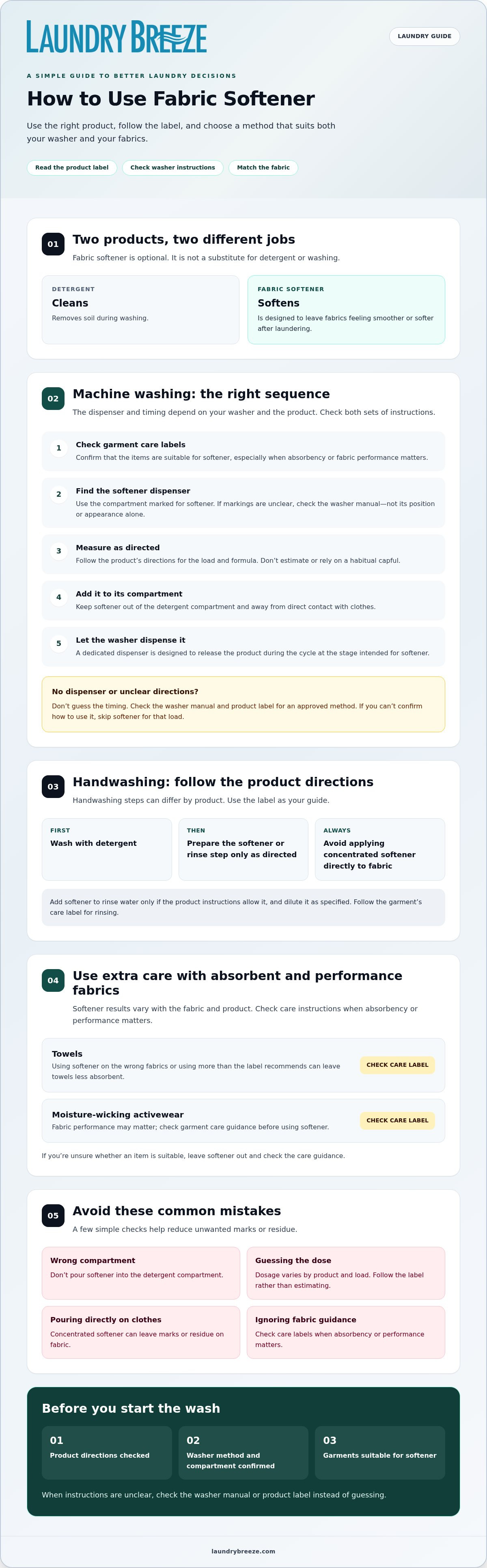
Add fabric softener only at the stage and location specified by the product label and your washer’s instructions. Many machines have a separate softener dispenser that releases the product at the appropriate time. Dispenser designs vary, so check the markings or manual instead of identifying the compartment by its position or appearance alone.
Fabric softener is a laundry product intended to make fabrics feel softer; detergent is the product that cleans clothes by removing soil during washing. Softener is optional, not a substitute for detergent or washing. In a fabric softener overview, you can learn more about these products. In practice, results can vary with the fabric and product. For this Guide for How To Use Fabric Softener, the key is to follow the label and washer directions rather than adding softener by habit.
What does fabric softener do?
Fabric softener is designed to leave fibers feeling smoother or softer after laundering. It works differently from detergent, which cleans the load. Softener doesn’t wash clothes, replace detergent, or guarantee the same feel across every material. Check garment care instructions before using it, especially for items where fabric performance or absorbency matters.
When should you add fabric softener?
If your washer has a compartment labeled for softener, add the product there before starting the cycle. The machine will generally dispense it during the cycle at the stage intended for softener, rather than mixing it with detergent at the beginning. Don’t pour it into the detergent compartment. If the markings aren’t clear, check the washer manual. It can help you identify the correct compartment and explain how the dispenser works on your model.
Some machines don’t have a dedicated dispenser, and product directions may differ. Read both sets of instructions before adding softener. In particular, don’t pour concentrated softener directly onto clothes, since direct contact may leave marks or residue. Use the method and timing specified on the product label and by the washer manufacturer. If the directions don’t seem to match, check the washer manual or contact the manufacturer rather than guessing.
Before you press start, confirm that you’ve chosen the softener compartment, read the product directions, and checked that the garments are suitable for softener. The next section walks through the steps for adding it in a machine or by hand.
How to Use Fabric Softener in a Washing Machine or by Hand
The right compartment and timing depend on your washer and softener. Before you start, check the garment care labels and the instructions for both the appliance and product. This Guide for How To Use Fabric Softener keeps the process straightforward: identify the right method, measure as directed, and avoid applying concentrated softener directly to fabric.
Using fabric softener in a washing machine
For a washer with a softener dispenser, follow this sequence:
- Check the labels. Confirm the garments can be washed with softener and review the product directions.
- Find the dispenser. Look for a compartment marked for fabric softener. If the markings are unclear, consult the washer manual rather than guessing.
- Measure the amount. Use the product’s directions for the load and formula. Don’t estimate or assume the same amount works for every product.
- Add softener to its compartment. Keep it out of the detergent compartment and don’t pour it directly onto clothes.
- Start the wash. The washer’s dispenser is designed to release the product during the cycle as directed by the appliance.
If your machine doesn’t have a softener dispenser, don’t add the product at a guessed point in the cycle. Check the washer manual and product label for an approved method and timing. If the instructions aren’t clear, skip softener for that load until you can confirm how to use it.
Using fabric softener when handwashing
Handwashing directions can differ by product, so use the label as your guide. Wash the garment with detergent first, then prepare the rinse or softener step only as the label directs. Add softener to rinse water only if the product instructions allow it, and dilute it as specified. Don’t apply concentrated product directly to the fabric. Follow the garment’s care label for rinsing, too.
How Much Fabric Softener Should You Use? Read the Label, Not a Guess
There isn’t one amount that works for every fabric softener. Directions can vary with the formula’s concentration and the load size, so a familiar capful or a dose that worked with another product may not be right for this one. Check the label each time you switch products, and follow any washer guidance.
Following the product label is more reliable than estimating a dose because the right amount depends on that specific formula and its directions. This is a simple but important step in any Guide for How To Use Fabric Softener: measure for the product you have, not by habit.
How to measure fabric softener for a load
Use the product’s measuring instructions and adjust the amount only when its directions explain how to account for load size or other conditions. If the bottle includes a cap, use it as a measuring tool only as directed. Don’t assume the cap should be filled to the top or that the same dose suits every load.
Pour the measured amount into the softener compartment, not the detergent compartment. If the washer has a marked maximum fill line, keep the product below it. Avoid overfilling, which can interfere with the dispenser’s intended use. If the product directions and washer instructions seem to conflict, check the appliance manual or contact its manufacturer before proceeding.
What if you accidentally use too much?
Don’t panic or automatically add another product to fix it. A noticeable film or residue on clothing may be a sign to review how much you used and whether the dispenser needs cleaning. These clues don’t prove that excess softener is the only cause, so consider the garment, product directions, and washer instructions before deciding what to do next.
Check the product label and appliance manual before choosing another wash or rinse. The right next step can depend on the fabric and machine, so don’t assume one remedy works for every load. If residue appears repeatedly, recheck your measuring method, the compartment’s fill limit, and the dispenser’s condition. Clean the dispenser only as the washer manual directs.
For the next load, measure according to the label, stay below the dispenser’s marked limit, and check the garments after washing. If the issue continues, pause softener use until you’ve reviewed the product and appliance instructions. This can help you identify whether the measuring method or dispenser needs attention.
Which Fabrics Should You Avoid Using Fabric Softener On?
Follow the garment care label and the item manufacturer’s instructions first. If they advise against fabric softener, skip it, even if you usually add it to other loads. Softener is optional, and a general laundry habit shouldn’t override directions for a particular fabric. Sort items by care needs, not just by color or load, so you can follow the right instructions for each group.
Towels and performance fabrics deserve a closer look because their usefulness can depend on absorbency or moisture-wicking performance. Softener may affect those qualities, but the right choice depends on the fabric and its care instructions. Check the label before adding it.
| Fabric or item | What to check | Skip or verify? |
|---|---|---|
| Towels | Care directions and whether absorbency is a priority | Skip if the label or manufacturer advises against softener; otherwise verify guidance |
| Moisture-wicking activewear | Garment instructions for washing performance fabrics | Skip if prohibited; follow the label’s recommended wash routine |
| Microfiber | Care label and manufacturer guidance | Verify before use, and skip if directions advise against it |
| Other special-care items | Fabric-specific instructions, including any restrictions | Follow the item’s directions rather than a general rule |
Should you use fabric softener on towels?
Check the towel’s care instructions, especially if maintaining absorbency matters to you. Some guidance may advise against softener, so don’t assume it belongs in every towel load. If the label or manufacturer recommends skipping it, wash the towels without softener and follow the rest of their care directions.
What about activewear, microfiber, and special-care fabrics?
Read the label on moisture-wicking activewear and microfiber items before adding softener. These fabrics may have specific care needs, and product or garment instructions take priority over general laundry advice. If the label says not to use softener, leave it out and choose a wash routine that follows the garment’s directions.
Fabric Softener Mistakes to Avoid and Easier Laundry Options
A few small checks can prevent common fabric-softener mix-ups. Don’t pour it into the detergent compartment, use more than the product label directs, or ignore a garment’s care instructions. Detergent and softener have different jobs: detergent cleans the load, while softener is optional. Neither replaces the care label, which should guide how an item is washed.
A quick checklist for using fabric softener correctly
- Check the fabric. Read the care label before adding softener to an unfamiliar item. If it says to avoid softener, leave it out.
- Check the washer. Use the manual to identify the softener dispenser, especially if its markings aren’t clear.
- Measure as directed. Follow the product label and don’t exceed the washer dispenser’s marked fill limit.
- Pause if you’re unsure. If the product, appliance, or garment instructions advise against softener, skip it for that load.
Seeing residue on clothes? Review the product’s dosage directions and check the dispenser for buildup, following the washer manual for cleaning instructions. If you’re unsure which compartment to use, don’t guess. Consult the manual before starting the cycle. For garments that need different care, sort them separately and follow their labels instead of applying one routine to every item.
Keep the roles clear: detergent is used to wash clothes, while fabric softener may be added according to its label and the washer’s directions. A care label still takes priority for a specific garment. If residue or uncertainty keeps coming up, skip softener until you’ve checked the instructions and confirmed the right approach.
When you would rather have laundry handled for you
Make Your Next Laundry Load Simpler
The basics are easy to remember: add fabric softener only where and when the product and washer instructions direct, and measure according to the product label instead of guessing. Before using it, check the garment care label. Towels, activewear, and other special-care fabrics may need a different approach, and softener isn’t required for every load.
Keep those checks handy, and this Guide for How To Use Fabric Softener can help you feel more confident with each wash. Detergent cleans; softener has a different purpose. Neither one replaces the care directions for your clothes.
Frequently Asked Questions
Where do you put fabric softener in a washing machine?
Use the compartment marked for fabric softener, if your washer has one. The machine is designed to release it during the appropriate part of the cycle. Don’t put it in the detergent compartment unless your appliance instructions specifically say to. Washer compartments can look different, so check the markings or manual if you’re unsure. Confirming the right spot before starting helps prevent misplaced product and confusion during laundry.
When should you add fabric softener to laundry?
Add softener to a dedicated dispenser before starting the cycle so the washer can release it at the intended time. If your washer doesn’t have a dispenser, check both the appliance manual and product label for timing instead of guessing. Avoid pouring concentrated softener directly onto clothes. Before using it on an unfamiliar garment, check its care label to see whether softener is suitable.
How much fabric softener should you use per load?
Follow the dosage directions on your softener label, since the recommended amount can vary by product and may depend on load size. Check your washer’s dispenser markings, too, and don’t fill past its limit. Use the product’s measuring cap only as its instructions direct; don’t pour freely or assume another product’s dose will work. This Guide for How To Use Fabric Softener starts with measuring for the specific product you have.
Can you put fabric softener directly on clothes?
Avoid pouring concentrated fabric softener directly onto garments. Direct application may leave visible marks or residue, and the product should be dispensed or diluted as its label instructs. Use the washer’s designated softener compartment when available. For handwashing, follow the product’s handwashing directions. Check garment care labels first, especially for delicate or performance fabrics, and skip softener if the garment instructions advise against it.
Can you use fabric softener on towels?
Check the towel’s care label and manufacturer guidance before using fabric softener. If absorbency matters, consider whether the instructions recommend skipping it. Softener isn’t automatically unsuitable for every towel, but it isn’t right for every item or routine either. Follow the specific care directions, and if they say not to use softener, wash the towels as directed without it.
Can you use fabric softener when handwashing clothes?
You may be able to use fabric softener when handwashing, as long as the garment and product instructions allow it. Follow the label for how to dilute or add the product, and only add it to rinse water if those directions permit. Don’t apply concentrated softener directly to fabric. For delicate items, check the care label and skip softener if it advises against use.
What happens if you use too much fabric softener?
Using too much may leave noticeable residue or make clothes feel coated, though results can vary by product, fabric, and washer. Check the product directions and appliance manual before choosing another wash or rinse, since one fix may not suit every load. Review dispenser markings, and clean the dispenser as the manual directs. Laundry Breeze offers wash and fold and pickup and delivery laundry services in Los Angeles, Beverly Hills, West Hollywood, Culver City, Santa Monica, Venice, and Westwood.
To see links to services mentioned in this article, please click
https://www.laundrybreeze.com


