

Could the water and cleaner that freshen one rug damage another? Absolutely. A rug’s fiber, construction, and backing matter more than any one-size-fits-all washing recipe. This Guide for Washing Your Rug will help you check what yours can safely handle before you reach for a bucket.
It’s understandable to worry about color bleeding, shrinkage, or a backing that won’t survive getting wet. Start by checking the care instructions and identifying the rug’s material. Then test a hidden area for colorfastness if damp cleaning is allowed, choose a method suited to the rug, and avoid soaking or scrubbing, two common ways to cause damage.
In this guide, you’ll learn how to assess your rug, choose a suitable cleaning approach, handle spills gently, and dry the rug thoroughly. You’ll also find out when home washing may be too risky. For rugs that are delicate, large, or difficult to identify, professional cleaning may be a safer option. Laundry Breeze lists rugs among the bulky items it cleans. Check whether your rug’s material and construction are accepted before arranging service.
Key Takeaways
- Check the care label and manufacturer’s instructions before deciding whether your rug can be washed at home.
- Identify the rug’s fiber and backing, then test a hidden area for colorfastness before damp cleaning if the instructions allow it.
- Match the method to the job: treat a small stain locally, clean surface dirt gently, and wash the whole rug only when the care instructions allow it.
- This Guide for Washing Your Rug explains how to remove loose dirt and clean a washable rug while limiting moisture and avoiding harsh scrubbing.
- Let the rug dry fully with good airflow before putting it back. Consider professional advice if its material or construction makes home washing uncertain.
Before washing your rug, check whether home cleaning is safe
Before adding water, check whether the rug’s care instructions and construction support home cleaning. A rug that looks sturdy may still have delicate fibers or a backing that reacts poorly to moisture. The safest method depends on the rug, not just its appearance.
Start with the care label and any manufacturer guidance. Look for the fiber type, cleaning restrictions, and instructions about water or specific cleaning methods. Different carpet cleaning methods use different amounts of moisture and cleaning agents, so don’t assume that a method that worked on another rug will work on yours.
What should you check before cleaning a rug?
Inspect the whole rug before choosing a method. Don’t identify its material by appearance alone. Check the label or manufacturer information if available. Look at the backing, edges, seams, and fringe for loose threads, cracking, fraying, or other weak spots. Note existing stains and damage so you can distinguish them from any changes during cleaning.
- Read the instructions: Find the care label, fiber details, and any cleaning restrictions.
- Inspect the construction: Check the backing, edges, seams, and fringe for wear, damage, or loose areas.
- Record the condition: Photograph stains or damage before cleaning, especially if the rug is valuable or delicate.
- Decide whether to proceed: If the instructions are clear and the rug is in sound condition, home care may be suitable. If not, get professional advice before cleaning.
Photos give you a record of the rug’s condition before you start. They can also help you describe a concern clearly if you ask a professional for guidance.
When should you avoid washing a rug at home?
Use extra caution with antique, handwoven, valuable, fragile, or visibly damaged rugs. Uncertain fibers, dyes that may not be stable, and a weak backing can make home washing risky. If the care label forbids water or its instructions are unclear, don’t guess. Ask a rug-cleaning professional to assess it first.
A small test can’t replace care instructions. Testing one hidden area may show how that spot reacts, but it doesn’t confirm that the whole rug or its backing can safely handle washing. If the label warns against water, or you can’t verify what the rug is made of, stop and get advice before cleaning.
This Guide for Washing Your Rug starts with a simple rule: clean at home only when the instructions and the rug’s condition support it. If you’re unsure, professional guidance may help you avoid turning a cleaning attempt into a repair problem.
Identify your rug’s fiber, backing, and colorfastness before choosing a method
A rug’s top layer is only part of the picture. Its visible pile may hide a different backing, blended fibers, or dyes that react to moisture. The surface can offer clues, but it can’t reliably identify the material or show how the whole rug will respond to cleaning. Check the care label or manufacturer’s guidance before choosing a method, and follow those instructions over general advice.
A rug’s fiber, backing, and construction determine how much moisture and cleaning it can safely tolerate. That’s why the same approach may suit one rug but damage another. Keep this in mind whenever you follow a Guide for Washing Your Rug.
How can you identify common rug fibers?
Wool, silk, cotton, jute, sisal, and polyester are examples of rug fibers, but this isn’t a complete list. Texture and appearance may offer hints, yet they aren’t proof. A soft pile, for instance, doesn’t confirm a particular fiber, and rugs can combine materials in the face yarn, backing, or both.
Blends and unknown fibers make label checks especially important. Don’t choose a detergent, water temperature, or soaking method based on a guess. Follow the care instructions for the specific rug. If you can’t identify its materials or find reliable guidance, ask a professional before applying moisture.
How do you test colorfastness without over-wetting?
Colorfastness means a dye stays in place instead of bleeding or transferring during cleaning. If the care instructions allow damp testing, choose a discreet area and follow the manufacturer’s directions. Use a clean, light-colored cloth to check for visible dye transfer. Use as little moisture as possible rather than soaking the test spot.
- Stop if you see color on the cloth.
- Stop if the texture changes or the backing reacts unexpectedly.
- Don’t proceed with broader damp cleaning if the test result is unclear.
Choose between spot cleaning, surface cleaning, and washing the whole rug
Match the method to the size of the problem and the rug’s care instructions. A small fresh spill may need only targeted attention, while general surface dirt calls for a broader approach. Washing the entire rug exposes more fibers and backing to moisture, so it isn’t automatically the best choice just because the rug looks washable.
| Method | Best suited for | Moisture exposure | Key caution |
|---|---|---|---|
| Spot cleaning | A localized spill or mark | Limited to the affected area | Follow fiber-specific instructions; blot instead of rubbing. |
| Surface cleaning | Light, broader surface soil | Applied across a larger area | Use only a method allowed by the rug’s care guidance. |
| Full washing | A rug whose instructions explicitly allow washing | May reach the pile and backing | Check construction, size, and drying needs first. |
The Carpet and Rug Institute cleaning standards offer broader guidance about carpet maintenance and cleaning. Use them as a reference, not a replacement for the care instructions for your particular rug.
When is spot cleaning the better choice?
For a fresh, localized mark, treating just that area can avoid exposing the whole rug to unnecessary moisture. Follow the rug’s care instructions and blot gently with a clean cloth, working from the outside toward the center. Don’t rub or scrub, which can push soil deeper or rough up fibers. Avoid mixing cleaners or applying a treatment the manufacturer hasn’t approved.
Can you machine-wash or fully wash an area rug?
A small size alone doesn’t mean a rug belongs in a washing machine. Check the care label, then consider whether the rug fits without crowding the washer, following both the machine and rug instructions. Size, backing, fringe, and construction can all affect whether machine washing is suitable. If directions are missing or unclear, or the rug is delicate, don’t machine-wash it or improvise a full wash.
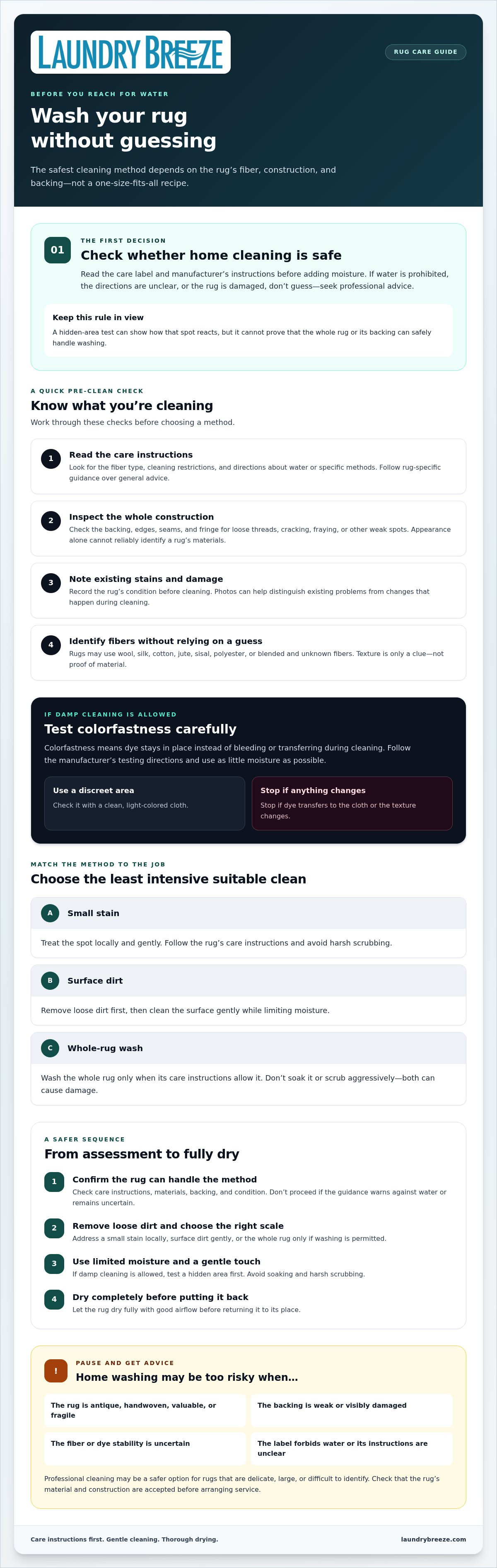
How to wash a washable rug at home, step by step
Follow these steps only if the rug’s care label or manufacturer confirms that washing is suitable. Instructions for a particular rug take priority over general cleaning tips. Follow the rug label before relying on generic advice. If the guidance is missing or unclear, pause and seek advice rather than experimenting.
- Prepare the area. Move furniture and choose a clean, suitable space where you can work without folding or dragging the rug over sharp edges. Gather only the tools and cleaner permitted by the rug’s instructions. Keep the care label nearby so you can check it as you go.
- Remove loose dirt gently. Vacuum or lift loose debris before adding moisture. Choose a vacuum setting suitable for the rug’s pile and construction. If the label warns against vacuuming, or the fibers or fringe seem fragile, follow its alternative guidance. Removing surface grit first helps keep it from mixing with damp fibers.
- Test the approved cleaner. If the manufacturer allows a cleaning product, test it on a discreet area according to the product and rug instructions. Use only a cleaner suitable for the rug’s material. Don’t combine products or substitute a household mixture. Stop if the test changes the rug’s color or texture.
- Clean in manageable sections. Apply only the amount of cleaning solution and moisture the instructions permit. Work gently, following the direction of the pile where practical. Blot or use a soft cloth rather than scrubbing aggressively. Check each area as you go, especially around seams, fringe, and backing.
- Rinse only if directed. Some care instructions may allow careful rinsing; others may not. Follow the specified method and use no more water than needed. Excess moisture can affect the backing and make thorough drying harder. Leftover cleaner can also leave residue, so follow product directions for removing it instead of adding extra rinses.
- Check the rug before moving on. Look for remaining suds, damp patches, or changes in color and texture. Don’t repeat the process with stronger cleaner or more water if the rug reacts unexpectedly. Follow the care instructions for drying before returning the rug to use.
Dry the rug fully and know when to choose professional rug cleaning
Cleaning isn’t finished when the visible dirt is gone. A rug that’s still damp underneath can hold moisture against its backing or the floor, so don’t put it back in place until it’s fully dry. Follow the manufacturer’s drying instructions and allow for airflow rather than trying to speed things up with unapproved heat.
How can you dry a rug safely after washing?
Use the drying method recommended for your rug. Choose a well-ventilated area where air can circulate around it, and avoid leaving it bunched or folded while damp. If the care instructions allow, position the rug so air reaches both the pile and backing. Handle it gently, especially if it’s heavy with moisture. Don’t use a heater, hair dryer, or other high-heat method unless the manufacturer specifically approves it.
Check more than the surface. Feel the pile and backing, including thicker areas and edges, for lingering dampness. Let the rug continue drying if any part still feels wet. Don’t place furniture on it or return it to the floor until it’s dry throughout. There’s no reliable fixed drying time for every rug, since material, construction, and the drying environment differ.
When is professional rug cleaning worth considering?
Pause home treatment if the rug is delicate, valuable, oversized, visibly damaged, or still has a stain that hasn’t responded to the care-approved method. Professional advice is also a sensible next step if you’re unsure about the material, backing, cleaning instructions, or how to dry the rug safely. Avoid escalating to stronger products or more water without guidance.
Laundry Breeze lists rugs among the bulky items it cleans, but that doesn’t mean every rug type or size is accepted. Before arranging service, ask whether your rug’s material, construction, and condition can be handled, and confirm the available service arrangements. Don’t assume rug cleaning is offered through pickup and delivery.
Choose the safest next step for your rug
A safe clean starts with the rug’s care instructions, fiber, and construction, not a one-size-fits-all washing recipe. This Guide for Washing Your Rug also highlights two safeguards: choose a method suited to the mess, and let the rug dry completely before putting it back.
If the rug is delicate, valuable, oversized, damaged, or hard to identify, pause before trying more water or stronger products. Professional advice may be the safer choice. Laundry Breeze lists rug cleaning among its bulky-item services and serves Los Angeles and nearby communities, but accepted rug types and service arrangements should be confirmed first.
Frequently Asked Questions
Can I wash my rug in a washing machine?
Only machine-wash a rug if its care label or manufacturer explicitly permits it and the washer can accommodate it without crowding. A small rug isn’t automatically machine-safe: its backing, fringe, and construction may not tolerate a wash cycle. Check both the rug and washer instructions. If the rug’s label is missing or unclear, don’t guess. Consider a suitable surface-cleaning method or ask a professional instead.
How do I wash an area rug at home?
To wash an area rug at home, first confirm its care instructions allow washing. Remove loose dirt gently, then test an approved cleaner in a hidden spot. Clean in manageable sections using only the product and moisture the instructions permit. Blot rather than scrub, and rinse only if directed. Dry the rug with good airflow until both the pile and backing are fully dry before returning it to the floor.
Is it safe to wash a wool rug with water?
Water isn’t automatically safe for a wool rug. Natural fibers can be vulnerable to over-wetting, which may contribute to dye bleeding, shrinkage, or backing damage. Check the rug’s care label or manufacturer instructions before damp cleaning, and don’t soak it unless the guidance specifically allows washing. If instructions are unclear, or the rug is valuable or delicate, get professional advice before using water.
How do I clean a rug without making the colors bleed?
Check the care instructions first, then follow their directions for a discreet colorfastness test before damp cleaning. Colorfastness means the dye stays in place rather than transferring. If testing is permitted, use a clean, light-colored cloth and check for visible color transfer. Stop if dye appears on the cloth or the rug’s texture changes. Don’t proceed with broader wet cleaning if the result is unclear.
What happens if a rug stays damp after washing?
A rug that stays damp can hold moisture against its backing and the floor beneath it. Don’t put it back in place, fold it, or cover it while it still feels wet. Follow the manufacturer’s drying guidance and provide airflow around the rug. Check thicker sections, edges, and the backing, not just the surface pile. If it remains damp or develops an unusual odor, seek professional advice.
Can I use the same cleaner on every type of rug?
No. Rugs can be made from different fibers, blends, and backing materials, and a cleaner that suits one may damage another or leave residue. Follow the care label or manufacturer’s guidance and use only a product approved for that rug. Don’t mix cleaners or rely on appearance to identify the material. If you can’t confirm what the rug is made of, ask a professional before treating it.
When should I take a rug to a professional cleaner?
Seek professional advice if your rug is delicate, valuable, oversized, visibly damaged, difficult to identify, or has a stain that hasn’t responded to care-approved treatment. Laundry Breeze lists rugs among the bulky items it cleans, but confirm that your specific rug’s material, size, and construction are accepted and ask about service arrangements. The business serves Los Angeles, Beverly Hills, West Hollywood, Culver City, Santa Monica, Venice, and Westwood.
To see links to services mentioned in this article, please click
https://www.laundrybreeze.com


