

How to Get Mold Out of Clothes: LA Laundry Guide
The strongest cleaner isn’t always the safest choice for moldy clothes. Before you scrub or start a hot wash, check the fabric and care label. It’s understandable to wonder whether a spotted or musty garment can be saved, especially when the wrong product or temperature could damage it. This Guide for How to Get Mold Out of Clothes will help you choose a careful next step, protect the fabric, and know when to pause.
Key Takeaways
- This Guide for How to Get Mold Out of Clothes starts with separating the garment, checking its care label, and assessing the affected area.
- Match any cleaning approach to the garment’s fabric and care instructions, and follow product directions instead of relying on generic recipes.
- After washing, inspect the clothing before drying or storing it so you can catch remaining spots or musty odor.
- Avoid rushing, ignoring care instructions, or combining incompatible cleaners, since these mistakes can harm fabric or complicate cleaning.
- For garments with visible mold, persistent odor, or a dry-clean-only label, ask a garment-care professional before proceeding. Contact Laundry Breeze first to confirm whether it can accept the item.
How to Get Mold Out of Clothes: Start With Safe First Steps
Some washable garments may be treatable, but whether an item can be saved depends on its fabric and the extent of the damage. Rather than reaching for a stronger cleaner, first check the garment and decide what care it can tolerate. Mold can grow in damp conditions; for background on what mold is, see Wikipedia’s overview.
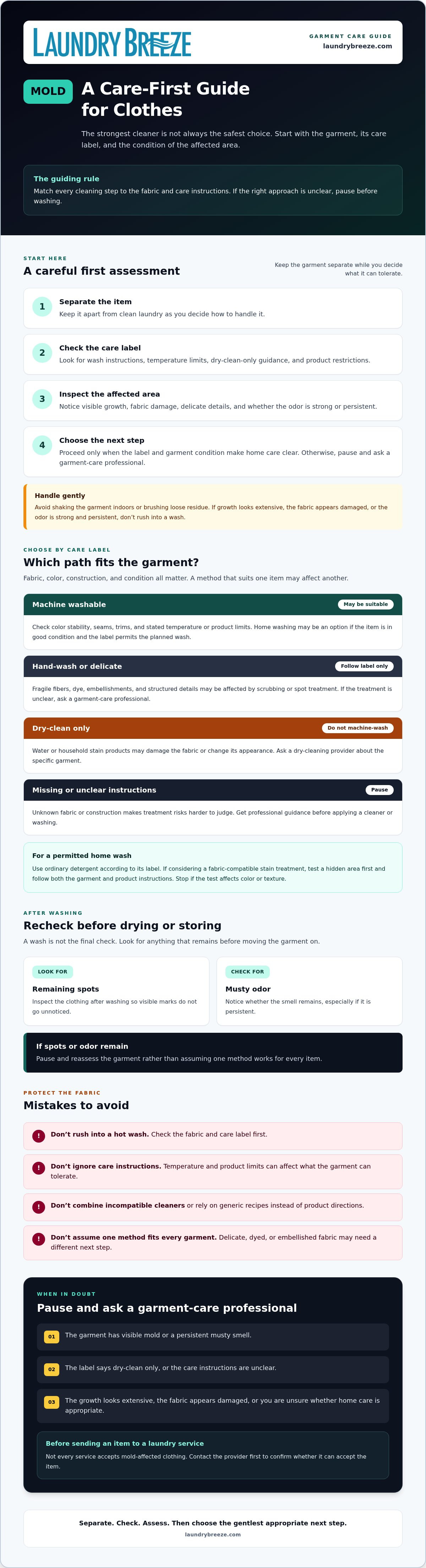
Start with this sequence:
- Separate the item. Keep it apart from clean laundry while you decide how to handle it.
- Check the care label. Look for washing instructions, temperature limits, dry-clean-only guidance, and product restrictions.
- Inspect the affected area. Note visible growth, fabric damage, delicate details, and whether the odor is strong or persistent.
- Choose the next step. Proceed only if the label and garment condition make home care clear. Otherwise, pause and ask a garment-care professional.
What to do as soon as you find mold on clothing
Handle the garment gently. Avoid shaking it indoors or brushing loose residue, which could spread material around the laundry area or onto other clothes. If the growth looks extensive, the fabric appears damaged, or the odor is strong and persistent, don’t rush into a wash. Keep the item separate while you decide whether to seek professional advice.
How the care label changes your cleaning plan
The label helps you identify whether the garment is washable, requires dry cleaning, or has limits on water temperature and cleaning products. Don’t assume a method that may suit sturdy cotton is safe for delicate, dyed, or embellished fabric. Follow both the garment instructions and any cleaner’s directions. If either is unclear, pause before treating the item.
This Guide for How to Get Mold Out of Clothes is about making a careful choice, not forcing every garment through the same process. Once you’ve checked the label and assessed the clothing, decide whether a fabric-appropriate home wash is reasonable or whether it’s better to stop and ask for help.
Choose a Mold-Removal Method That Fits the Fabric
A cleaning method is only useful if the garment can tolerate it. Use the care label as your starting point, then consider the fabric, color, construction, and condition. A detergent or stain treatment that works on one item may fade another or affect delicate fibers. The label and product directions take priority over generic online recipes, including suggestions in Bob Vila's guide to mold removal.
| Care label | Fabric or garment considerations | Home washing? |
|---|---|---|
| Machine washable | Check color stability, seams, trims, and any stated temperature or product limits. | May be suitable if the item is in good condition and the label permits the planned wash. |
| Hand-wash or delicate instructions | Fragile fibers, dye, embellishments, and structured details may be affected by scrubbing or spot treatment. | Only follow the method on the label. Ask a garment-care professional if the treatment is unclear. |
| Dry-clean only | Water or household stain products may damage the fabric or change its appearance. | Don’t machine-wash it. Ask a dry-cleaning provider about the specific garment. |
| Missing or unclear instructions | Unknown fabric or construction makes it harder to judge treatment risks. | Pause and get professional guidance before applying a cleaner or washing. |
Which clothes can usually be washed at home?
Home washing may be an option when the care label clearly permits it, the garment’s color and construction appear stable, and visible staining is limited. Choose ordinary detergent and use it according to its label. If you consider a fabric-compatible stain treatment, test it on a hidden area first and follow both sets of instructions. Stop if the test affects the color or texture.
When should you avoid home treatment?
Skip improvised treatment for dry-clean-only items, delicate garments, or clothing with extensive staining or damage. Don’t combine cleaners or add a second product because the first didn’t work. Mixing products can create hazards, and a stronger approach isn’t automatically safer for fabric. If mold is still visible, contact a garment-care provider before bringing the item in.
Wash, Recheck, and Dry Clothes Without Locking In the Odor
Once you’ve chosen a method the garment can tolerate, follow a clear sequence: pretreat only if the care label permits it, wash according to the label and product directions, inspect the item, then dry it as instructed. Keep it separate from clean laundry until washing is complete. Don’t add extra cleaners or combine products in hopes of speeding things up.
How to wash a treated garment
Use the care label to select the wash cycle and water temperature, and measure detergent according to its directions. If you applied a fabric-compatible treatment, make sure it’s suitable for the garment and follow its instructions too. After the wash, check the previously affected area and nearby fabric in good light. Look for remaining spots, changes in color or texture, and any musty smell before moving on.
What to do if spots or musty odor remain
If you still see a mark or notice an odor, pause. Recheck the care label and the directions for anything already used before deciding whether to wash again. For a washable garment, repeat only a compatible process supported by the label and product instructions. Don’t automatically increase the concentration, use hotter water, or try a stronger treatment. If the odor persists, damage spreads, or another attempt could harm the fabric, ask a garment-care professional for advice.
Inspection helps you decide whether the garment needs another compatible step before heat or storage. Follow the label’s drying instructions, and don’t use a dryer or other heat source before checking for remaining spots if you’re unsure whether it’s appropriate. Avoid putting clothing away while it’s damp, since lingering moisture can contribute to mustiness.
A garment should be completely dry before you store it. Check seams, cuffs, waistbands, and other thicker areas, which may take longer to dry than the rest of the fabric. If the garment still feels damp or smells musty, let it dry further according to its care instructions and reassess before putting it away.
This step-by-step approach keeps the focus on what the garment can safely handle. In this Guide for How to Get Mold Out of Clothes, a remaining mark or odor is a reason to reassess, not a signal to reach for a harsher cleaner.
Common Mold-Cleaning Mistakes and How to Prevent Them
A garment can look better after washing and still need another careful check. Don’t treat a lighter stain as proof that the clothing is ready for heat or storage. Inspect the fabric in good light and notice whether spots, dampness, or musty odor remain. If something still seems wrong, pause rather than automatically reaching for a stronger product.
Mistakes that can damage clothes or complicate cleaning
Using a cleaner without checking fabric compatibility can cause fading or damage, while ignoring the care label may expose clothing to a method it can’t tolerate. Read the product directions too, and don’t combine cleaners as a shortcut. Different products aren’t automatically safe to use together. Before storing the garment, check it again once it’s dry. If odor remains, don’t fold it away and hope it disappears.
Keep these checks in mind:
- Check before treating. Confirm that the product is suitable for the fabric and follow its instructions.
- Don’t mix cleaners. Use a compatible method rather than improvising with several products.
- Inspect before putting clothes away. Look for remaining spots or odor after washing and drying.
- Wait until the garment is fully dry. Damp fabric shouldn’t go into a closet, drawer, or laundry basket.
How to keep stored clothes fresh and dry
After washing, let garments dry according to their care instructions, and check thicker seams or folded areas for lingering dampness. Keep closets and storage spaces dry, and avoid leaving damp laundry sitting in a basket for long periods. If clothing or a storage area has been exposed to moisture, check stored items for new spots or a musty smell before wearing them.
Prevention also means noticing dampness before it lingers. Empty laundry baskets regularly, allow wet items to dry rather than leaving them bundled together, and make sure clothes are fully dry before folding. If a closet or storage area becomes damp, address that condition before returning clothes to it. Otherwise, freshly cleaned garments may be exposed to the same moisture again.
Removing a stain addresses the mark; keeping clothes dry helps prevent the conditions that let mold return. This is a practical principle in any Guide for How to Get Mold Out of Clothes: inspect carefully, follow garment instructions, and don’t store clothing until it’s dry and free of lingering odor.
When to Ask a Laundry Professional About Moldy Clothes
Home treatment isn’t always the best next step. Stop if the care label is unclear, the fabric is delicate, or a spot treatment seems to be changing the color or texture. If spots or a musty odor remain after care-label-safe washing, ask a garment-care professional what they recommend before trying another product. Professional laundry care isn’t a guarantee that mold, stains, or odor will be removed, or that the garment will be wearable again.
Should you keep treating the garment at home?
Pause when another attempt could damage the item. For a washable garment, share what you’ve already tried and ask whether further care is appropriate. For clothing confirmed suitable for ordinary laundering, Laundry Breeze offers wash-and-fold laundry service. If the care label says dry-clean only, ask a provider about dry cleaning before bringing the garment in. Neither service should be assumed to accept mold-affected items.
How to ask about laundry help in Los Angeles
Before arranging service, describe the garment, its care label, what you can see or smell, and any cleaning you’ve already attempted. Ask whether the provider accepts clothing with visible mold or a persistent musty odor, and confirm how it should be handled before you visit or schedule pickup. Laundry Breeze’s ability to accept mold-affected garments must be confirmed first.
If the garment is accepted and suitable for the service, you can ask about Laundry Breeze’s pickup-and-delivery laundry service. Confirm current availability for your location as well as acceptance of the specific item before making arrangements. This helps avoid bringing in clothing the provider isn’t able to handle.
Choose a Careful Next Step for Your Clothes
Moldy clothing doesn’t call for a stronger cleaner by default. Start with the care label, match any treatment to the fabric, and inspect the garment after washing before drying or storing it. If spots or musty odor remain, or another attempt could damage a delicate item, pause and ask a garment-care professional for advice.
This Guide for How to Get Mold Out of Clothes is built around protecting the garment while making a practical choice. Some washable items may be suitable for ordinary laundering, while dry-clean-only pieces need advice from a dry-cleaning provider. No cleaning method guarantees that every stain or odor will come out.
Frequently Asked Questions
Can you get mold out of clothes?
Sometimes, but the result depends on the fabric, care label, extent of growth, and whether stains or odor remain. Separate the garment from clean laundry and check its care instructions before choosing a compatible cleaning method. This Guide for How to Get Mold Out of Clothes can help you decide what to try, but stop if the item is delicate, damaged, or still smells musty after washing. Ask a garment-care professional about the safest next step.
Should you wash moldy clothes in hot or cold water?
There isn’t one water temperature that’s right for every garment. Check the care label and follow the directions on your detergent or treatment product. Water that’s too hot for an item may shrink or damage it, while a generic cold-water recommendation may not suit the product being used. Let the garment’s material and care instructions guide your choice. If the label is missing or unclear, ask a garment-care professional before washing.
Can you use bleach to remove mold from clothes?
Don’t assume bleach is safe for clothing. It can discolor or damage some fabrics, so check both the garment’s care label and the bleach product directions before use. Never combine bleach with other cleaning products. If the garment and product instructions allow a treatment, test it on an inconspicuous area when appropriate. Stop if the fabric’s color or texture changes, or ask a garment-care professional if you’re unsure whether bleach is suitable.
What should you do if mold stains remain after washing clothes?
Don’t put the garment away or automatically reach for a stronger cleaner. Recheck its care label and inspect the fabric for changes in color or texture. If it’s washable, consider repeating only a compatible process allowed by the garment and product directions. For persistent marks or odor, delicate fabric, or worsening damage, stop and ask a professional about the safest next step. A remaining stain doesn’t tell you which treatment is safe to try next.
Can moldy clothes be washed with other laundry?
Keep a mold-affected item separate from clean laundry while you assess and treat it. Handle it gently, and avoid shaking or brushing it in a way that could spread loose residue. Follow its care label and use an appropriate cleaning process before returning it to ordinary laundry. If growth is extensive or you’re unsure about the garment’s condition, pause and seek professional advice before washing it with other clothes.
How do you get a musty mold smell out of clothes?
First, check that the care label allows home washing. Wash the garment using a fabric-compatible method and follow the product directions, then check for odor and visible spots before drying or storing it. Don’t cover a lingering smell with fragrance or assume the issue is resolved because the odor seems lighter. Reassess the garment, and if the smell persists or another wash could harm the fabric, ask a garment-care professional for advice.
Can a dry cleaner remove mold from clothing?
It depends on the garment, its care instructions, and the provider’s handling policies. Contact the dry cleaner before bringing in clothing with visible mold or a persistent musty smell. Describe the fabric, visible condition, and any treatment you’ve already tried. Laundry Breeze offers dry cleaning in Los Angeles and nearby areas, including Beverly Hills, West Hollywood, Culver City, Santa Monica, Venice, and Westwood. Confirm current availability and garment acceptance first, since results aren’t guaranteed.
To see links to services mentioned in this article, please click
https://www.laundrybreeze.com


