

What if clean linens could be ready for your business without pulling your team away from its core work? A reliable Commercial linen service should suit the towels, sheets, and uniforms you use, as well as the way your business runs. When laundry takes time away from guests, clients, or daily operations, a clear process for handling it can make planning easier.
This guide explains how Laundry Breeze’s commercial laundry service supports Los Angeles-area businesses, from hotels and short-term rentals to gyms, salons, medical facilities, med spas, and restaurants. You’ll learn how to plan your linen inventory and workflow, compare cleaning and rental models, and understand how Laundry Breeze handles business laundry. Laundry Breeze keeps each client’s laundry separate, requires no contracts, and can invoice commercial customers weekly or monthly. With a clear routine, your team can spend less time managing laundry and more time focused on the work your business does best.
Key Takeaways
- A Commercial linen service can move recurring laundry off your team’s workload and help keep business textiles ready for use.
- Map the process from sorting and collection through cleaning, folding, and return to see how it fits your daily workflow.
- Compare linen ownership, handling practices, and billing arrangements to understand which service model suits your business.
- Plan clean-linen needs around the items you use, your storage space, and the pace of your operations.
- Laundry Breeze’s eco-friendly deep-cleaning process removes allergens, dust mites, and bacteria from business laundry.
Commercial Linen Service: Why Outsourcing Linen Care Matters
A commercial linen service cleans sheets, towels, uniforms, and other reusable textiles used in a business. Unlike household laundry, it supports the ongoing flow of items a business needs to serve guests, clients, and staff. Clean textiles are part of daily operations, not another task competing for your team’s attention.
Consider the full laundry loop: gathering used items, sorting them, washing and drying them, folding them, then returning them to storage or the point of use. Each step takes time and space. When employees fit laundry in between other duties, their attention is divided. When laundry becomes a regular in-house job, machines, storage, and staff time all become part of the workflow.
Clean stock also shapes the experience people have with your business. A guest expects fresh sheets; a restaurant needs clean table linens for service; gym members and staff rely on clean towels. If clean items run short, teams may need to reorganize tasks or delay room, table, or facility preparation. Outsourcing is one way to manage that recurring work. Whether it makes sense for your business depends on your laundry volume, routines, equipment, and priorities, not on an assumed saving.
Which business tasks make linen outsourcing worth considering?
Notice where laundry fits into a typical workday. Who collects used linens, carries them to the wash area, loads and unloads machines, folds clean items, and restocks shelves? If those jobs interrupt customer service or pull staff away from their main roles, outsourcing can simplify the routine.
Volume can change, too. A quiet period and a busy stretch may produce very different amounts of laundry, making an in-house process harder to manage. Consider whether your team has enough time, room, and equipment to handle those shifts without disrupting other work. Outsourcing gives you another way to handle the workload, rather than an automatic cost-cutting answer.
What counts as commercial linen in everyday operations?
Commercial linens are reusable fabric items used as part of a business’s service. Examples include hotel sheets, restaurant table linens, and gym towels. Salons, med spas, medical facilities, and short-term rentals may also use towels, sheets, uniforms, or other business textiles. The specific mix depends on the work being done and how often each item is used.
Laundry care is different from housekeeping or facility management. Cleaning a sheet or towel doesn’t include making a bed, preparing a guest room, or maintaining a business space. Keep that distinction clear as you identify the laundry workload and decide which items belong in your routine.
How Commercial Linen Service Moves Business Laundry Through Its Cleaning Cycle
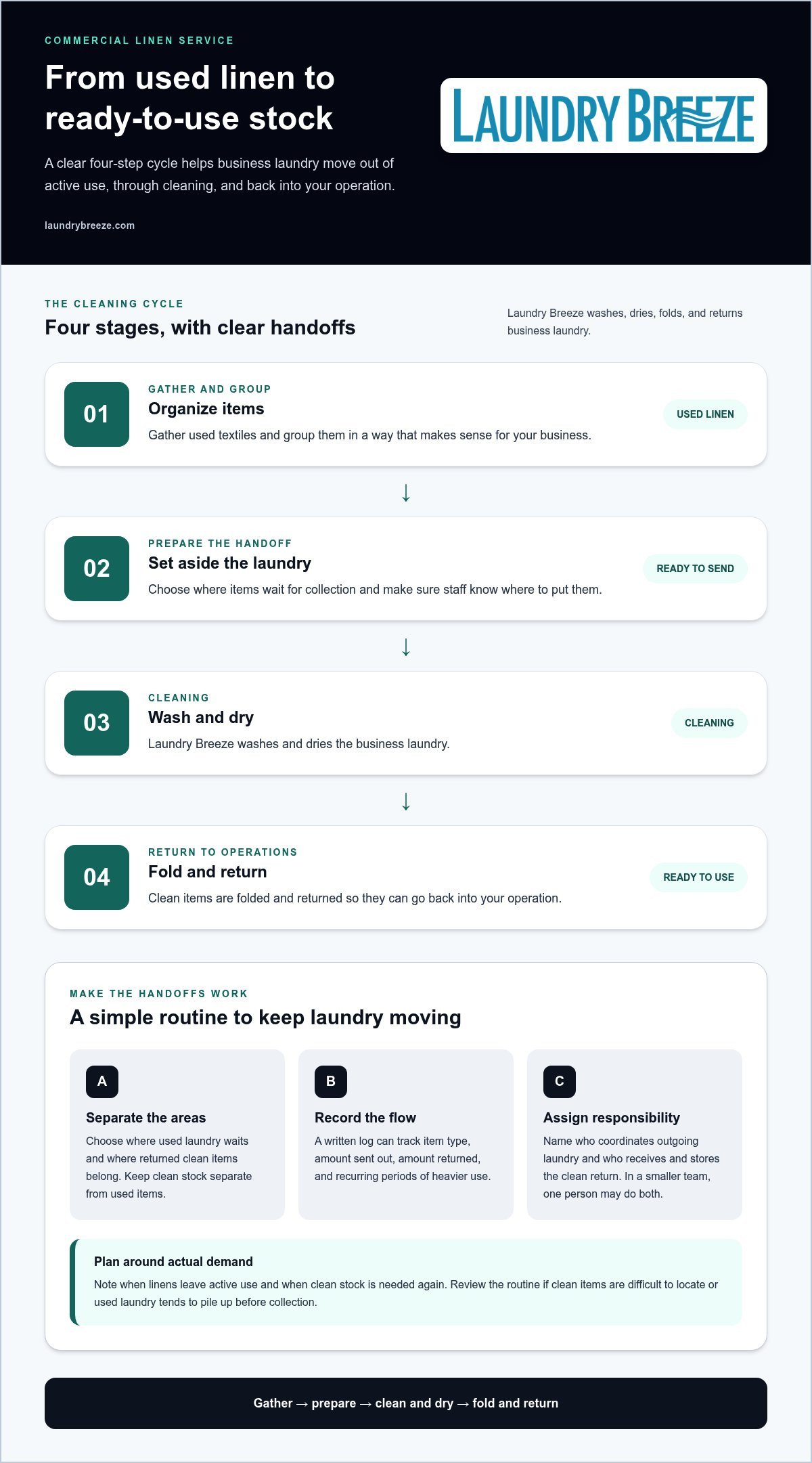
A dependable linen routine needs a clear path for used items to leave active use, move through cleaning, and return ready for your team. Laundry Breeze’s commercial laundry service washes, dries, folds, and returns business laundry. Planning the handoffs helps you fit that process into your staffing and storage routines.
For general industry context, the Textile Rental Services Association (TRSA) offers resources related to linen, uniform, and facility services. For your own operation, focus on how each handoff fits your staffing and storage routines.
What happens during a typical commercial linen service cycle?
Map the cycle from the moment an item is taken out of use to when it’s ready to be used again. A practical sequence includes:
- Organize items: Gather used textiles and group them in a way that makes sense for your business.
- Prepare the laundry: Set aside the items for the handoff and make sure staff know where to put them.
- Clean and dry: Laundry Breeze washes and dries the items.
- Fold and return: Clean items are folded and returned so they can go back into your operation.
The steps are straightforward, but the handoff matters. Decide where used laundry will wait, who prepares it, and where returned items should go. A dedicated receiving area can help keep clean stock separate from used items. If your business handles different types of textiles, identify them clearly so staff can keep the laundry organized from the start.
How can a business fit linen processing into its workflow?
Start with demand, not a guessed schedule. Note when linens leave active use and when clean stock is needed again. A simple written log can record the type of item, the amount sent out, the amount returned, and recurring periods of heavier use. This gives you a practical picture of your routine and can reveal where a handoff or restocking step needs attention.
Assign clear roles, too. One person can coordinate outgoing laundry, while a designated staff member receives the clean return and puts it in its storage location. In a smaller team, the same person may handle both tasks. What matters is that everyone understands the responsibility, even when shifts change. Review the process if clean items are difficult to locate or used laundry tends to pile up before collection.
Commercial Linen Service Options: Compare Ownership, Handling, and Billing
Before choosing a service, separate three questions: who owns the linens, how they’re handled, and how the service is billed. These details shape how laundry fits into your operation. A Commercial linen service can clean the textiles your business already owns, while a rental model supplies linens as well as managing their care. Knowing which arrangement you need helps you compare options without confusing cleaning with linen supply.
How does cleaning business-owned linen differ from linen rental?
Cleaning processes your linens; rental supplies them. With a cleaning service, your business keeps responsibility for its existing stock and decides how to store and replace it. A rental arrangement involves using linens supplied through that program, so the supply model differs. Consider what you already own, whether you have room to store it, and who will manage worn or missing items. Laundry Breeze’s commercial service cleans business laundry rather than renting linens.
Which service terms help businesses compare providers?
Look at practical terms that affect day-to-day work, not just the service name. A short comparison can help you identify what matters to your business:
- Commitment: Note whether an ongoing contract is required and how the arrangement works. Laundry Breeze’s commercial service is contract-free.
- Handling: Consider how your business’s items are kept distinct during processing. Laundry Breeze does not mix different clients’ laundry.
- Billing: Consider which billing cadence works with your bookkeeping. Laundry Breeze commercial customers can be invoiced weekly or monthly.
- Communication: Decide who on your team coordinates the laundry and receives returned items, so responsibilities don’t get lost between shifts.
These details matter because businesses have different routines. A short-term rental may need a clear way to manage its linen stock, while a restaurant may focus on keeping table textiles moving through regular operations. The right fit is the one whose ownership model, handling, and billing align with your setup.
For background on the laundry workforce, the Bureau of Labor Statistics on Laundry and Dry-Cleaning Workers provides occupational information. For your own planning, compare your current linen inventory and responsibilities with the service terms that matter to your business. If you’re reviewing local options, the commercial laundry service page outlines Laundry Breeze’s business offering. You can also review commercial laundry service prices in Los Angeles as part of your budget planning, then weigh those details alongside ownership, handling, and billing instead of judging by one factor alone.
Plan Commercial Linen Service Around Los Angeles Business Operations
A practical linen routine starts with how your business actually uses its textiles. A hotel, gym, salon, and restaurant may all need clean items, but their supplies, storage needs, and pace of use differ. For businesses in Los Angeles, Beverly Hills, West Hollywood, Culver City, Santa Monica, Venice, and Westwood, planning around real usage can make it easier to decide what needs cleaning and where clean stock should go when it returns.
What should Los Angeles businesses map before choosing a linen routine?
List each linen category and the role it plays in daily work. Then consider where used items collect, how much space is available for clean stock, who coordinates the handoff, and when demand tends to rise. A short-term rental might track sheets and towels around guest turnover; a restaurant may note which table linens are used during service. Use your own records, not a generic volume estimate.
- Items: Record the linens your business uses and where each is needed.
- Storage: Identify where clean stock can be kept without crowding work areas.
- Handoffs: Assign responsibility for preparing outgoing laundry and receiving clean returns.
- Demand changes: Note the periods when your own activity increases or linen needs shift.
Plan linen service around actual usage patterns, storage capacity, and the moments clean stock is needed. This gives your team a useful starting point for setting a routine without relying on assumptions about how much laundry a business “should” produce.
How do linen needs differ across local business types?
Consider how each item is used. Hotel and short-term rental sheets are tied to guest stays and room readiness. Restaurant table linens support food service, while salon towels are used during appointments. Gym towels move through member and staff use; med spas and medical facilities may have their own mix of towels, linens, or uniforms. Those differences shape what gets collected, stored, and restocked.
Even businesses in the same industry can have different routines. A salon with limited storage may need to pay close attention to where clean towels are placed, while a restaurant may focus on keeping table linens easy for staff to access. Map the items and handoffs that matter in your own space before settling on a process.
Laundry Breeze Commercial Linen Service: A Local Next Step
Once you’ve mapped your linen types, storage needs, and handoff routine, you can choose a service that fits those details. Laundry Breeze provides commercial laundry for businesses in Los Angeles, Beverly Hills, West Hollywood, Culver City, Santa Monica, Venice, and Westwood, cleaning business linens, towels, and uniforms. A Commercial linen service can take recurring laundry tasks off your team’s hands, so staff can stay focused on serving guests, clients, and customers.
What can businesses expect from Laundry Breeze’s commercial service?
Laundry Breeze serves businesses such as hotels, short-term rentals, gyms, salons, med spas, medical facilities, and restaurants. Each has a different mix of textiles and usage patterns, so it helps to be clear about the items your business needs cleaned and how they support daily work. The service is contract-free, and different clients’ laundry is kept separate.
Laundry Breeze’s eco-friendly deep-cleaning process removes allergens, dust mites, and bacteria. This describes the stated cleaning process, not a medical or regulatory certification. It’s a practical detail to consider as you plan how business linens fit into your regular operations.
Explore Laundry Breeze’s commercial laundry service to see how its offering supports your business’s linens, towels, and uniforms. Keeping the items and workflow in view can make it easier to plan a useful handoff.
How can a business take the next step?
Prepare a brief outline of your operation before getting started. You don’t need a complicated inventory system. A clear description gives the service context about what your team uses and what matters in the handoff.
- Business type: Share whether you run a hotel, short-term rental, gym, salon, med spa, medical facility, restaurant, or another kind of business.
- Linen categories: List the items you need cleaned, such as towels, sheets, linens, or uniforms.
- Routine: Describe where used laundry is gathered, who coordinates it, and where clean items need to go when they return.
- Operational needs: Note storage limits and periods when your business uses particular items more heavily.
These details connect the service to the way your business works, rather than relying on a generic laundry plan. Laundry Breeze commercial customers can be invoiced weekly or monthly, giving businesses billing options to consider alongside their linen workflow.
Make Your Linen Routine Work for You
A linen routine is most useful when it gives your team one less decision to make during a busy shift. Turn your planning into a simple working plan: name the person responsible for laundry handoffs, note where clean stock belongs, and choose a regular moment to review whether the arrangement still suits daily work. If staffing or business operations change, revisit the plan instead of letting old assumptions dictate what gets washed and where it goes. Keep the instructions clear enough for the whole team to follow.
The right Commercial linen service should support your operating rhythm, not create extra steps. Start with the needs you can describe clearly, then use those details to shape a practical approach to your business’s linen care. Small adjustments can make the process easier to manage and help staff stay focused on the people they serve.
Frequently Asked Questions
Is commercial linen service practical for a small business?
Yes, it can be practical if laundry regularly takes staff away from other work. Start by listing the items your business uses, how often they need cleaning, and how much staff time goes into sorting and managing them. For example, a small salon can track towel use across its appointment days. That picture helps you judge whether outsourcing suits your operation. Laundry Breeze’s Wash & Fold Service has a $25 minimum order, while free pickup and delivery for general laundry has a $40 minimum order.
What is a linen par level?
A linen par level is the amount of a particular item a business aims to have available across items in use, items being cleaned, and stored clean stock. A lodging business might track sheets separately from towels because each is used differently. There’s no universal quantity to apply. Consider how quickly each item is used and returned, along with the storage space you have, then adjust your target based on actual experience.
How often should a business send linens for cleaning?
There’s no single cleaning rhythm that suits every business. The right timing depends on how quickly items are used, how much clean stock is on hand, and how much room is available to store it. Track what leaves active use and what’s needed before the next return. Use those observations to plan a routine around your operations and the pickup and delivery service hours, Monday through Sunday, 9:00 a.m. to 7:00 p.m.
Can linen needs change with seasonal demand?
Yes, changes in guest stays, appointments, classes, or restaurant activity can shift how quickly linens are used. Review your own records from busier periods and note which items were hardest to keep available. For example, a gym could compare towel use during a fuller class schedule with a quieter period. Share expected demand changes when planning laundry service so the handoff routine reflects the way your business operates.
How should staff prepare linens for pickup?
Make the handoff clear and consistent. Choose a designated place for outgoing items, tell staff which linen categories belong in the collection, and identify textiles with different care instructions. Assign someone to prepare the laundry and someone to receive it if those duties fall to different people. A short written reminder can help keep the routine clear across shifts.
What should a business do with linens that have special care labels?
Check the care label before adding an item to a routine wash batch. If the instructions differ from those for other textiles, set the item aside and make its care guidance easy for staff to see. This helps prevent a team from treating every fabric alike. Laundry Breeze also offers a Dry Cleaning Service for garment care; follow the item’s care instructions when deciding how to handle commercial textiles.
What are Laundry Breeze’s pickup and delivery hours?
Laundry Breeze offers pickup and delivery Monday through Sunday, 9:00 a.m. to 7:00 p.m. Businesses in Los Angeles, Beverly Hills, West Hollywood, Culver City, Santa Monica, Venice, and Westwood can use these hours when planning internal handoffs. Free pickup and delivery for general laundry has a $40 minimum order.
To see links to services mentioned in this article, please click
https://www.laundrybreeze.com


