

A commercial linen service near me in Los Angeles can help businesses keep towels, linens, and uniforms clean without handling every load themselves. Turnaround times described in the market range from 3 to 6 hours to next-day return, depending on the service. Pickup and delivery, the types of items handled, and order volume all shape the arrangement.
When laundry competes with the work your business needs to get done, a dependable service can make the routine easier. The right setup should suit your linen needs and make pickup, processing, and delivery straightforward.
This guide explains what to look for in commercial laundry pickup and delivery, what can affect turnaround, and how restaurant linens and uniforms fit into a service plan. You’ll also learn how to assess laundry volume and pricing, and how Laundry Breeze serves businesses in Los Angeles, Beverly Hills, West Hollywood, Culver City, Santa Monica, Venice, and Westwood.
Key Takeaways
- Plan pickup and delivery around your business’s linen flow, with clear sorting and handoff routines.
- Match turnaround expectations to your operation’s needs and the service schedule.
- Group restaurant linens and uniforms by type and usage to make laundry needs easier to manage.
- Track order volume to understand what to discuss when exploring volume-based savings.
- Build pricing around actual laundry weights rather than estimates, as the U.S. Government Accountability Office advises for laundry service contracts.
Commercial laundry pickup and delivery
Commercial laundry pickup and delivery brings soiled business items to a laundry facility and returns them clean. Keep the handoff organized by listing items such as towels, table linens, and uniforms, separating laundry by type, and noting handling instructions. Labeled bags or containers help staff manage collection. If you’re searching for a commercial linen service near me in Los Angeles, these details help you explain what your business needs.
Build the schedule around your operations and when clean linens are needed, rather than waiting for storage to run low. A restaurant, for example, can plan pickups around linen use and kitchen prep. Share access instructions, the collection point, and a staff contact, and record schedule changes in one place. A simple routine helps staff prepare laundry consistently.
Quality checks start before laundry leaves your premises. Count or weigh items using the agreed method, and record damaged or stained pieces separately. When laundry returns, compare it with the pickup record and check cleanliness, folding, and packaging before storing it. For ozone laundry systems, the Centers for Medicare & Medicaid Services says the facility and laundry service need an agreement stating that laundry will be hygienically clean and protected from recontamination during loading and transport.
Packaging helps protect clean linens between processing and use. Agree on how items will be grouped, folded, and packed, and identify where returned bundles should go. A hotel might separate sheets from towels for easier storage. Keep soiled and clean goods apart during handoff. If packaging arrives wet, damaged, or mixed, record the issue with the delivery details and follow the service’s established process for reporting it.
Before signing, what should you check in a commercial linen service contract? Review pickup and return schedules, item handling, quality expectations, order measurement, minimum order terms, delivery fees, and how missed or damaged items are documented. Clear terms make responsibilities easier to understand.
Minimum orders and delivery fees affect the total cost of pickup and delivery. Review the minimum quantity, how it’s measured, and when a delivery fee applies. Compare those terms with your usual laundry volume and pickup frequency. If volume changes seasonally, understand how adjustments are handled. When evaluating a commercial linen service near me, look for clear written terms rather than relying on an informal estimate.
Common friction points with commercial linen services include missed pickups, returned items that don’t match the pickup record, inconsistent cleaning, and unclear extra charges. Dated records, item counts, and written delivery terms make issues easier to identify and resolve.
Laundry turnaround times
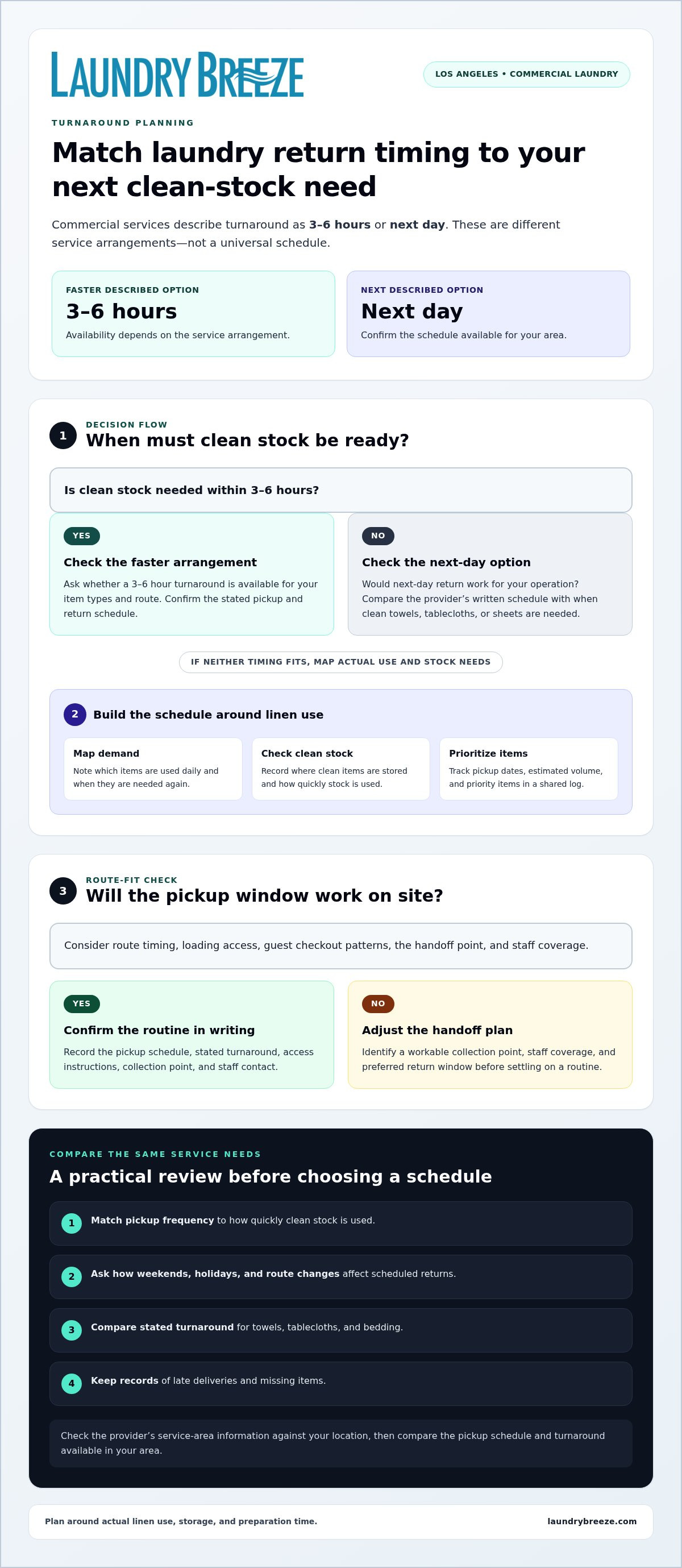
Turnaround means the time between pickup and return of processed laundry. Commercial laundry services describe turnaround as 3 to 6 hours or next day, depending on the service. Those are different service arrangements, not a universal schedule. For a Los Angeles business, plan around when clean towels, tablecloths, or sheets must be ready for use.
Start with a simple usage map. Note which items are used daily, when they’re needed again, and where clean stock is stored. A vacation rental, for example, may need fresh sheets and towels between guest stays. An Airbnb host can separate laundry by property or room to help staff return bundles to the right place. Hotels can sort sheets, bath towels, and dining linens into distinct groups.
Assign one person to coordinate laundry and keep the schedule easy to manage. A community center might track towels used for programs, while a nonprofit shelter may need clean linens for regular operations. Record pickup dates, estimated item volume, and priority items in a shared log so staff can see what was sent and what needs to return.
To compare local providers on delivery frequency, turnaround, and reliability, review the written pickup schedule, stated turnaround, and process for reporting late or incomplete orders. Compare the same item types and service needs rather than relying on general claims about speed.
To find commercial linen services that cover your ZIP code, check the provider’s service-area information against your Los Angeles location. Then compare the pickup schedule and turnaround available in your area.
Businesses in Los Angeles should also consider route timing. A pickup window that works for a downtown restaurant may not suit a business with limited loading access or a property with staggered guest checkouts. Map the handoff point, staff coverage, and preferred return window before settling on a routine. This helps the laundry schedule support daily operations instead of interrupting them.
Use a short review process:
- Match pickup frequency to how quickly clean stock is used.
- Ask how weekends, holidays, and route changes affect scheduled returns.
- Compare the stated turnaround for towels, tablecloths, and bedding.
- Keep a record of late deliveries and missing items.
Restaurant linens and uniforms
Restaurants handle table linens, towels, aprons, and workwear throughout daily service. Sorting these items by use makes laundry easier to organize and plan.
Restaurant Linen Services
Restaurant laundry can include tablecloths, napkins, kitchen towels, and staff uniforms. Separate dining-room linens from kitchen items before collection, since each group serves a different purpose. For example, keep napkins together and put used cleaning towels in a separate container. Before storing returned items, check cleanliness, folding, and visible stains.
Group uniforms by type, such as chef coats, aprons, and service shirts. Keep personal items and garments needing special handling apart from regular laundry. A simple written sorting guide helps employees prepare the right pieces for collection. When uniforms return, organize them by role or department so staff can find workwear without searching through mixed bundles.
Linen and Uniform Rental Options
Linen services may provide rental items, clean linens and uniforms owned by the restaurant, or offer both options. Rental items can include tablecloths, napkins, aprons, and work shirts. Compare what a service supplies with what your team already owns, then review the terms for replacement, cleaning, and returns. This clarifies whether you need linen rental, linen cleaning, or both.
Organize uniform cleaning around how each garment is used. A chef coat, host’s shirt, and apron used near food preparation may each need different handling. Create a garment list and note stains, damage, or instructions before pickup. This gives the cleaning service a clear record and helps your team inspect returned workwear consistently.
Separate towels by task before collection. Keep dining-room wipe-down cloths apart from hand towels and kitchen towels to prevent mixed batches and simplify storage. For linen cleaning, identify tablecloths and napkins separately, then check that returned bundles match the restaurant’s sorting system.
Use a basic intake routine to keep service needs clear:
- Sort table linens, towels, and uniforms into separate groups.
- Record damaged garments or linens before they leave the restaurant.
- Set a consistent place for clean, folded items after return.
- Review the order against the item groups your staff prepared.
For a restaurant in Los Angeles, these steps make linen and uniform handling easier to repeat across shifts. Clear sorting and inspection routines help staff identify missing items, keep clean stock organized, and prepare the next batch without disrupting service.
Volume discounts
Volume-based discounts link laundry charges to the amount of work handled. For a Los Angeles business, volume may include the weight and mix of sheets, napkins, towels, and uniforms processed. The discount depends on the agreement, so compare its terms with your regular laundry needs. A larger load alone doesn’t explain how a discount is calculated.
Track laundry over a representative operating period. Record what goes out, how often it’s collected, and whether demand changes with occupancy or bookings. A hotel may handle sheets and towels alongside restaurant napkins, while a nail salon may send a different mix of towels and workwear. Use actual item records rather than a rough estimate.
Separate regular volume from occasional surges. A vacation rental operator may have more bedding to process after several guest departures. A hotel may have steady room turnover, while a salon’s towel use follows its appointment schedule. Note these patterns in a simple log to distinguish normal use from busy periods.
Check how a proposed discount is calculated. Does it depend on total weight, item category, collection frequency, or a combination? Confirm whether the same calculation applies to sheets, napkins, and uniforms. A discount based on total load may work differently from one tied to particular items. Written terms should make the calculation clear before service begins.
Accurate measurement matters. The U.S. Government Accountability Office says a laundry service contract should specify that payments are based on actual laundry weights rather than estimates. Use consistent weighing and recording practices, keep service records with your own laundry log, and compare them with invoices. This gives both sides a shared basis for evaluating volume.
Review the full agreement, not just the discount label. Check which services the discount covers, how changes in volume affect it, and whether delivery or minimum-order terms change the total. A stated reduction may have limited value if it applies only to certain items. Clear definitions help you compare the arrangement with your business’s laundry pattern.
Use this checklist when assessing volume terms:
- List the items included, such as sheets, napkins, or towels.
- Record typical loads and seasonal changes separately.
- Confirm how weight or item counts are documented in the agreement.
- Compare discount conditions with delivery and minimum-order terms.
For hotels, rentals, and nail salons, the key question is whether a proposed discount matches measurable, repeatable laundry volume. Keep item categories clear and retain records. This makes the calculation easier to understand and helps you spot changes when your laundry mix shifts.
Commercial pricing and custom quotes
A custom commercial quote should reflect the laundry your business actually sends. Start with an item list, such as vacation rental sheets, salon towels, or hospitality linens. Note which items are regular and which appear only during busy periods. This gives the quote a clearer picture of your usual laundry mix.
Volume is only one part of a service arrangement. Laundry weight and type, pickup frequency, and requested handling can all affect the quote. A massage studio may send towels and sheets, while a vacation rental may send guest bedding after checkouts. Separate these categories in your records so you can describe the work accurately.
Ask how the quote measures laundry and records changes. The U.S. Government Accountability Office says a laundry service contract should specify that payments are based on actual laundry weights rather than estimates. Clear weight records help both sides compare invoices with the laundry processed. Keep your own dated records, especially when guest occupancy or salon appointments change the volume.
Commercial laundry pricing depends on the operation and is provided after a quote request. Cost factors include laundry weight, item mix, pickup frequency, and requested handling. Compare the quote’s terms with your actual service needs, not just its headline discount. A low estimate may not account for separated item groups or a changing collection schedule.
- List the items included, such as towels, sheets, or guest linens.
- Check how actual weight is measured and recorded.
- Review pickup frequency and any minimum-order terms.
- Clarify how changes in volume affect the agreement.
- Confirm how special sorting or handling is reflected.
A hospitality business with changing guest turnover can use occupancy records to explain laundry fluctuations. A salon can track towel use against its service patterns. These records distinguish regular volume from temporary peaks and help show whether the proposed terms fit the business’s needs. Keep the item list and invoices together for easier review.
Laundry Breeze: Pickup & Delivery Laundry Service
Laundry Breeze provides Commercial Laundry Service for businesses that need help with towels, linens, and uniforms. Its Pickup & Delivery Laundry Service takes laundry off your team’s hands, making it a practical option when routine loads compete with daily operations.
Before pickup, organize items by type and note handling preferences. Laundry Breeze also offers Comforter & Pillow Laundry Service and Wash & Fold Service for laundry needs beyond regular commercial linens.
Share your business’s laundry needs with Laundry Breeze to discuss a suitable service. Visit LaundryBreeze.com to learn more.
Make Your Next Laundry Step Easier
Choosing a commercial linen service near me in Los Angeles is an opportunity to simplify how your business handles recurring laundry. Consider what your team needs most: fewer laundry tasks during the workday, clean items organized for use, or help with bulky bedding. A clear list of priorities makes the next conversation more useful.
Laundry Breeze provides Commercial Laundry Service and Pickup & Delivery Laundry Service for business laundry needs. Comforter & Pillow Laundry Service can also help with bulky bedding. Identify the items that take the most time to manage, then explore the service that best suits your routine.
Frequently Asked Questions
What commercial linen services are near me?
Businesses in Los Angeles can find commercial laundry services for towels, linens, and uniforms. Laundry Breeze serves hotels, gyms, salons, medical spas, and restaurants. Its local service area includes Los Angeles, Beverly Hills, Culver City, Santa Monica, West Hollywood, Venice, and Westwood. The right service depends on the items your operation uses and the laundry tasks you want handled.
How much does commercial linen service cost per week or month?
Commercial laundry costs depend on the items processed, actual laundry weight, and pickup schedule. A hotel sending sheets and towels has a different laundry profile from a salon focused on towels and uniforms. To prepare for a weekly or monthly estimate, organize your item types and typical volume before requesting a quote. Laundry Breeze tailors commercial pricing to the business’s needs rather than publishing one universal commercial rate.
Are there minimum order quantities, contract terms, or setup fees?
Minimum order requirements depend on the service, so review the terms that apply to your order. Laundry Breeze does not require contracts or subscription fees, and its pricing has no hidden fees. Organize the items you expect to send and review the applicable service terms before starting, so the arrangement fits your laundry routine.
What cleaning, sanitizing, and quality standards do commercial linen services follow?
Cleaning and sanitizing aren’t interchangeable terms, so define the outcome your business needs. A restaurant might specify how table linens should be returned, while a spa may set expectations for towels. Put handling, packaging, and inspection expectations in writing. Record the items sent and returned, then note any quality issue against that record. This creates a practical review process without assuming every service follows identical standards.
Do nearby linen services offer pickup and delivery, and what are the delivery fees?
Laundry Breeze provides pickup and delivery for commercial laundry in Los Angeles, Beverly Hills, West Hollywood, Culver City, Santa Monica, Venice, and Westwood. Free pickup and delivery applies to orders that meet the applicable minimum, and requirements vary by service. Review the terms alongside your planned pickup frequency and laundry volume to see how the service fits your operation.
How can I request quotes or start service with a local linen provider?
Prepare a short inventory before requesting a commercial quote. List item types, such as towels, sheets, and uniforms, and describe how laundry volume changes during normal operations. Include your business location and preferred pickup routine. Then contact Laundry Breeze to discuss a commercial laundry arrangement that fits those needs. Clear details make it easier to find a suitable service plan.
To see links to services mentioned in this article, please click
https://www.laundrybreeze.com


