

Could the quickest way to clean your shoes also be the easiest way to damage them? A washing machine is convenient, but the wrong method can affect a shoe’s shape, color, or fit. This Guide for Washing Your Shoes starts with the safest step: check the care label and choose the gentlest method that can remove the dirt. If you’re unsure whether a pair can handle a machine wash, check its materials and construction before deciding.
Learn how to clean shoes by material, wash laces and insoles separately, and tackle dirty soles without scrubbing the rest of the shoe too hard. You’ll also find out when machine washing may be an option and when hand cleaning is a better choice. Finally, follow practical drying steps to help your shoes keep their shape and dry completely. A little care before and after cleaning can make shoe care feel less like a gamble.
Key Takeaways
- Check the care label and remove loose dirt before choosing a cleaning method.
- This Guide for Washing Your Shoes shows how to clean uppers, soles, laces, and insoles with gentle tools and light pressure.
- Choose spot-cleaning, hand-washing, or machine washing based on the shoe’s material, construction, and care instructions.
- Air-dry shoes at room temperature and wait until every part is dry before putting the insoles and laces back in.
- Air out damp shoes and clean them when their condition and care guidance call for it.
Shoe Washing Guide: Check Material and Care Labels
Safe shoe cleaning starts before water or cleaner touches the shoe. Read its care label or manufacturer guidance, then choose a method suited to its materials and construction. The key is not to treat every pair the same way. A mesh running shoe, a leather sneaker, and a shoe with delicate trim may each need a different approach.
Choose the gentlest effective method: Use as little moisture and pressure as possible while following the shoe’s care instructions.
Start with the shoe dry. Brush or wipe away loose dirt before adding moisture so grit is less likely to spread or get rubbed into the material. Remove laces and removable insoles if the care guidance allows it, then clean those parts separately. General laundry processes involve washing and drying, but shoes need an extra material check because they combine different components.
What should you check before washing shoes?
Check the whole shoe, not just the visible upper. Identify the upper, lining, sole, trims, and any removable parts. Look for visible damage, peeling or loose adhesives, and delicate details that moisture or brushing could affect. Avoid scrubbing weak seams or loose trim, and follow the manufacturer’s specific guidance for those areas.
Find out whether the instructions allow damp cleaning, hand-washing, or machine washing. If the guidance is unclear, don’t assume a shoe is washable because its surface looks sturdy. Choose dry cleaning or carefully limited spot-cleaning rather than wetting the whole shoe.
Which shoe materials need different care?
Mesh and fabric may tolerate gentle damp cleaning when the manufacturer allows it, but their texture and construction still matter. Use a light touch, especially on open mesh or knit areas where rough brushing can snag fibers. Don’t soak the shoe unless its care instructions specifically allow it.
Leather and suede need care suited to those materials. Don’t treat them like ordinary fabric or use a routine intended for canvas. Their finishes can react differently to moisture and cleaners, so follow shoe-specific directions and use methods appropriate for that material. No single household ingredient or cleaning process suits every pair.
How to Clean Shoe Uppers, Soles, Laces, and Insoles
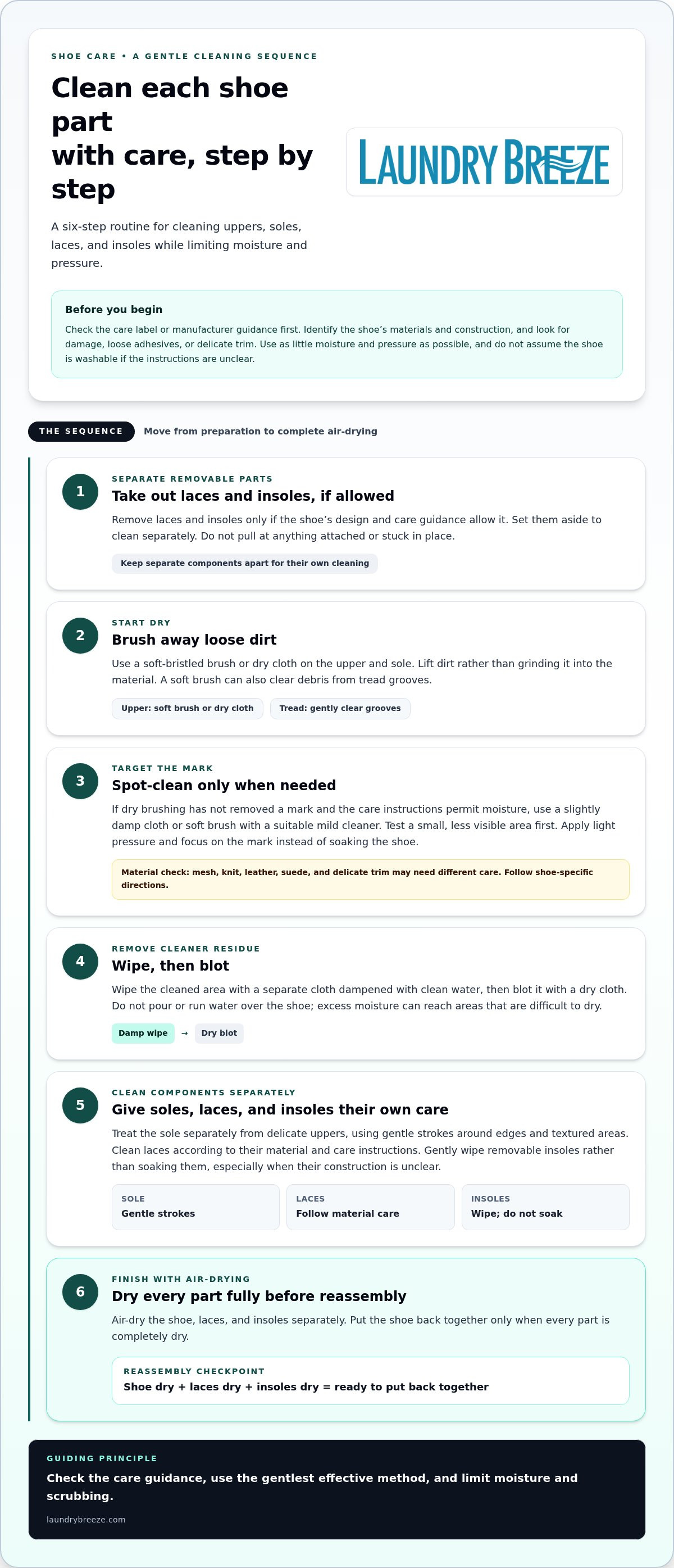
After checking the care guidance, clean each part in a steady order. Keep the shoe as dry as possible, adding moisture only if the material allows it and dry brushing isn’t enough. This routine keeps the Guide for Washing Your Shoes practical without treating every component as if it needs a full wash.
- 1. Separate removable parts. Take out the laces and insoles only if the shoe’s design allows it. Set them aside for separate cleaning. Don’t pull at anything attached or stuck in place.
- 2. Brush away loose dirt. Use a soft-bristled brush or dry cloth on the upper and sole. Lift dirt instead of grinding it into the material. A soft brush can also clear debris from tread grooves.
- 3. Spot-clean where needed. If dry brushing hasn’t removed a mark and the care instructions permit moisture, use a slightly damp cloth or soft brush with a suitable mild cleaner. Test a small, less visible area first. Apply light pressure and focus on the mark rather than soaking the shoe.
- 4. Remove residue carefully. Wipe the cleaned area with a separate cloth dampened with clean water, then blot it with a dry cloth. Don’t pour or run water over the shoe. Excess moisture can reach areas that are difficult to dry.
- 5. Clean the sole and separate components. Treat the sole separately from delicate uppers, using gentle strokes around edges and textured areas. Clean laces according to their material and care instructions. Wipe removable insoles gently rather than soaking them, especially if their construction is unclear.
- 6. Let each part dry fully. Air-dry the shoe, laces, and insoles separately. Put the shoe back together only when every part is completely dry.
Can You Put Shoes in the Washing Machine? Compare the Options
Sometimes, but convenience alone isn’t a safe reason to machine-wash shoes. The right choice depends on the care label, materials, and construction. A machine cycle exposes shoes to more water and movement than targeted cleaning. That can affect their shape, delicate materials, trims, or adhesives. Checking the instructions first helps you avoid unnecessary risk.
Compare the options and choose the least intensive method likely to work:
Dry brushing: The lowest-moisture option. Try it first for loose dirt on shoes that can be brushed gently.
Spot-cleaning: Adds moisture to a small area. It’s useful for isolated marks when the shoe’s care guidance permits damp cleaning.
Hand-washing: Gives you more control over the amount of water and pressure used on each area. Consider it when instructions call for gentle cleaning or the shoe has delicate parts.
Machine washing: Exposes the whole shoe to water and movement. Use it only if the manufacturer’s instructions allow it and the shoe’s construction is suitable.
When is hand-cleaning a better choice?
Hand-cleaning lets you focus on a dirty spot instead of wetting the entire shoe. It also makes it easier to use light pressure and avoid delicate sections. Choose this method if the care instructions recommend gentle treatment. Some canvas, nylon, or polyester shoes may tolerate more moisture than leather or suede, but the manufacturer’s guidance should determine the method for that specific pair.
General laundry advice can’t account for every shoe detail. The American Cleaning Institute’s laundry best practices offer broader washing guidance, while shoe care should follow the manufacturer’s instructions.
What should you consider before machine-washing shoes?
Check the shoe’s care label or manufacturer guidance before putting it in the washer. Consider the upper and lining as well as trims, attached components, and adhesives. A shoe that looks sturdy may still have parts that don’t respond well to a full wash.
If the instructions are absent or unclear, skip the machine. Use gentle spot-cleaning instead, guided by the shoe’s material and care information. That’s the safer approach when you can’t establish that a machine cycle is suitable.
How to Dry Shoes Without Warping or Trapping Moisture
Cleaning isn’t finished until the shoes are fully dry. Moisture can linger inside the toe, around seams, or beneath removable insoles. Putting shoes back together too soon may trap dampness. Give each component space to dry, and don’t try to speed things up with direct heat.
How can you help shoes keep their shape while drying?
Air-dry shoes at room temperature in a ventilated place, away from heaters, direct sunlight, and other strong heat sources. Heat may affect a shoe’s shape or materials. Follow the manufacturer’s drying instructions if they differ.
If the shoe can be supported this way, loosely place clean, absorbent paper inside to help draw out moisture and support its shape. Don’t pack it tightly or push it in so far that it stretches the shoe. Replace the paper when it feels damp. Keep laces and removable insoles out of the shoe while they dry, unless the care guidance says otherwise.
Drying is an important step in this Guide for Washing Your Shoes. A shoe can feel dry on the outside while moisture remains inside. Check areas that dry slowly, especially seams and the toe, instead of relying on appearance alone.
When are shoes ready to wear again?
Wait until the interior, removable insoles, and laces are completely dry before reassembling or wearing the shoes. Touch the lining and seams to check for cool or damp spots. Drying time varies with the shoe’s materials and surrounding conditions, so check the shoe itself rather than aiming for a fixed timeframe.
Drying checklist
- Shape: Support it loosely with clean paper if suitable. Don’t overstuff.
- Airflow: Choose a ventilated spot at room temperature.
- Heat: Keep shoes away from direct heat and harsh sunlight unless the manufacturer instructs otherwise.
- Complete drying: Check the interior, seams, insoles, and laces before putting the shoe back together.
Keep Shoes Fresh and Make the Rest of Laundry Easier
A little upkeep between washes can simplify shoe care. Brush off loose dirt when you notice it instead of letting it build up, and let damp shoes air out fully before putting them away. If a mark remains, choose a method suited to the material and follow the manufacturer’s care instructions.
How can you keep shoes cleaner between washes?
There’s no single cleaning schedule that suits every pair. Consider how often you wear the shoes, how dirty they look, what they’re made of, and what the care guidance recommends. Shoes worn outdoors may need attention sooner than pairs worn occasionally indoors. Use visible dirt and the shoe’s condition as your cue rather than washing on a fixed timetable.
Keep shoe cleaning separate from clothing laundry. Don’t put muddy shoes in a load of clothes, where dirt could transfer. Clean shoes and shoe-care tools apart from garments, and follow clothing care labels for the rest of the load. Keeping the tasks separate helps you choose the right method for each.
What can you do when laundry takes up your time?
This Guide for Washing Your Shoes covers shoe care, while everyday clothes need their own laundry routine. If washing and folding garments are taking up time, Laundry Breeze’s Wash & Fold service can help with clothing laundry. It’s a separate task from cleaning shoes.
Keep Your Shoes Clean with Confidence
A safer shoe-cleaning routine starts with the care label, not the washing machine. Use a method suited to the material, remove dirt gently, and clean laces and insoles separately when the shoe’s design allows. This Guide for Washing Your Shoes also shows why patient air-drying matters: wait until every part is fully dry before putting the shoes back together or wearing them.
Make shoe care a separate task from clothing laundry, and let visible dirt, use, and manufacturer guidance determine when your shoes need attention. Laundry Breeze offers wash and fold for clothing, with pickup and delivery in Los Angeles and nearby areas, including Beverly Hills, West Hollywood, Culver City, Santa Monica, Venice, and Westwood.
Frequently Asked Questions
Can you wash shoes in a washing machine?
Sometimes, but only if the shoe’s care label or manufacturer guidance says machine washing is suitable. Material alone isn’t enough. Construction, trims, and adhesives can also affect how a pair handles water and movement. If instructions are missing or unclear, skip the machine and use gentle spot-cleaning instead. That cautious choice is central to this Guide for Washing Your Shoes.
How do you wash shoes by hand?
First remove loose dirt with a soft brush or dry cloth. If the shoe’s care instructions allow moisture, use a slightly damp cloth or soft brush with a suitable mild cleaner. Work gently on small areas instead of soaking the whole shoe. Wipe away residue with a clean, damp cloth, then blot with a dry one. Let all parts air-dry completely before wearing the shoes.
What is the safest way to clean white sneakers?
Check the care instructions first. White sneakers can still be made from materials that need different treatment. Brush off dry dirt, then spot-clean a small, less visible area with a method approved for that material. If the material responds well, clean marks with a soft cloth or brush and light pressure. Don’t assume bleach or a strong cleaner is safe, as it may affect the material or color.
How do you clean suede shoes without damaging them?
Follow the shoe manufacturer’s suede-care instructions and avoid machine washing or soaking. Start by gently brushing away dry dirt with a tool suited to suede. For remaining marks, use only a method or cleaner recommended by the manufacturer. Apply it carefully to a small area and avoid rubbing hard, since force or excess moisture may affect the suede’s surface.
Can you put shoe laces and insoles in the washing machine?
Machine-wash laces or insoles only if their care instructions allow it. Laces can be removed and cleaned separately, but their material and construction matter. Removable insoles may need gentler care, so lightly wiping them can be a safer option when guidance is unclear. Don’t put attached components in the machine or soak materials you can’t identify. Let laces and insoles dry fully before putting them back in the shoes.
How should you dry shoes after washing them?
Air-dry shoes at room temperature in a ventilated place, away from direct heat and harsh sunlight unless the manufacturer advises otherwise. Remove the insoles and laces when the shoe design allows, and wait until the interior, seams, and every separate part are fully dry before reassembling. While your shoes dry, Laundry Breeze offers clothing laundry pickup and delivery in Los Angeles, including Beverly Hills, West Hollywood, Culver City, Santa Monica, Venice, and Westwood.
To see links to services mentioned in this article, please click
https://www.laundrybreeze.com


