

Choosing a laundry service involves more than loyalty or rewards programs. Consider practical details such as apartment pickup, what wash and fold includes, and how to communicate care preferences. This guide explains how to arrange a clear handoff and choose an option that fits your routine.
Laundry Breeze serves Los Angeles and nearby communities, including Beverly Hills, Culver City, and Santa Monica. Whether you have a regular household load or need to catch up, understanding pickup, delivery, and care instructions can make laundry easier to manage.
Key Takeaways
- Understand how pickup and delivery can simplify laundry day, including when you live in an apartment building.
- Learn what wash and fold typically takes off your hands and how to communicate your laundry preferences.
- See why service-area coverage matters and how to think about location before arranging a pickup.
- Explore the questions to consider about loyalty or rewards programs when choosing a laundry routine.
- Find out when Laundry Breeze’s laundry options can help with household loads or business linens.
Do you offer any pickup and delivery services?
Pickup and delivery can bundle collection, cleaning, and return into one routine. The handoff details matter most for apartment access, timing, and garment care.
A pickup-and-delivery laundry service collects laundry from your home or building, cleans it, and returns it. Wash-and-fold service includes washing, drying, and folding. Before pickup, separate items that need special care from everyday clothing and include clear instructions.
Care and labeling needs depend on the laundry. For contaminated laundry, the Centers for Disease Control and Prevention says bags must be clearly identified so health-care workers can handle items safely, including when laundry goes to an off-site service. For everyday clothing, follow the garment care labels and share any relevant instructions. Check the service terms to understand how to raise concerns about cleaning or delivery.
Turnaround depends on the service and cleaning method. Wash and fold involves washing, drying, and folding, while dry cleaning uses a different garment-care process. If you need an outfit or uniform for a specific event, choose a service with a stated turnaround that works for your plans.
Fabric, care labels, stains, and item condition can affect how a garment should be handled. Separate delicate or bulky items and point out visible stains before pickup. If an item returns damaged, stained, or missing, report the issue promptly with its description and your order details.
Pickup and Delivery Scheduling
Scheduling sets the collection window, return plan, and address for the order. Choose a time when someone can hand over the bag, or provide clear building-entry instructions. For a recurring household routine, use a consistent pickup day; for a one-time load, schedule around when clean clothes are needed. Notifications can help mark milestones, such as collection and return.
Doorstep and Concierge Delivery
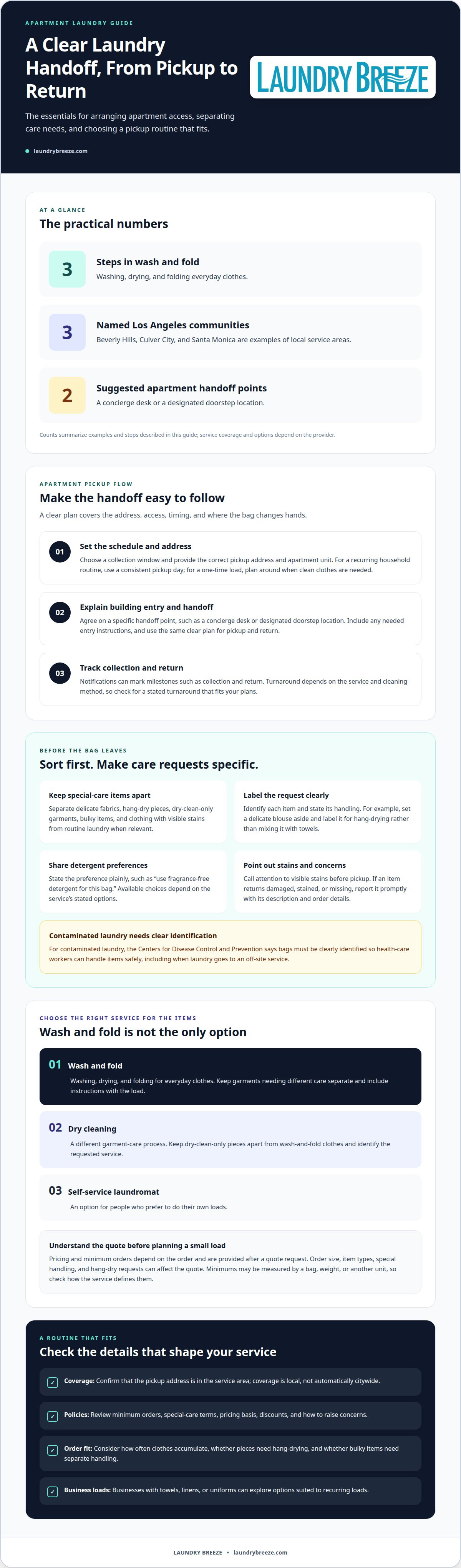
For apartment pickup and delivery, agree on a specific handoff point, such as a concierge desk or designated doorstep location. Include the correct unit and any necessary entry instructions. Using the same clear plan for pickup and return helps avoid confusion, and delivery updates can clarify when the order has been collected or returned.
Wash-and-fold service
Wash-and-fold handles everyday clothes through washing, drying, and folding. Other common options include dry cleaning for garments needing a different cleaning method and self-service laundromats for people who prefer to do their own loads.
For wash and fold, preparation starts with separating items that need special attention. Keep delicate fabrics, pieces marked for hang-drying, and garments with visible stains apart from routine clothing. Include clear care instructions with the load. That gives the cleaner useful details before processing begins, rather than leaving a preference hidden inside a mixed bag.
Pricing and minimum orders depend on the order and are provided after a quote request. Order size, item types, special handling, and hang-dry requests can affect the quote. A minimum may be measured differently by different businesses, so understand whether it refers to a bag, weight, or another unit before planning a small load.
Pack clothing loosely enough that items are easy to sort and special-care pieces are easy to spot. Use a separate bag for garments that should not go with everyday clothes. If you use a designated laundry bag, follow its capacity guidance rather than estimating the load by item count.
For garments that should be hang-dried, identify each item and state the requested handling. For example, set a delicate blouse aside and label it for hang-drying rather than mixing it with towels. Specific instructions make it easier to distinguish the request from routine laundry care.
For pickup or drop-off, place laundry in a suitable bag and separate items with special care instructions. Keep dry-clean-only garments apart from wash-and-fold items, and point out visible stains when handing over the load.
Bag capacity and minimum-order rules can shape whether a small weekly load or a larger household batch makes sense. Before arranging service, consider how often clothes accumulate, whether the order includes hang-dry pieces, and whether bulky items need separate handling. Those details help define the right load without relying on a guessed bag count.
Laundry preferences and customization
Before booking, review recent customer comments, the pricing basis, and service policies. Look for repeated feedback about order handling, missed instructions, and how concerns are resolved. Read the terms for minimum orders, special care, and discounts. A clear policy explains what each charge covers and how customers report a problem.
Make preferences specific to the items they apply to. For example, separate a wool sweater from everyday cotton clothes and include its care instructions. If you have a detergent preference, state it clearly. Identify garments that need air-drying rather than relying on a general request for gentle handling.
Custom detergent selections can be useful for households with scent sensitivities or a preferred product. The available choices and how they are applied depend on the service’s stated options. Describe the preference plainly, such as “use fragrance-free detergent for this bag,” and keep that request distinct from fabric-care instructions.
Dry cleaning involves different garment handling from routine washing. Keep dry-clean-only pieces separate from wash-and-fold clothes, and identify the requested service. Separating items helps staff see which garments are intended for dry cleaning before processing.
Pricing depends on the case and is provided after a quote request; factors include load size, garment types, and requested handling. Review whether a quote explains any minimum order, separate-item charges, or add-on services. A clear breakdown makes it easier to understand the total before committing, without relying on a promotional headline alone.
A customer loyalty discount may reward repeat orders, but its terms determine how it works. Look for the qualifying purchase, redemption rules, expiration conditions, and whether the offer applies to the service you need. A discount is useful only when the requirements fit your normal laundry routine.
Customer reviews provide practical clues when they describe a specific order. For instance, comments about separated delicates or followed detergent instructions reveal more than a general “great service” rating. Compare recurring themes across reviews, including communication, delivery handling, and whether staff addressed stains or missing items constructively.
Before scheduling, make a short list of relevant instructions: detergent preference, hang-dry garments, dry-cleaning items, and visible stains. Tie each note to the right item or bag. This gives staff clear information about what matters for your order.
Service coverage across New York City boroughs
Los Angeles service coverage is described through cities and neighborhoods, not boroughs. The relevant local areas include Los Angeles, Beverly Hills, West Hollywood, Culver City, Santa Monica, Venice, and Westwood. Naming the exact city helps distinguish a pickup address from nearby communities with similar street names or adjoining boundaries.
For a pickup, start with the complete address, including the city and ZIP code. An address in Beverly Hills differs from one in Los Angeles, even when the locations are close. Apartment residents should also note the building entrance, unit, and preferred handoff point. Those details help make the collection location clear.
Pickup, a laundromat visit, and home washing suit different routines. Pickup can spare you the trip of carrying a laundry bag elsewhere. A self-service laundromat lets you handle the washing yourself, while home washing gives you control over the cycle and timing if you have laundry equipment. Choose based on which tasks you want to manage.
Your location and laundry type both matter. A household in Culver City may need different pickup arrangements from one in Santa Monica. For businesses, the volume and location of towels, linens, or uniforms shape laundry routines. Wash and fold can handle household loads, while garments needing special care should be identified separately.
Use a location check before arranging service. Match the full pickup address to the intended city, then consider building access and handoff instructions. A secured entrance, concierge desk, or limited loading area can affect where a bag is collected. Providing the same clear location details for return can help avoid confusion between neighboring buildings.
Laundry Breeze serves Los Angeles and nearby areas, including Beverly Hills, West Hollywood, Culver City, Santa Monica, Venice, and Westwood. A city name alone may not identify your building, so include the full address when arranging pickup.
Compare pickup, home washing, and a laundromat by deciding which parts of the laundry routine you want to handle. Pickup can help if carrying bags is inconvenient. Self-service suits people who prefer to manage each wash cycle, while home washing keeps the process in your hands if you have working equipment. Each option fits a different household routine.
Before deciding that home washing is the easiest option, consider whether buying and installing equipment fits your plans and budget. Compare that cost with the effort of taking laundry elsewhere or arranging pickup. Laundry Breeze's pickup and delivery service can handle collection and return for households in Los Angeles and nearby areas, including Beverly Hills, West Hollywood, Culver City, Santa Monica, Venice, and Westwood. The right choice depends on how you want to balance convenience, equipment, and cost.
Laundry pickup at apartment buildings
Apartment pickup needs more than a street address. Provide the building entrance, unit number, and agreed handoff location. A busy lobby, locked gate, or shared package room can affect the collection, so clear instructions help distinguish your building from nearby ones.
Decide who will hand over the bag. If you’ll be home, schedule around your availability. If you use a concierge, identify the resident and confirm the agreed handoff. For doorstep pickup, specify the floor and unit, along with a location that does not block a hallway.
Security deserves attention in shared spaces. Use a closed, clearly identifiable bag, and avoid leaving clothing unattended in an open lobby. Include your name and unit details where they can be seen by the person handling the order. If the building has entry instructions, share only the access details needed for the agreed pickup.
Apartment buildings can also complicate delivery. A driver may need to use a call box, check in with a concierge, or follow secured-entry instructions. Choose one return location and keep it consistent. For example, using the concierge desk for both pickup and delivery can reduce the risk of a bag being left at the wrong door.
Consider building routines before choosing a pickup window. A loading area may be occupied during move-in, while a busy front desk may have limited space for packages. Tell the service about these constraints when scheduling. If several residents share a pickup arrangement, label each bag separately so one apartment’s clothes don’t get mixed up with another’s.
Laundry access varies between Los Angeles apartments. Some residents have machines in their units; others use a shared laundry room or carry bags elsewhere. Pickup can reduce those trips, while home washing leaves each cycle under your control. Describe any secured entrance, elevator access, or designated loading area when arranging the handoff.
Building access and order details can affect how a pickup is priced. The quote depends on the case and is given after a quote request, with factors such as load size, item types, and handling needs. For apartment residents, we highly recommend sharing access instructions and a specific handoff location before the scheduled collection.
Laundry Breeze
Laundry Breeze helps households and businesses in Los Angeles manage laundry. Choose pickup and delivery or wash and fold for everyday clothing, or Commercial Laundry Service for business linens and uniforms. Comforter & Pillow Laundry Service handles bulky bedding that can be difficult to wash at home.
These options can help when laundry piles up, building access makes trips inconvenient, or a business needs clean towels and linens. Laundry Breeze serves Los Angeles and nearby areas, including Beverly Hills, West Hollywood, Culver City, Santa Monica, Venice, and Westwood. Choose based on what needs cleaning and whether pickup, drop-off, or self-service suits your routine.
Make your next laundry day easier
A smoother laundry routine starts with matching the service to the load. Decide whether you need household clothes handled, business laundry managed, or bulky bedding cleaned. Laundry Breeze offers Pickup & Delivery Service, Commercial Laundry, and Comforter & Pillow Laundry Service for different laundry needs.
Before reaching out, consider what you’re sending and which instructions matter. For apartment pickup, note the preferred handoff location and building-access details. For business laundry, identify the items involved, such as towels, linens, or uniforms. These details help make the next step practical.
Frequently Asked Questions
Are there any loyalty or rewards programs available?
Plan around the laundry service you need, rather than assuming a rewards offer. For repeat household loads, consider whether pickup and delivery or wash and fold best fits your routine. Businesses can focus on handling recurring towels, linens, or uniforms. Laundry Breeze’s practical options are designed around laundry needs, so choose based on the items and service you require.
What are your hours of operation?
Pickup and delivery are available Monday through Sunday, from 9:00 a.m. to 7:00 p.m. For example, if your apartment building has a staffed concierge, use the pickup window to plan the handoff. The stated hours refer to pickup and delivery service, not necessarily every laundromat activity. This schedule helps Los Angeles customers plan when laundry can be collected or returned.
What payment methods do you accept?
Laundry Breeze accepts cash, credit cards, debit cards, Apple Pay, and EBT. Commercial customers can also pay by invoice, with weekly or monthly invoicing available. For example, a business with recurring uniform or towel loads can use invoicing, while a residential customer can choose another listed payment method. Knowing your payment option in advance helps keep checkout straightforward.
How much does laundry service cost per pound or per load in the United States?
There isn’t one nationwide rate: the cost depends on the service, load size, item types, and handling requested. A provider may price routine clothing by weight, while bulky bedding or individual garments may be priced separately. For Laundry Breeze, the price depends on the case and is given after a quote request. The quote factors include the service and items being cleaned.
How do I choose a reliable laundry service near me?
Choose based on your location, laundry type, and the instructions your order requires. For example, a household with delicate garments may prioritize communicating care preferences, while a Los Angeles business may need recurring handling for towels or uniforms. Review the service’s stated pickup process and coverage details, then organize your items and instructions clearly. A good fit should match the real task, not just a broad label.
What laundry items or fabrics do services refuse or charge extra to clean?
Fabric type, care instructions, stains, item condition, bulky pieces, and special handling can affect acceptance or the quote. Separate dry-clean-only, delicate, and hang-dry items, and ask how they are handled before pickup.
How do laundry services handle lost, damaged, or stained clothing?
If clothing is lost, damaged, or stained, report the issue promptly with the item description and order details. Review the service terms for how to raise a concern.
To see links to services mentioned in this article, please click
https://www.laundrybreeze.com


