

Convenience matters, but it also helps to know what happens to your laundry and which items you can send. This guide explains what wash and fold includes, how pickup and drop-off work, how bulky items are handled, and what to consider when choosing a turnaround option.
You’ll also learn how to prepare laundry for service and what details can affect your order. Use these points to decide whether wash and fold fits your routine and whether pickup or drop-off is the better option in Los Angeles.
Key Takeaways
- Learn what wash and fold covers and how per-pound pricing is generally calculated.
- See how pickup and delivery can fit into your laundry routine, from preparing a bag to receiving clean clothes.
- Understand which everyday laundry and bulky household items may suit wash and fold service.
- Compare standard and expedited turnaround options so you can plan around your laundry needs.
- Follow the basic drop-off process and decide which service option best fits your routine.
What is Wash and Fold?
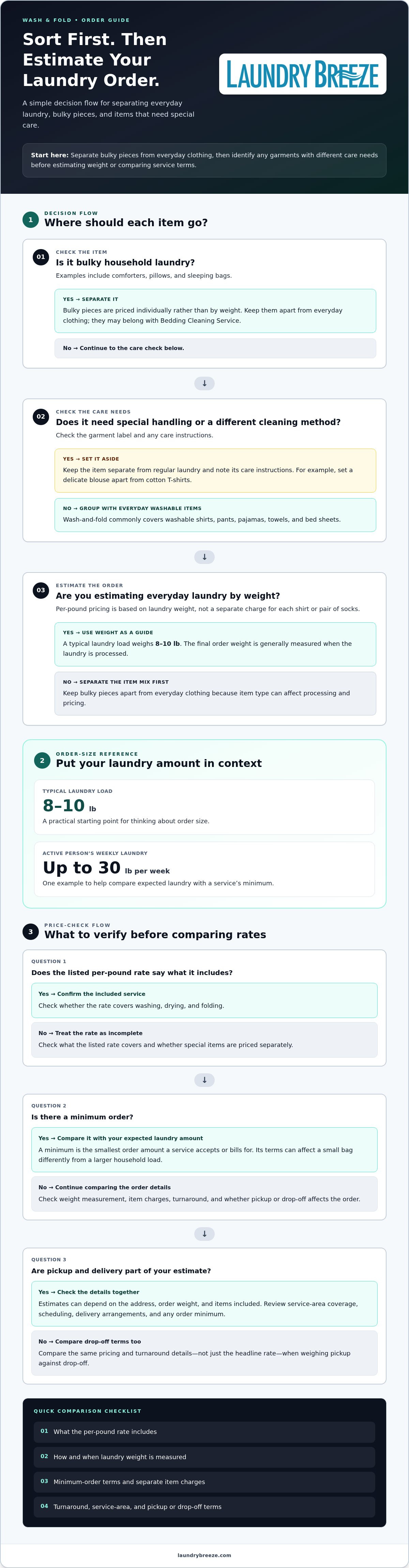
Wash and fold is a laundry service that takes clothing through sorting, washing, drying, and folding, then returns it ready to put away. A typical laundry load weighs 8-10 lbs, so weight gives customers a practical way to estimate the size of an order. For example, separate a lightweight clothing bag from bulky bedding before estimating the total, since item mix can affect how a service processes and prices laundry.
Per-pound pricing means the charge is based on the weight of the laundry, rather than a separate charge for each shirt or pair of socks. The final weight is generally measured when the order is processed. Check whether the listed rate covers washing, drying, and folding, and whether special items are priced separately. A quote request establishes the price; factors can include order weight, item type, and requested service.
Minimum orders are another part of the comparison. A minimum is the smallest order amount a service accepts or bills for, and its terms can affect a small bag more than a full load. Compare the minimum with the amount of laundry you expect to send, along with any separate item charges. For instance, a small weekly bundle may reach a minimum differently from a larger household load.
To compare local wash and fold services, review the same details for each: what the per-pound rate includes, how weight is measured, what minimum applies, and how pickup or drop-off affects the order. Then compare turnaround and service-area terms, not just the headline rate. This gives you a more useful estimate of the total service than comparing a single number without its conditions.
Pickup and delivery estimates can depend on the address, order weight, and items included. A Los Angeles address may be within a service area while a particular route or schedule shapes the estimate. Keep the address and a realistic laundry estimate together when reviewing service details. The Los Angeles laundry service area page can help you understand local coverage.
Before placing an order, separate garments that need special handling and note their care instructions. Keep comforters and other bulky pieces apart from everyday clothing because they are priced individually rather than by weight. A clear separation helps identify what belongs in Wash & Fold Laundry Service and what needs Bedding Cleaning Service.
An active person may have up to 30 pounds of laundry per week. That amount can help frame a realistic estimate when comparing expected order size with a service’s minimum.
Wash-and-fold pickup and delivery
Pickup and delivery removes the trip to a laundromat from the wash-and-fold routine. You place clothes, towels, or household laundry in a bag, arrange a collection, and receive the clean order at the agreed destination. The service handles the trip alongside washing, drying, and folding. For a household balancing work and laundry, skipping the drive and counter visit can remove a practical hassle.
Scheduling usually begins with choosing a pickup window and entering the collection address. Then add delivery details, including where the order should go and how the driver can reach the pickup point. Keep the bag easy to identify, and separate items with different care needs. For example, set aside a garment that needs special handling instead of mixing it with everyday towels.
Contactless pickup and delivery can make a handoff simpler when nobody is available to meet the driver. A typical arrangement uses a designated location, such as a porch or building reception area, plus clear access instructions. Choose a spot that keeps the bag out of the way, and state how the driver should identify it. Delivery instructions should be equally clear, especially in an apartment building with several entrances.
Plan the pickup around your actual routine. If you work from home, select a time when you can prepare the bag; if you’ll be away, use an agreed handoff location. Before booking, review the service area, scheduling choices, delivery arrangements, and any order minimum. Those details affect whether pickup and delivery fit your address and laundry habits. Terms such as “free pickup” should be read in context, including what the offer applies to.
Reviews and ratings are most useful when they describe specific parts of the process. Look for comments about pickup punctuality, clear delivery instructions, neatly folded clothes, and how a business handled a missed handoff. A detailed account can reveal more than a rating alone, especially when several customers mention the same service feature.
Detergent and fabric-care options vary by service. Compare the stated choices, such as detergent preferences or instructions for delicate fabrics, and note your needs while arranging the order. Clear care instructions help distinguish laundry that can be handled together from items requiring separate treatment.
Laundry types and bulky household items
Wash-and-fold is suited to everyday washable clothes, including shirts, socks, and casual garments. Towels and sheets can also be handled as laundry items, rather than folded one piece at a time at home. Before packing, check garment labels and separate items with different care needs. This simple sorting step helps distinguish regular clothing from pieces that need special treatment.
Common wash-and-fold items include washable shirts, pants, pajamas, towels, and bed sheets. Put similar garments together, then set aside anything requiring a different cleaning method. For example, keep a delicate blouse apart from cotton T-shirts and mention its care instructions when placing the order.
Comforters, pillows, and other bulky household items are handled separately from everyday clothes. Laundry Breeze’s Bedding Cleaning Service includes individually priced items such as comforters, pillows, and sleeping bags. Keep bulky pieces apart from regular laundry when preparing your order.
Before sending a comforter or pillow, check its care label for material and cleaning instructions. Down, synthetic fill, and decorative details can require different handling. A large comforter also needs enough space to move during washing and drying. If the label directs dry cleaning, keep the item out of a regular washable-clothing bundle and choose care suited to that instruction.
Keep items requiring dry cleaning or another special process separate from a regular wash-and-fold order. Laundry Breeze offers Dry Cleaning Service, including pickup and delivery. Remove personal belongings and sharp objects from the laundry bag, and identify garments that need dry cleaning when arranging service.
A quick sorting routine makes doing laundry simpler: group everyday clothes, towels, and sheets, then separate comforters and pillows. Keep special-care garments apart and follow each label. If a household order includes both shirts and bulky bedding, treating them as distinct item groups helps clarify the right cleaning method. The goal is clean clothing folded for easy storage, with household pieces handled according to their size and care needs.
Standard and expedited turnaround
Turnaround is the time between handing over laundry and receiving it clean. Compare the completion estimate with your household schedule and delivery arrangements.
Standard Turnaround
Standard turnaround follows the service’s regular cleaning and folding schedule. The estimate can depend on when the order arrives, its size, and whether it includes bulky items. For example, a bag dropped off before a weekend may move through a different schedule than one submitted midweek. Compare the stated completion window with the day you need clean clothes, not just the pickup time.
Same-Day or Next-Day Turnaround
Same-day or next-day turnaround means requesting laundry back within a shorter window than standard processing. These options depend on the service’s schedule, order size, and whether you drop off laundry or arrange pickup. A tight deadline, such as needing a clean work shirt tomorrow, makes the stated cutoff and return arrangement especially important.
Before choosing expedited processing, note the time your laundry enters the workflow. A pickup request and an in-person drop-off may have different starting points. Ask how the service counts turnaround, such as from collection, arrival, or order acceptance. That detail helps you compare estimates accurately and plan around a household need, like preparing uniforms before a workweek.
Text alerts can make scheduling easier when a service provides them. A message may communicate that an order is ready or that delivery is approaching. Treat alerts as updates, not as a substitute for the original turnaround estimate. Keep your phone number current and review any delivery instructions, especially when someone else will receive the laundry.
Expedited service can be useful when a specific event sets the deadline. For example, a household preparing for travel may need clean clothes before departure, while routine laundry can follow standard timing. Consider whether the shorter window is worth prioritizing over convenience, such as keeping your regular pickup day. Match the service option to the actual deadline rather than choosing speed automatically.
Turnaround estimates also relate to how the order is handled. Separate special-care garments and bulky bedding before submission, because item type can affect processing. If clean sheets are needed for a scheduled guest arrival, include that timing when planning the order. Clear instructions about pickup, drop-off, and delivery help align cleaning and folding with the date you need the laundry back.
To compare options, write down the expected ready time, how the order is returned, and whether an update is sent. Then compare those details against your calendar. A clear estimate helps you decide whether standard service fits or expedited timing better matches the next household task.
Drop-off wash-dry-fold process
A drop-off order lets you bring laundry to a laundromat instead of arranging collection. At Laundry Breeze, you can leave your prepared clothes for washing, drying, and folding, then return to collect them. Keep delicate garments apart from everyday clothing and tell staff about any care instructions.
To prepare laundry for pickup or drop-off, put washable clothes in a secure bag, separate delicate items, and share relevant care instructions. Keep comforters and other bulky items separate from everyday laundry. Check pockets for keys, receipts, or other belongings before handing over the bag.
At drop-off, tell the attendant what the order contains and mention preferences that affect cleaning. Examples include separating colors, using a particular detergent if that option is offered, or keeping a garment with special instructions apart. Don’t assume an unmarked item will receive a different treatment. Clear details at the counter help describe how you want the order handled.
Before leaving, confirm the order’s identifying details and the expected return arrangement. If your bag includes both regular clothes and a comforter, make sure both item types are noted. Ask how you’ll know the laundry is ready, and keep any claim ticket or order information provided. These simple steps make it easier to collect the correct order later.
The cleaning sequence generally covers washing, drying, and folding. Once the order is ready, folded garments are easier to put away, and the home laundry pile is one task shorter. When you collect your bag, look over the order before leaving. If you notice a missing item or a care concern, describe it promptly and refer to the order details.
Use this drop-off checklist before heading out:
- Check pockets and separate delicate or special-care garments.
- Keep bulky household items distinct from everyday clothes.
- Share detergent or fabric-care preferences during the handoff.
- Keep the receipt or order information for collection.
Laundry Breeze: Pickup & Delivery Laundry Service
Laundry Breeze offers pickup and delivery for wash-and-fold laundry, helping you hand off everyday clothes without making a laundromat trip. Choose this option when collecting and dropping off laundry yourself doesn’t fit your routine. The service returns laundry clean and folded, ready to put away.
For bulky bedding, Laundry Breeze also provides Comforter & Pillow Laundry Service. Businesses handling regular loads of towels, linens, or uniforms can use Commercial Laundry Service to take laundry tasks off their owners’ hands. Choose the service that matches your items and whether the laundry is for home or business.
Make laundry easier to fit into your week
Choose a laundry routine that gives you more time for the rest of your week. If you’re looking for a wash and fold laundry service near me in Los Angeles, consider whether pickup or drop-off suits your household. Laundry Breeze serves Los Angeles, Beverly Hills, West Hollywood, Culver City, Santa Monica, Venice, and Westwood, with Pickup & Delivery Laundry Service and Comforter & Pillow Laundry Service.
For business laundry, Laundry Breeze offers Commercial Laundry Service for items such as towels, linens, and uniforms. Choose this service to have business laundry handled, or select a residential service for household clothes and bedding.
Frequently Asked Questions
Can I customize my laundry order?
Yes, share your laundry preferences and care instructions when arranging your order. For example, note garments that need separate handling and identify bulky bedding apart from everyday clothes. Clear instructions help describe how you want the order handled. Keep special-care items distinct from regular laundry, and mention any preferences when scheduling or handing over your bag.
Can I put anything I want to wash in the bag?
No, use the bag for laundry items, not personal belongings. Check every pocket for keys, receipts, or other items before packing. Keep dry-clean-only garments and items requiring a different care method separate from regular wash-and-fold laundry. Identify bulky bedding separately, too. A quick check before pickup or drop-off helps ensure the bag contains items intended for cleaning.
Do I have to be home during the laundry pickup time?
Being home is one way to hand over laundry, but the important step is arranging a clear pickup handoff. If you won’t be there, provide accessible placement instructions when scheduling and use a designated location only when the pickup arrangement permits it. For example, specify the correct entrance or reception desk in a multi-unit building so the bag can be identified.
Do you offer services in my area?
Laundry Breeze serves Los Angeles and nearby communities, including Beverly Hills, West Hollywood, Culver City, Santa Monica, Venice, and Westwood. Coverage is local, not nationwide. If you live in one of these areas, include your full address when arranging service so the pickup location is clear. The address helps connect your laundry order with the appropriate service details for your neighborhood.
How do I place my first order?
Start by choosing pickup and delivery or a drop-off wash-and-fold order. For pickup, schedule a collection and provide the service address; for drop-off, bring your prepared laundry to the facility. Separate special-care items and bulky bedding, then share relevant instructions with your order. If you’re arranging laundry for a business, identify the items, such as towels, linens, or uniforms.
How will I know the total cost?
The total depends on the service selected, laundry weight, minimum order requirements, and whether the bag includes individually priced bulky items. A comforter, for example, may be priced differently from everyday clothes. The price is provided after a quote request. To understand the order total, distinguish regular wash-and-fold laundry from bedding or other pieces handled separately.
Where can I find wash-and-fold laundry services nearby?
If you’re looking for a wash and fold laundry service near me in Los Angeles, Laundry Breeze offers drop-off Wash & Fold Laundry Service and pickup and delivery. The local service area includes Los Angeles, Beverly Hills, West Hollywood, Culver City, Santa Monica, Venice, and Westwood. Choose drop-off when visiting the laundromat fits your plans, or pickup when you want laundry collected.
How are wash-and-fold laundry prices calculated per pound nearby?
Per-pound pricing is based on the weight of the laundry processed, while the order minimum affects the bill for smaller loads. Bulky pieces, such as comforters or pillows, may be priced individually instead of by the pound. When comparing a service estimate, separate those pieces from everyday clothes and account for the order minimum to understand how the total is calculated.
To see links to services mentioned in this article, please click
https://www.laundrybreeze.com


